Komodo Liveaboard vs Day Trip: The Honest Decision Framework
Komodo liveaboard vs day trip: real fleet prices, what one night at anchor changes, per-hour cost math and an honest checklist for choosing your format.
7 min read
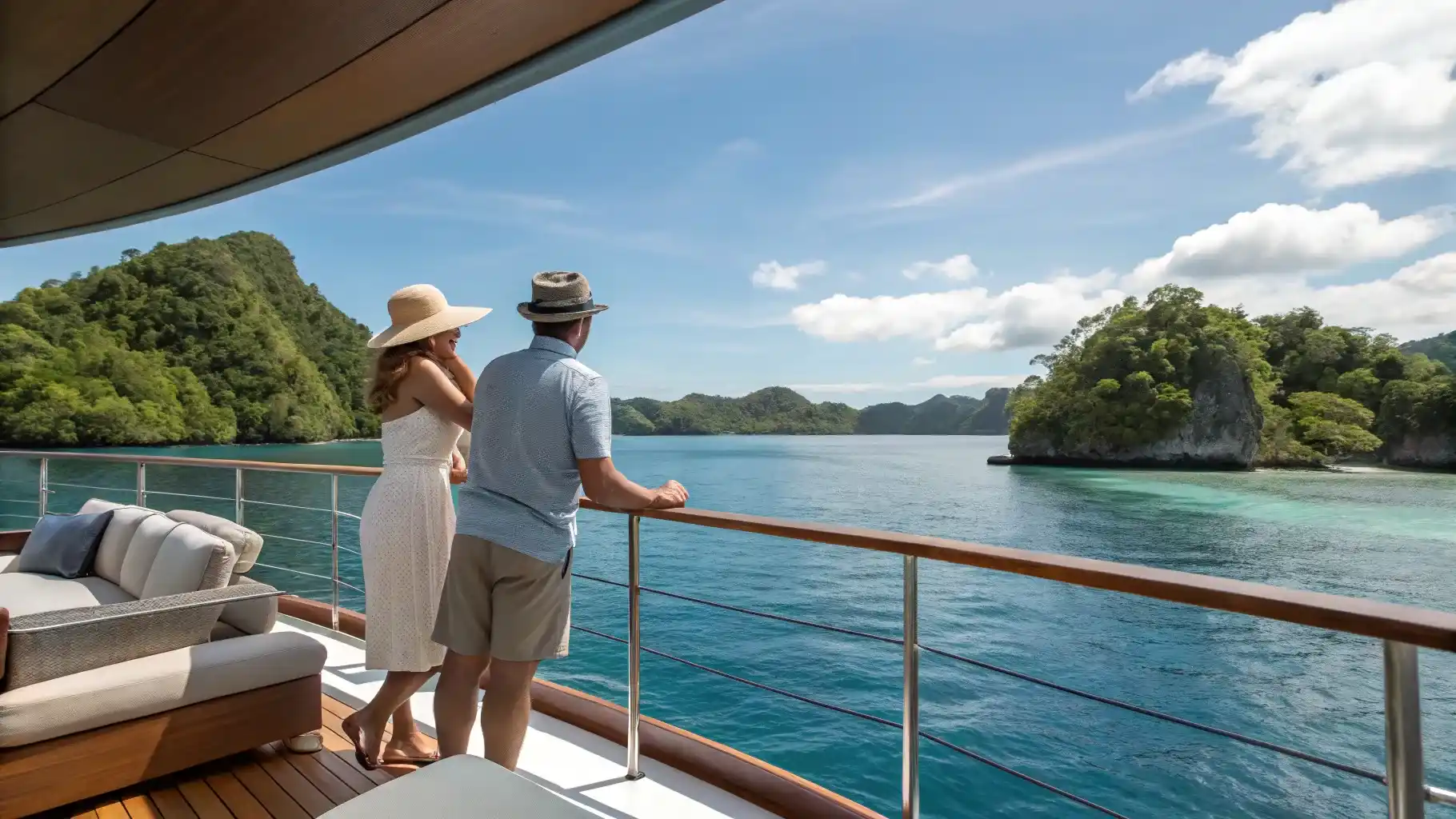
Komodo liveaboard vs day trip: the honest decision framework
The Komodo liveaboard vs day trip choice comes down to one question: do you want to see the park or feel it? A day trip covers the six famous stops in 10 to 12 fast hours from USD 148.57 per person; a liveaboard slows the same water into dawn anchorages, empty trails and nights at anchor.
Both formats are legitimate — we run both, daily, and this page exists because guests deserve the trade-offs stated plainly rather than upsold. Here is the framework the desk actually uses when someone asks which way to go.
The two formats, defined
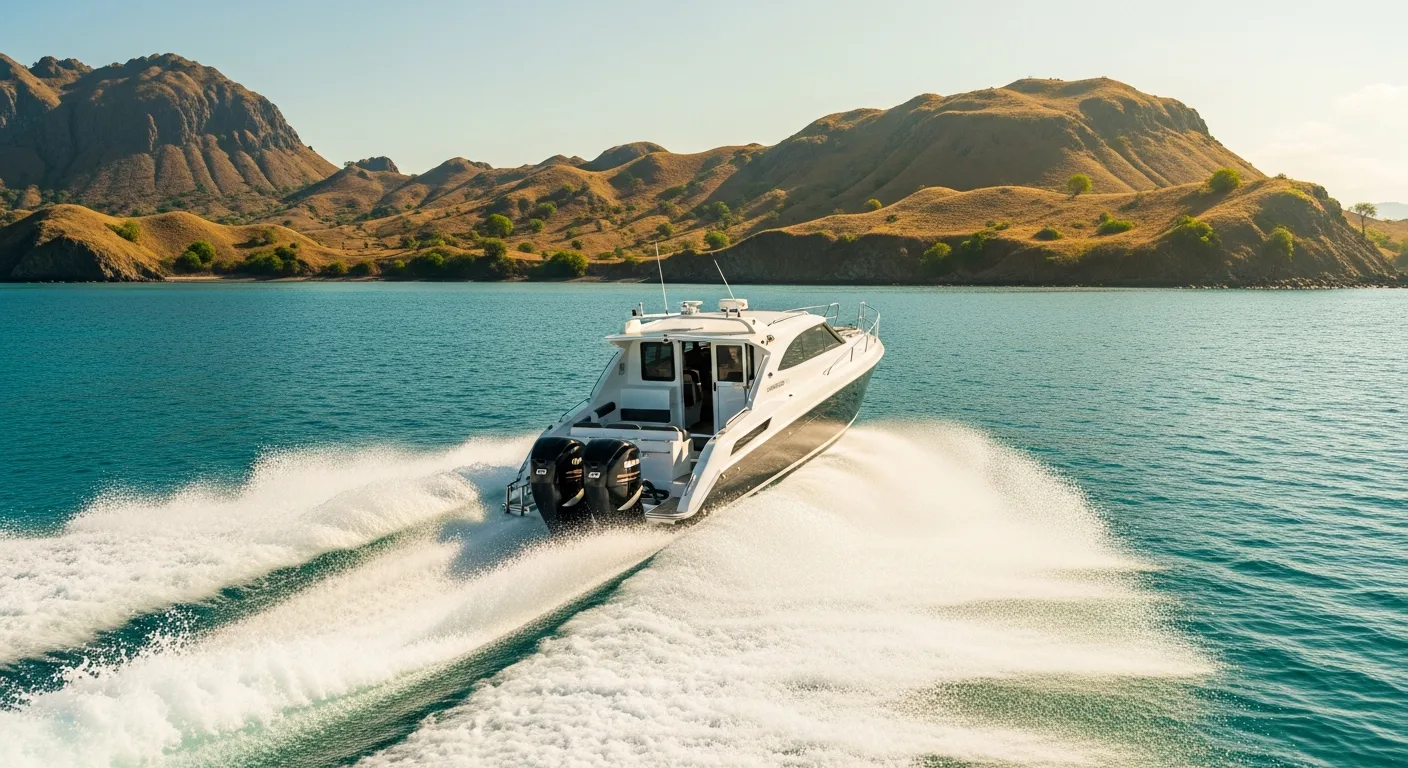
The day trip is a speedboat sprint: depart Labuan Bajo around 06:00, loop Padar, Komodo Island, Pink Beach, Taka Makassar, Manta Point and Kanawa, return by 17:00. Speed is the whole architecture — a fast hull covers in one daylight window what a phinisi covers in three days. The complete route, boat by boat, is on our Komodo day trip page.
The liveaboard is the same geography with the clock removed: a crewed phinisi or yacht that anchors inside the park overnight, so the day starts where the day boats have not yet arrived. Formats run from the 2-day 1-night charter up to two-week expeditions.
What the day trip does well
- The icons, all of them, in one day. Dragons at Loh Liang, the Padar viewpoint, Pink Beach sand, mantas at the cleaning station — the full postcard set between two hotel nights.
- Honest pricing. Shared speedboat seats from USD 148.57 per person including lunch and transfers; private boats from USD 1,110 for New Spirit (10 guests) through USD 1,239 for Kaia Explorer to USD 1,943 for the 25-guest New Hope 6. Whole numbers, one day, done.
- No cabin commitment. Guests unsure about sleeping afloat, families with young children on a first sea day, and travelers with 36 hours in Flores all get the park without the overnight variable.
- Late bookability. Speedboats hold availability weeks after the liveaboards have sold their peak dates.
What one night changes
The difference is not more stops — it is different hours at the same stops.
- Dawn at Padar. Day boats arriving from Labuan Bajo reach the viewpoint mid-morning with everyone else. A boat anchored below climbs at first light and has the ridgeline nearly alone.
- Dusk at Kalong. The evening bat exodus — tens of thousands of flying foxes crossing a red sky — happens after every day boat has gone home. It may be the park’s single best hour, and it is structurally unavailable to the day format.
- Time answers to conditions. Mantas showing well? A liveaboard stays another hour. On a day trip the schedule owns you; at anchor, you own it.
- No double crossing. The park sits a serious ride from town — the exposed channels are covered once, not bracketed around every visit. Distances and crossing times are mapped in our routes and distances guide.
The cost math, stated fairly
Compare like with like — the day trip is cheaper, but less than it first appears once you divide by people and hours:
- Private day boat: USD 1,110–1,943 whole-boat. Ten guests on New Spirit is about USD 111 per person for roughly 11 hours in the park — plus park fees, plus two hotel nights bracketing it.
- Private overnight: published 2-day 1-night whole-boat rates in our directory start at USD 2,974 (Pesona Bajo, 15 guests) and USD 3,262 (Segara, 12 guests) — meals, cabins and crew included. Fifteen guests on Pesona Bajo is under USD 200 per person for two park days and the night between them.
- Per hour actually inside the park, the overnight formats routinely come out cheaper than the sprint. The premium buys the hours, not the badge.
Budget note in the other direction: shared liveaboard cabins (open trips) undercut private charters but bundle you with strangers and a fixed route — the trade-offs live in our open trip vs private trip comparison. And one hybrid worth knowing exists: a handful of phinisi, such as Lalunia, publish a one-day whole-boat rate (USD 2,891.55) — the slow-boat atmosphere compressed into a single day, for groups who want deck life without the cabin.
Is one day enough for Komodo National Park?
For the icons, honestly, yes — the six-stop loop is a real day and nobody comes back feeling shortchanged on sights. What one day cannot deliver is the park’s rhythm: the light changing on an anchorage, trails before the heat, the sea going quiet after the fleet leaves. If that sentence stirs anything, you are a liveaboard guest. For the full duration ladder — where each added day stops paying for itself — see how many days you need in Komodo.
Choose the day trip if
- You have one spare day in Flores, full stop.
- Sleeping afloat genuinely worries you or a member of your group.
- You are testing the water — literally — before committing to a longer charter later.
- The budget line is firm and shared seats close the question.
Choose the liveaboard if
- Padar at dawn and Kalong at dusk sound like the point rather than extras.
- You are building the trip around snorkeling or diving windows, not around a return deadline.
- Your group fills a boat — per-person math turns sharply in your favor.
- You would rather unpack once than commute across the same channel twice.
Two objections, answered before you raise them
“I get seasick — surely the day trip is safer for me?” Counterintuitively, often not. The day trip is eleven hours of continuous motion on a fast hull, including the afternoon chop on the return leg. A liveaboard spends its nights and long stretches of its days at anchor in sheltered bays, where the boat barely moves; the crossings are shorter segments between calm. Plenty of motion-sensitive guests do better sleeping at anchor than sprinting the channels twice. Our seasickness and comfort guide covers tablet timing and which cabins ride smoothest.
“With kids, one day must be the sensible ceiling.” Depends entirely on the kids. Under-fives generally do better on the day format — short, contained, home by dinner. School-age children are frequently the liveaboard’s biggest fans: a boat is a floating adventure and the crew usually adopts them by the first afternoon. The age-by-age reasoning is in our family charter guide.
The middle path: 2 days, 1 night
Most guests torn between the formats are actually asking for the 2-day 1-night itinerary: one night at anchor buys the dawn and the dusk — the two hours that define the liveaboard — without committing a holiday week. It is the format we recommend most often to first-timers, and the boats that run it well are marked throughout the fleet directory.
Liveaboard vs day trip, answered short
Is a Komodo liveaboard worth it?
If you value the park’s quiet hours — dawn trails, dusk anchorages, unhurried manta time — yes, and the per-hour math is better than the headline price suggests. If you need the icons only, the day trip delivers them honestly.
Is a Komodo day trip worth it?
Yes. Ten to twelve hours covers all six signature stops including a ranger-guided dragon walk. It is a long, full, real day — just one lived on the schedule’s terms rather than yours.
Can I do both?
A pattern we quietly like: day trip first visit, liveaboard the return. Nobody has ever reported regretting the second booking.
Still weighing it? Send your dates, group size and what you most want from the park, and the desk — operated by Komodo Luxury — will tell you straight which format fits, including when the answer is the cheaper one. Message the fleet desk on WhatsApp — (+62) 811 3823 875 or email [email protected].