11D10N Komodo & Flores-to-Bali Charter — The Crossing, Properly
10 day Komodo and Flores yacht charter: full south loop, Sangeang, Satonda, two Moyo nights, Gilis to Bali. Itinerary, pricing $30k–$300k.
22 min read
A 10 day Komodo and Flores yacht charter departing Labuan Bajo is the first duration where the phrase “the crossing” means something real — a genuine one-way voyage from eastern Flores through Komodo National Park’s south coast, past an active volcano, across to Satonda’s crater lake and Moyo’s jungle waterfall, and finally into the Gili Islands before Bali. Ten nights. Four distinct marine regions. A route that most guests describe not as a charter but as a voyage they happened to do on a private boat.
This page covers the 11D10N shape specifically: the 10D9N one-way spine with one full extra day banked deliberately into the itinerary — a second night at Horseshoe Bay in Komodo’s south (October to April), or a second night on Moyo — so that no two large passages fall back-to-back and the trip never tips from indulgent into efficient. That single extra night is, consistently, the detail guests mention first when they write to say thank you.
Who This Charter Is For
Three groups reach for the eleven-day format and each uses it differently.
Multigenerational families are the clearest match. Three or four generations aboard a 7-to-9-cabin flagship phinisi means the grandparents can have a morning in a hammock while the teenagers dive Cannibal Rock and the parents are somewhere between the two. The second Moyo night absorbs the inevitable schedule slippage — a child who wants to swim the rope swings at Diwu Mbai again, a grandmother who wants to simply sit at anchor and read. You cannot manufacture that kind of time on a 7-night charter. You can here.
Honeymoon-plus couples — meaning people who want a honeymoon and a diving expedition — find that this is the format where both things fit without compromise. The south Komodo days at Manta Alley and Cannibal Rock are serious diving. Moyo’s second night, with a private beach dinner arranged in advance and the island entirely to yourselves, is serious romance. The route contains both, and they do not crowd each other.
Divers logging thirty-plus dives across four regions are the third natural fit. Komodo’s central pinnacles, the south coast cold-water sites, Gili Banta’s current-swept walls, Sangeang’s black-sand muck, and Moyo’s reef — that is a range of marine environments within one itinerary that you cannot assemble any other way within a single charter. The extra day at south Komodo in the October-to-April window means a full three-dive day at Yellow Wall and Manta Alley rather than one rushed dive before the north transit.
What it does not suit: guests with hard departure constraints from Labuan Bajo who need to return to port. This is a one-way itinerary — you disembark at Lombok or push onward to Bali. It requires a one-way flight back or, more commonly, guests who were flying home via Bali anyway and treat the boat as the transfer.
Day-by-Day: 11D10N Komodo and Flores Yacht Charter Itinerary
Day 1 — Labuan Bajo Departure: Kelor Island and Rinca Dragons
Depart Labuan Bajo 08:00–09:00. Forty-five to ninety minutes to Kelor Island: the hill trek is short — twenty minutes to the top — and the view across the Flores Sea earns it. House reef snorkel below. Then the run to Rinca’s Loh Buaya for the ranger-guided Komodo dragon walk: an hour on the trails, dragons near the feeding station most mornings, the smell of sun-warmed grassland and something faintly reptilian. Anchor overnight near Kalong Island and watch the flying fox colony pull off the trees at dusk. Quarter of a million fruit bats. Every time.
Day 2 — Padar Sunrise and South Komodo (Oct–Apr) / Central Komodo (May–Sep)
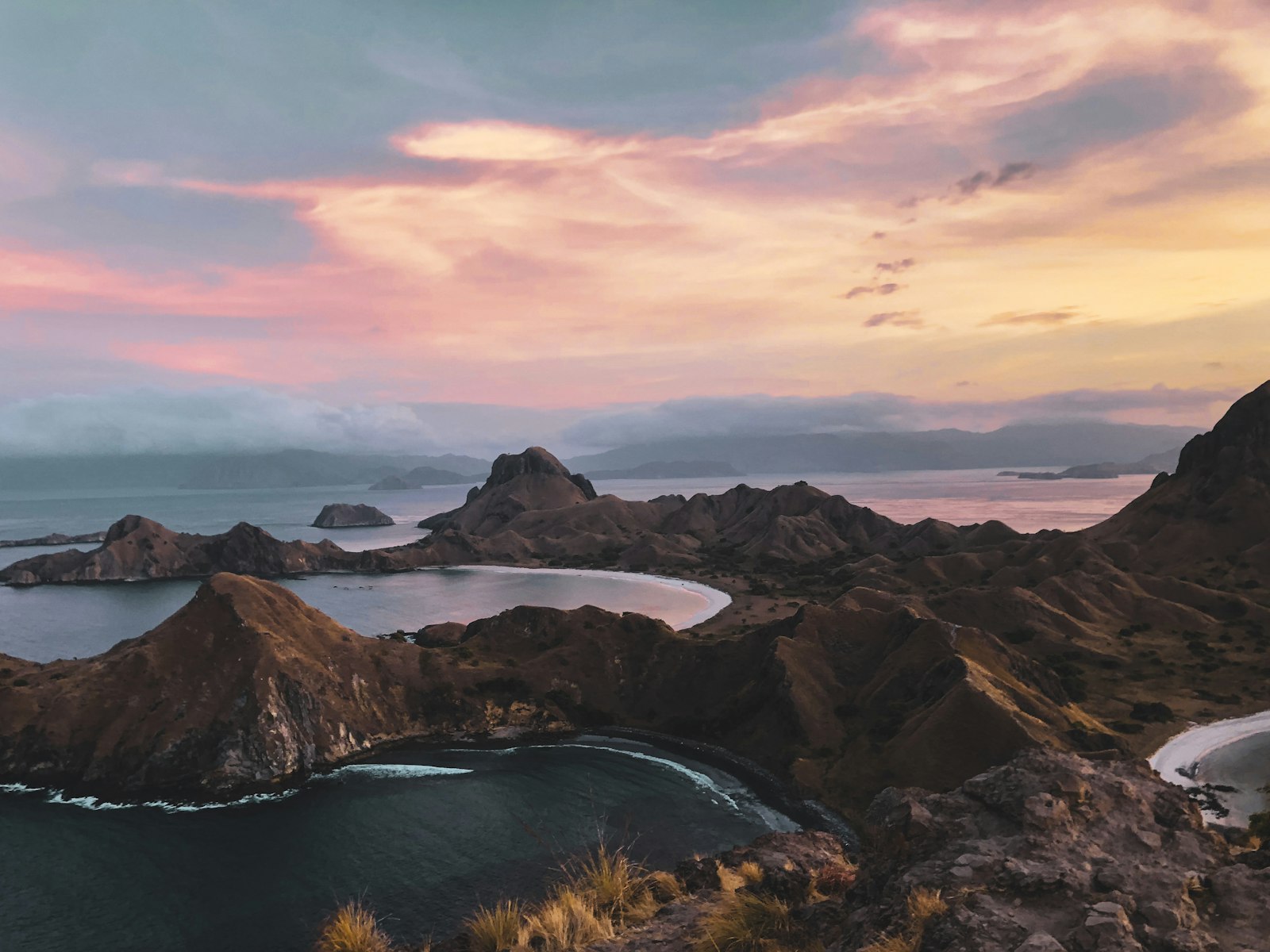
Pre-dawn sail positions the boat under Padar — 1.5 to 2 hours from Kalong at typical phinisi speed. The sunrise trek (45–60 minutes up) delivers the three-bay panorama that defines this destination. After descending, the routes split. October to April: afternoon move south — Padar’s south-facing sites, then 2–3 hours to Horseshoe Bay (Loh Dasami). Cannibal Rock in the late afternoon, wild dragons sighted from the tender on the beach, anchor in the bay. This is the anchorage that turns sceptics. Protected, quiet, and the water at Cannibal Rock is some of the most colour-saturated in the entire park. May to September: Pink Beach and Loh Liang for a Komodo Island dragon trek; anchor Pink Beach or Siaba.
Day 3 — Full South Day: Yellow Wall, Manta Alley (Oct–Apr) / North Diving (May–Sep)
October to April: this is the day the extra night earns its place. Dawn dive at Yellow Wall — soft corals from surface to 30 metres, colour that looks artificial in photographs and impossible in person. Then 3 hours west-southwest to Manta Alley (Torpedo Bay): the south-coast manta aggregation site, peaking in the wet season as plankton blooms bring the animals in. Two or three passes through the channel, the boat holding station above while the mantas work the water column below. Afternoon anchor at Loh Sera. May to September: substitute with Batu Bolong, Tatawa Kecil, and Sebayur — the north-central park sites that carry the dry-season product; all excellent, and honest to say so.
Day 4 — North Transit: Pink Beach, Loh Liang Dragons
Morning: sail north from Loh Sera (3–4 hours). Pink Beach stop — the pink tinge in the sand comes from red coral fragments mixed into white sand, most visible in direct afternoon light. House reef snorkel. Then Komodo Island’s Loh Liang for the official dragon trek — longer trail options than Rinca, larger dragons on average, the permit system managed through the SiORA booking platform (advance reservation is mandatory; your operator handles it, verify at booking). Anchor Pink Beach or the bay near Loh Liang.
Day 5 — Gili Lawa: Castle Rock, Crystal Rock, Sunset Ridge
Morning: 1.5–2 hours north to Gili Lawa. Castle Rock and Crystal Rock are the iconic current-swept pinnacles that made Komodo’s diving reputation — schooling fish in formations so dense they block the light, reef sharks hunting the column edges, Napoleon wrasse drifting in. The dive guide times entry on the current; the sites are genuinely best on the flow. Gili Lawa Laut’s lagoon for non-divers or the snorkel crowd. Late afternoon: the ridge hike on Gili Lawa Darat for sunset — the angle back across the park toward Komodo and Rinca turns amber and then coral from up here. Anchor in the bay below. One of the calmest nights on the whole route.
Day 6 — Gili Banta and the Crossing to Sangeang
Morning: 1.5–2.5 hours north from Gili Lawa to Gili Banta, uninhabited, just outside the park boundary. K2 Wall and GPS Point are advanced dive sites — strong current, deep, large pelagics — and the dive guide makes the call on conditions. If the current is running too hard, Banta’s sheltered east-bay snorkel is still a half-morning well spent, and you will almost certainly be the only boat. Lunch at anchor. Afternoon: 3–4.5 hours across to Sangeang Api. The volcano appears on the horizon about an hour out — a grey-white cone, rarely without at least some plume. Always confirm current PVMBG volcano advisories before departure (last verified June 2026). Arrive late afternoon. Bubble Reef — volcanic gas seeps rising through black sand, warm patches, resident species that seem to have agreed not to leave — and Hot Rocks for first dives. Anchor off Bontoh village.
Day 7 — Sangeang Full Day: Critters, Village Walk, Afternoon West Crossing
The underwater photographer’s favourite day on the whole voyage. Deep Purple and Techno Reef are black-sand muck — nudibranchs, frogfish, ghost pipefish, shrimp in volcanic rock crevices — and the substrate itself is unlike any dive site in the park. Morning dives, surface interval, afternoon dives. Between sessions, a walk into Bontoh village: a Bugis community at the base of an active volcano, traditional boats on a black-sand beach, children curious about the foreign arrivals from the charter anchored offshore. Late afternoon: the long crossing west begins — 4.5–6.5 hours to Satonda. If departure is late afternoon, the passage runs partly overnight; plan the timing with your captain. Anchor at Satonda.
Day 8 — Satonda Crater Lake and Moyo Arrival
Morning: Satonda Island — a flooded volcanic crater filled with a brackish lake, ringed by dense jungle, with a healthy coral reef around the outside. The crater-lake walk takes 20–30 minutes through the forest and the view over the water from the rim is one of the quieter rewards of the whole charter. Reef snorkel off the beach. Midday: 3–4.5 hours west to Moyo Island. Anchor at Labuan Aji. First afternoon on the island: beach walk, house reef, or simply sitting on deck watching the sun drop behind the island’s central ridge. Moyo is a nature reserve — no permanent tourist infrastructure on the beaches, almost no boats. The quiet is audible.
Day 9 — Moyo Full Day: Mata Jitu Waterfall, Second Night
This is the day that earns its own chapter in the stories guests tell when they get home. Morning: trek to Mata Jitu, the waterfall sometimes called the Lady Di waterfall — named for her 1993 visit, and the trail through Moyo’s forest to reach it is part of the point, not merely a prelude. The falls drop into a series of rock pools deep enough to swim and clear enough to see the bottom. Diwu Mbai nearby has rope swings over a swimming hole — a detail that costs nothing on the itinerary and is disproportionately beloved by children, teenagers, and adults who let themselves be children for five minutes. Afternoon: back to the boat, house reef, or a long nap in the shade of the sundeck. Second Moyo night at anchor. A private beach dinner arranged in advance with the crew transforms this evening; the kitchen team on a properly crewed phinisi or liveaboard can do considerably more than the standard three meals suggest.
Day 10 — Moyo to Medang to the Gili Islands
The day is a long one by distance — 6–8 hours in total across multiple legs — but it does not feel it because there are stops. Morning departure from Moyo; 4.5–6.5 hours to Medang on the Sumbawa coast, with a midday snorkel stop at a reef en route. Medang’s sandbank in the afternoon for a swim before the final 1.5–2 hour run to Gili Air. The Gilis — the three small islands off northwest Lombok — are where the trip shifts register: cold drinks at anchor, the smell of the island on the breeze, the knowledge that Bali or the airport is one short hop away. Anchor Gili Air.
Day 11 — Disembark Lombok or Continue to Bali
The charter formally ends at Lombok. Guests who need Bali have two choices: a tender landing at Gili Air followed by a fast boat to Bali (external service, pre-arrange separately), or continuing aboard for 2.5–3.5 hours to Amed on Bali’s east coast, or the full 7–11 hour run to Benoa Harbour near the airport. Some operators offer the Bali extension as part of the route; others price it as an additional night. Confirm at booking which endpoint your charter covers and plan flights accordingly — Lombok International Airport handles domestic connections to Bali and Jakarta daily.
The Two Seasonal Products
The 11D10N charter runs differently in different months and it is worth being specific rather than vague about it.
- October to April — the premium version
- The northwest monsoon brings calmer conditions along Komodo’s south coast. Horseshoe Bay, Yellow Wall, Cannibal Rock and Manta Alley are fully accessible, and the second Horseshoe Bay night (Days 2–3) gives divers a full day at those south sites without rushing the north transit. Manta Alley peaks November to April as plankton concentrations build. Brief rain squalls in January and February rarely cost activity hours — the anchorages are protected and the underwater conditions are unaffected. This is the written itinerary’s natural form.
- May to September — the north-weighted version
- Southeast trade winds make the south coast uncomfortable to rough. The honest adjustment is to reroute Days 2–3 entirely through north and central Komodo: Batu Bolong, Tatawa Kecil, Tatawa Besar, Sebayur, Siaba Besar (turtle site), Castle Rock, Crystal Rock. These sites are world-class and the dry season produces excellent visibility and flat water on the park’s northern anchorages. Karang Makassar mantas are year-round. The product changes character — less dramatic topography, more consistent conditions — and for a purely diving group the trade-off is reasonable. The Sumbawa and Moyo chapters from Day 6 are unaffected by the park season; the Sangeang crossing is most comfortable April to June and September to November.
- July and August
- Peak school-holiday season and the strongest SE trade winds. The park is at its busiest. Central and north Komodo diving is reliable and good; south coast access is not advised — sell the north variant honestly. The Sangeang crossing is achievable but expect short-period chop on exposed legs. Guests with motion sensitivity should either accept this or choose April–June.
The Labuan Bajo harbour authority has historically suspended sailing permits during periods of extreme weather per BMKG warnings — documented in March 2024 and late 2025 — and a night-sailing restriction applies to tourist vessels. Your operator monitors forecasts daily and will build schedule adjustments around any weather hold. The Moyo second night functions as the route’s natural buffer: if one leg runs late, the extra Moyo morning absorbs it without reshaping the whole itinerary.
Per-Night Budget: What Ten Nights Actually Costs
The charter market prices by the trip, not as a clean nightly rate, but per-night framing is the most useful comparison tool across vessel classes. All figures below are implied per-night rates, last verified June 2026. Actual quotes will vary by vessel, season, group size and what is bundled.
| Vessel Class | Implied Per Night | 10-Night Example Total | Typical Cabins | Typical Crew |
|---|---|---|---|---|
| Mid-range phinisi | ~$3,000–5,000/night | ~$30,000–50,000 | 4–6 cabins | 6–10 |
| Upper-mid / boutique liveaboard | ~$5,000–10,000/night | ~$50,000–100,000 | 5–7 cabins | 8–14 |
| Luxury phinisi ($7k–$15k/night class) | ~$7,000–15,000/night | ~$70,000–150,000 | 6–9 cabins | 12–21 |
| Flagship / top-tier (price on application) | ~$15,000–30,000/night | ~$150,000–300,000 | 7–9 cabins | 16–21+ |
Worked example: A luxury phinisi at $10,000/night × 10 nights = $100,000 for the whole vessel before park fees. For a family of 8 occupying 4 or 5 cabins on a 7-cabin boat, that is $12,500 per person for ten days of private charter — a figure that sounds large until measured against what it actually contains: full crew (typically 14–16 on a boat this size), three meals a day plus snacks, all gear, a cook who will adjust every dish to dietary preference, and an itinerary no resort can replicate.
Park entrance fees for foreign visitors run approximately IDR 250,000 per person per day (verify at booking — this is travel-site consensus, not official decree; last verified June 2026). Ranger fees, dive surcharges, SiORA reservation fees, and fuel on a one-way repositioning route are typically excluded on mid-range vessels and increasingly bundled into luxury all-inclusive rates — confirm per quote. Full scuba gear, nitrox, and a dedicated dive guide are usually additional even when compressors and tanks are aboard.
One-way repositioning charters from Labuan Bajo to Bali or Lombok are sometimes available at adjusted rates in April–May and October–November, when fleets migrate between operating seasons — ask specifically about repositioning pricing when enquiring, as it can meaningfully reduce the per-night cost on premium vessels.
The full range across all vessel classes: 10 nights × $3,000–$30,000/night = $30,000–$300,000 (last verified June 2026).
To run the numbers for your specific group, design your charter with our concierge team or reach them on WhatsApp — they will send two or three vessel options with per-night rates and a cabin plan within 24 hours.
The Moyo Second Night: Why It Matters
Most 10-day Komodo and Flores sailing charters — the ones that exist — pass through Moyo in a single overnight stop: arrive late afternoon, morning waterfall trek, depart by noon. The island gets ticked, not experienced. The 11D10N format banks one extra night there specifically because Moyo rewards time at a ratio unlike anywhere else on this route.
Moyo is a protected nature reserve covering nearly the whole island. The interior is primary forest; the surrounding reef is in good condition; the beaches between the designated mooring points are entirely deserted except for the occasional local fishing boat. There are no resort buildings visible from the water. The quiet is one of those things that registers physically after ten days of movement.
With two nights, the itinerary has room for: the Mata Jitu waterfall trek in proper time (the forest walk is an hour each way and worth doing without a watch), a separate afternoon reef dive, and an evening at anchor that does not need to be curtailed because of an early departure. Guests who honeymoon on this route consistently cite the Moyo second night as the most luxurious moment of the charter — not the five-star phinisi, not Cannibal Rock, not the Sangeang volcano. The empty island, the still water, and the fact that nowhere to be the next morning is among the rarest things private travel can produce.
Diving on the 11D10N Route: Four Distinct Regions
Thirty-plus dives is a reasonable target for a dive-focused group across eleven days. The sites span a range of environments that genuinely do not repeat each other, which is unusual even at this scale.
South Komodo (Days 2–3, Oct–Apr): Cannibal Rock, Yellow Wall, Manta Alley. Cold-water upwelling drives extraordinary soft-coral density — the colour saturation at Yellow Wall at 15–20 metres is unlike anything in the north or central park. Horseshoe Bay itself is a protected anchorage with a serviceable house reef. Manta Alley in the wet season: a channel site where mantas feed on plankton concentrations, usually multiple animals at a time.
Central and north Komodo (Days 4–5): Karang Makassar for mantas year-round, Batu Bolong for reef sharks and schooling fish, Castle Rock and Crystal Rock for the current-swept pinnacle experience that Komodo’s diving reputation is built on. These are high-energy sites — entry timing on the current matters, and the dive guide’s knowledge of the tidal windows is the practical reason why a well-staffed charter dives these better than a budget one.
Gili Banta (Day 6): K2 Wall and GPS Point. Advanced, current-dependent, genuinely frontier. If conditions prevent the main sites, the island’s sheltered bay has gentler diving that still outclasses most of what exists closer to Labuan Bajo. The remoteness is part of it — almost no other boats, no other divers on most days.
Sangeang Api (Days 6–7): Bubble Reef, Hot Rocks, Deep Purple, Techno Reef. The volcanic substrate is the differentiator — black sand, gas seeps, warm patches, species found here that are rare or absent everywhere else on the route. Macro photographers spend the whole surface interval going through camera cards. Non-divers can snorkel the shallower sections near Bubble Reef; the volcanic topography is visible even at two metres.
Moyo’s reef adds a fifth region if the group wants it — shallower, gentler, good for decompression dives before flying. The Gili Islands on Night 10 are snorkelling territory: easy turtle sites, sandy bottom, visibility that flatters rather than challenges.
Vessel Classes for a Private 10-Day Komodo Liveaboard
For a multigenerational family of 8–12 or a honeymoon couple wanting private use of a 5 star liveaboard in Komodo waters, the vessel class decision is mostly a cabin and crew question.
A luxury phinisi in the 40–55 metre range with 6–9 cabins and 12–18 crew is the natural match for groups over six. The traditional wooden construction, wide social deck, and typically generous interior layout suit multi-day communal living well. Look for confirmed all-ensuite configuration and individual cabin air-conditioning — on a ten-day passage in tropical heat these are requirements, not preferences. For a honeymoon charter, a large master cabin with a king bed and private deck access is the detail worth specifying before booking.
A motor yacht covers the same route 30–40 percent faster. On a 10-night itinerary the time savings are real — extra dives, longer site visits — but the social architecture is different. Motor yachts in this class tend toward fewer, more private cabins and a more contained layout. For a couple or a small group that wants speed and efficiency over sundeck socialising, this is the right conversation to have with your concierge.
The minimum sensible cabin specification for any charter this length: ensuite bathroom per cabin, individual climate control, and hot water reliably available. These are achievable across mid-range phinisi and up. Budget wooden boats below the mid-range threshold can be excellent for shorter trips inside the park but are less well-suited to a one-way 10-night crossing with varied sea states.
Planning a Komodo National Park Sailing Holiday of This Length
We are a Komodo Luxury charter planning authority for private charters departing Labuan Bajo into Komodo National Park and beyond. Our concierge team operates under the Indonesia Juara brand, a sister company within Juara Holding Group (disclosed relationship). We do not operate vessels ourselves — we match your group’s size, dates, budget, and priorities to specific yachts and handle the brief-to-booking process, including park permit coordination and route timing.
No operator can pay to appear in our vessel recommendations or change what we publish. If you proceed with an operator through our introduction, they may pay us a referral fee at no additional cost to you.
For a charter of this length, the planning conversation is worth starting two to four months ahead — the best vessels on the October-to-April premium season fill early, and repositioning pricing (when available) is typically confirmed at the time fleet assignments are made. Tell us: travel dates, departure and arrival points, number of guests and ages, dive certification levels if applicable, any dietary requirements, and your per-night budget range. That is enough to send back a shortlist of vessels with real per-night rates, cabin plans, and proposed day-by-day routes calibrated to your season.
Start with our charter brief form or message the Indonesia Juara concierge team on WhatsApp.
Frequently Asked Questions
What does a 10 day Komodo and Flores yacht charter cost in total?
The full range across vessel classes is 10 nights × $3,000–$30,000/night = $30,000–$300,000 for the whole boat, before park fees (implied per-night rates, last verified June 2026). A mid-range phinisi at $4,000/night × 10 nights = $40,000 total for the vessel. A luxury phinisi at $10,000/night reaches $100,000. Flagship vessels are price on application and can reach or exceed the upper bracket. Park entrance fees for foreign visitors run approximately IDR 250,000 per person per day; ranger fees, SiORA reservation fees, and fuel surcharges on one-way routes are additional — confirm what is bundled in your specific quote.
Is the second night on Moyo worth the extra day versus a 9-night charter?
For most guests, yes — and the feedback is consistent enough to be worth stating plainly. A single Moyo night means arriving late, doing the waterfall trek, and leaving mid-morning. A second night means actually being on the island rather than passing through it. The difference is less about activities (the same trek, the same reef, the same rope swings) and more about pace: the morning after the waterfall when there is nowhere to be is the luxury the extra day buys. For families with children, it also gives the itinerary genuine buffer against weather delays or a day when someone needs rest. The cost is one additional night’s charter rate — at the vessel’s per-night price, it is the charter’s best-value extra day.
When is the best season for a luxury liveaboard Komodo private charter of this length?
October to April is the premium window for the full itinerary as written — south Komodo’s Horseshoe Bay, Yellow Wall, Cannibal Rock, and Manta Alley are all accessible, the NW monsoon keeps south-coast anchorages calm, and manta aggregations at Manta Alley peak November to April. Brief rain in January and February is normal; the anchorages are protected and activity hours are rarely lost. April to June and September to November are excellent shoulder windows — conditions calm, crowds lower, Sangeang crossing comfortable. July and August are viable but honest: south Komodo is off the menu, SE winds make some exposed legs choppy, and the park is at peak occupancy.
Can a family with children and elderly grandparents do this charter?
Yes, and the 11D10N format is specifically designed to handle mixed-capability groups. The key is vessel selection: a 7-to-9-cabin luxury phinisi with a wide main deck, a shaded lounge, and a crew ratio that includes someone whose job is attending to guest comfort (rather than just sailing and cooking) makes the difference between a demanding trip and a seamless one. Komodo’s currents are genuinely strong at the exposed pinnacle sites — Castle Rock, Crystal Rock — and children or elderly guests should stay on the boat or snorkel the calmer adjacent areas while certified adults dive. Moyo, Satonda, the Gili Islands, and Pink Beach are all accessible and physically gentle. The dragon trekking at Rinca and Komodo Island is walking pace with a ranger; fit grandparents do it regularly. Confirm minimum age requirements for diving with your operator; most set 10 or 12 for Open Water certification as a minimum.
What makes this different from a standard Komodo liveaboard sailing charter package?
Most Labuan Bajo sailing tour packages cover 3 to 5 nights inside Komodo National Park and return to port. This itinerary does not return — it crosses west through Sumbawa, past Sangeang volcano, and finishes at Lombok or Bali. The route includes sites (Satonda crater lake, Moyo waterfall, Sangeang’s volcanic dive sites) that have no equivalent inside the park and cannot be reached on a short round-trip charter without a week of passages each way. For guests who have already done the 3 or 4-night Komodo loop and want the next thing, or for those flying out of Bali anyway and treating the yacht as the transport, this is the format that makes geographic sense. The per-night cost is the same vessel class — what you pay for is the distance, not inflated rates for going further.