Komodo Diving Charter — Private Dive Boats & Dive-Ready Liveaboards from Labuan Bajo
Charter a dive boat in Labuan Bajo: Tatawa dive trips from USD 657, dive-ready phinisi with divemaster and gear, plus season notes from our fleet desk.
8 min read

A Komodo diving charter books you a dive-equipped boat out of Labuan Bajo — either a dedicated dive vessel like Tatawa, with trips from USD 657 per diver, or a private phinisi carrying a dive add-on with tanks, gear and divemaster included. Certification is required; the park’s currents are the reason its reefs are world class.
This page is the charter-booking desk for diving, not a lifestyle brochure. Labuan Bajo Boat Charter grades every dive boat it lists — compressor service, tank counts, guide ratios, tender setup — under Komodo Luxury, the TripAdvisor Travellers’ Choice operator behind this fleet since its first Komodo seasons.
Two ways to charter a dive trip
Format one: the dedicated dive boat
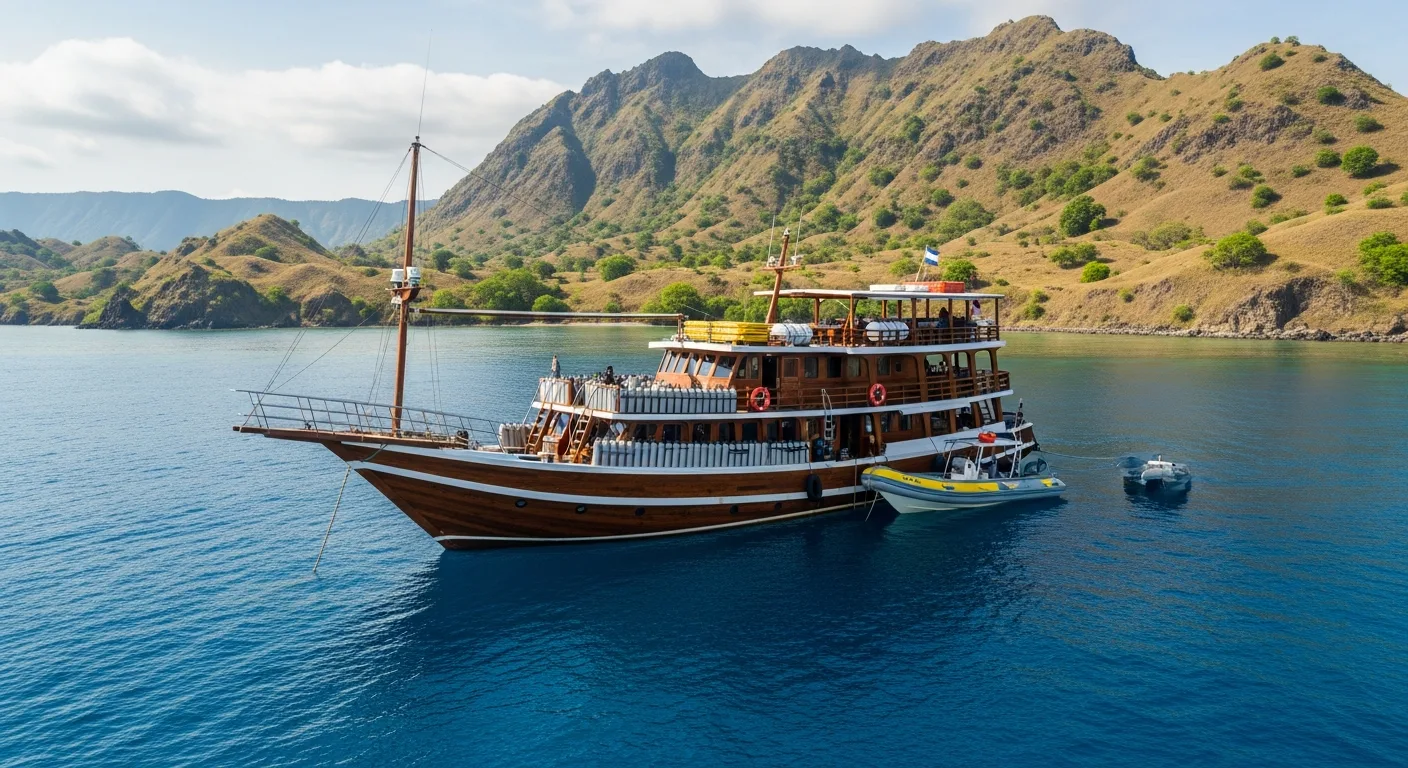
Tatawa is our documented specialist — a 21-meter dive boat running two published programs. The 2-day day-boat format: hotel pickup at 7:30, three dives a day, six dives total, from USD 657 per diver with full equipment, PADI guides at a maximum of four guests per guide, fresh lunch buffet on board. The 3D2N liveaboard format: nine dives including night dives, five cabins, maximum eight divers, from USD 871 per person. Both carry a Bauer compressor, twelve tanks and a 40 hp RIB tender. Open Water certification is the floor; several sites ask for Advanced.
Format two: the dive-ready private charter
Take a whole phinisi and bolt diving onto it. Lalunia, a 27-meter deluxe phinisi with five cabins, charters from USD 2,891.55 for one day (2D1N from USD 3,552.49) and adds diving at USD 151.51 per diver per day — gear and divemaster included, minimum two divers. This is the format for mixed groups: divers dive, snorkelers snorkel the same reefs from the surface, and nobody compromises. Compare whole-boat economics on the liveaboard charter page.
The rest of the dive rail
Three further dive vessels sit in our fleet directory, each specified qualitatively while we complete published-rate verification — pricing on request through the desk:
- Oracle — dive liveaboard built for multi-day park coverage; itineraries quoted per route.
- Neptune One — dive-configured liveaboard suited to group charters; price on request.
- Vagabond — expedition-style dive vessel for longer programs; price on request.
We do not publish numbers we have not verified. When a rate appears on those pages, it will be the operator’s real one.
Which Komodo boat charter is best for diving?
Answer with three questions. All divers, certified, focused on bottom time? Tatawa’s day-boat or 3D2N program — the guide ratio and compressor logistics are already solved. Mixed group of divers and non-divers? Lalunia’s charter-plus-add-on keeps everyone on one boat. Six-plus divers wanting multi-day coverage of both north and south? A dedicated liveaboard charter — Oracle, Neptune One or Vagabond — quoted per route through the desk. Our charter vs dive resort comparison covers the land-based alternative honestly.
Komodo diving season by month
Diving runs year-round; the fleet simply changes which side of the park it works. Broadly: April to November favors the northern and central sites with the calmest surface conditions, while the October-to-April window opens South Komodo’s cooler, richer walls — the same seasonal split our 4D3N south-unlock itinerary is built around. Manta encounters peak in the rainy months around December to February. January and February bring the most weather variability; crews reroute rather than cancel where safety allows. Site-by-site season notes: manta season and best time to sail Komodo.
Can I dive from a Komodo charter boat?
Yes, with two conditions. You must hold at least an Open Water certification — bring the card, boats do check — and the boat must carry dive support: compressor or tank arrangement, divemaster, oxygen kit, tender. That second condition is exactly what our grading verifies before a vessel earns a dive listing. A phinisi with ten rental masks is a snorkel boat, whatever its brochure says; if snorkeling is actually the brief, the snorkeling charter page is the better read.
A dive-charter day, hour by hour
The rhythm on a graded boat is unhurried and deliberate. Wake at 6:00, light breakfast, briefing with the tide table open — the divemaster explains not just the site but why now is the window. First dive around 7:00 while the current is workable, full breakfast after. Second dive late morning at a different profile, lunch and a long surface interval through the heat of the day, third dive mid-afternoon. On liveaboard programs, a night dive replaces sunset drinks for those who want it — Tatawa’s 3D2N schedule includes them as standard. Between dives the boat repositions, which in Komodo doubles as the scenery reel: Padar’s ridgelines, dragon country sliding past the rail.
What our grading checks before a dive listing
Diving is the one category where our curators get pedantic, deliberately. Before a vessel earns a dive listing we verify: compressor make and service records (Tatawa runs a Bauer), tank count against maximum guest load, oxygen kit and first-aid currency, tender engine reliability (a drift dive without a chase boat is not a plan, it is a hope), guide certifications and the real ratio — four divers per guide is our published ceiling, not a marketing line. We also ask the awkward question: when did this crew last abort a dive for conditions? The right answer is recent. Boats that pass, list; boats that shrug, do not.
What is included, what to bring
Published dive programs include tanks, weights, full equipment, guides and meals on board; the Lalunia add-on includes gear and divemaster. Park entrance, activity and dive fees are charged per person by the park authority and are excluded everywhere — figures in the park fees guide. Bring your certification card, logbook, dive insurance details, and your own computer if you own one. Nitrox and specialty requests: ask the desk per vessel rather than assuming.
Matching the route to your logbook
Komodo rewards honesty about experience more than almost any destination we book. Fresh Open Water card and single-digit dives? The sheltered central-park sites deliver turtles, healthy hard coral and the occasional reef shark without testing your buoyancy in current — a fine trip, honestly framed. Twenty to fifty dives with some drift experience? The classic channel sites open up, and this is where Komodo becomes Komodo: fish soup in moving water, mantas on station in season. Beyond that, with Advanced certification and current comfort, the full route map is yours, including the southern walls in their October-to-April window. A graded crew will place you accurately if you state your logbook plainly — and will quietly re-route the day rather than take an optimistic group into a hard tide. Tell the desk your real numbers; the park does not grade on ambition.
Book a dive charter with verified logistics
Tell us your certification level, dive count, dates and group mix, and fleet director Kristo Jehamat’s desk matches you to the right format with an exact quote — including the unglamorous details like tank counts and guide ratios that make or break a dive trip. Rusty after a layoff? Say so — a refresher session on day one is easy to arrange and cheaper than a bad first dive. Structured brief: plan your charter.
Message the fleet desk on WhatsApp — (+62) 811 3823 875 or email [email protected].
Komodo diving charter FAQ
Do I need to be certified to dive in Komodo?
Yes. Open Water is the minimum on every boat we list; current-swept sites like the channel reefs ask for Advanced or equivalent experience. Uncertified travelers can snorkel most of the same sites from the surface.
How much does a Komodo dive charter cost?
Published anchors: from USD 657 per diver for Tatawa’s 2-day, six-dive program; USD 871 for the 3D2N nine-dive liveaboard; private phinisi from USD 2,891.55 per day plus USD 151.51 per diver per day for the dive package on Lalunia. Larger liveaboards are quoted per route.
Are Komodo’s currents dangerous for divers?
They are strong and they are the point — they feed the mantas, sharks and fish schools. Graded boats manage them with tide-timed entries, tight guide ratios, drift protocols and a chase tender. Tell the desk your logged-dive count honestly and the routing will respect it.
Can non-divers join a dive charter?
On a private dive-ready phinisi, yes — snorkelers share the same reefs from the surface while divers go deep. Dedicated dive-boat departures like Tatawa’s are diver-only by design.
Guides for this charter
- Komodo Scuba Diving for Beginners: A 2027 First-Timer’s Guide from Labuan Bajo
- Learn to Dive in Labuan Bajo, Then Explore Komodo: The 2027 Course-to-Charter Path
- Labuan Bajo Boat Charters for Experienced Divers: Currents, Night Dives & North vs South in 2027
- Freediving Komodo: Is a Labuan Bajo Charter Right for Breath-Hold Divers in 2027?