Are Komodo Liveaboards Safe for Kids? A Family Charter Planning Guide
Are Komodo liveaboards safe for kids? Currents, calm snorkel sites, dragon-trek rules, cabin configs, and family itineraries from Labuan Bajo.
21 min read
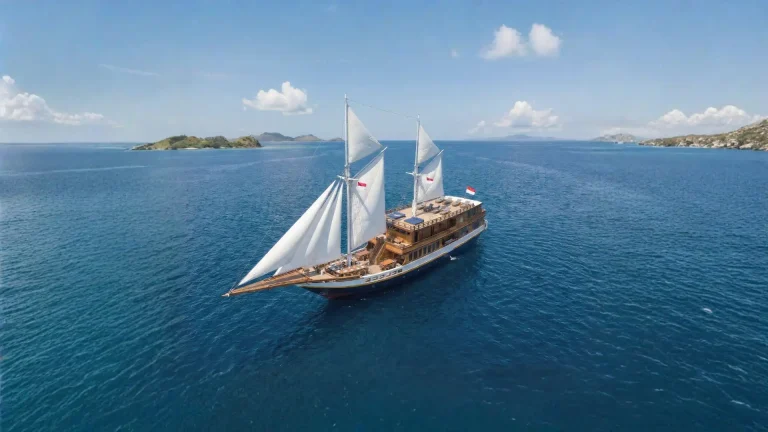
Komodo liveaboards are safe for children when the operator, the itinerary, and the vessel class are matched to the age and temperament of your family. That sentence does real work — because the honest answer is not a blanket yes or no. The waters between Labuan Bajo and Komodo National Park hold some of the strongest tidal currents in Indonesia. Certain dive sites are categorically off-limits for children. But the same route also contains shallow, glass-calm bays where a seven-year-old with a mask can spend an hour watching parrotfish without a current in sight. The difference between an anxious family trip and a genuinely great one is knowing which is which — and designing the days accordingly.
This guide covers the specific questions families ask before booking: which snorkel sites suit beginners and younger swimmers, how dragon treks work with kids present, what life-jacket and supervision norms look like on a private charter, and how cabin configurations actually work on mid-range and luxury phinisi. I write from years of planning itineraries through these waters, and every number here is sourced from verifiable 2026 operator and park data. Where figures may shift, I say so.
Understanding Komodo Currents: What Parents Need to Know
Komodo National Park’s biodiversity — the manta rays, the turtles, the walls of soft coral — exists precisely because the currents rip through the channels between islands and pump cold, nutrient-rich water up from depth. That same oceanographic fact is the reason certain sites need to be kept off the family programme entirely.
The headline sites most operators advertise — Castle Rock, Crystal Rock, Batu Bolong — are advanced drift dives. Currents at these pinnacles regularly exceed 3–4 knots. They are spectacular. They are also completely unsuitable for children or any non-certified adult, and no reputable operator will take a family to these sites for snorkelling. A private charter gives you the advantage of simply routing around them without anyone feeling they are missing out.
Tidal windows matter everywhere in the park, even at calmer sites. Slack tide — the short period between flood and ebb when the water goes still — is when snorkelling conditions flip from uncomfortable to ideal. Your captain and dive guide will track these windows daily. On a private charter, you have the flexibility to wait an extra forty minutes at anchor for the tide to turn. Group boats running fixed departures rarely have that option.
Beginner Snorkeling Spots in Komodo That Work for Children
The good news: the park has more family-friendly water than the adventure-focused marketing suggests. These are the sites I build into family itineraries first.
Kelor Island
A small, steep-sided island roughly 45 to 90 minutes from Labuan Bajo by phinisi. The reef shelf on the leeward side drops gradually into about 5 metres before the wall begins. Visibility is usually good, the current at slack is minimal, and the coral cover is dense enough to keep kids engaged. The short hill trek to the viewpoint is also manageable for children around six and up — it takes about 20 minutes each way and the view across to Komodo is disproportionately rewarding for the effort. Kelor is the standard Day 1 opener on almost every itinerary for good reason: it sets the tone without overwhelming anyone.
Siaba Besar (Turtle Alley)
A large, sheltered bay on the northeastern side of Siaba Island. The sandy bottom runs between 3 and 8 metres across most of the snorkel area, and the site is genuinely famous for green sea turtles that rest on the coral heads and surface so reliably that guides call it Turtle Alley. Current is minimal inside the bay. Children who can handle basic fins-and-mask snorkelling will likely find this the highlight of the trip. It appears on 4D3N and longer itineraries as a natural afternoon stop after the more demanding dragon-island mornings.
Kanawa Island
A compact island about 2 hours from Labuan Bajo with a reef that encircles a calm lagoon on its western side. Depth over the coral table averages 2 to 4 metres — snorkel-friendly even for children who prefer not to go far below the surface. Kanawa is often used as a closing afternoon stop on the run back to Labuan Bajo, which makes it a practical choice for families whose children have tired out by the final day.
Pink Beach (Pantai Merah)
The most photographed beach in the park and a legitimate family snorkel site. The pink-tinted sand comes from fragments of red coral mixed with white, and the reef begins almost at the waterline on the southern end of the beach. Depth on the inner reef table is 1 to 4 metres. Current close to the beach is minimal at the right tidal window. The beach itself is shallow-entry, which matters when you have young children who need to walk in gradually. Pink Beach is within 1 hour of Komodo Island, so it sits naturally on the same day as the dragon trek at Loh Liang.
Karang Makassar (Manta Point) — with caveats
The manta aggregation site in the central park is usable for older children and confident swimmers, but it needs a careful briefing. The mantas here are present year-round (higher hit rates in the plankton-rich December to March period), and the experience of floating above a 3-metre reef manta is genuinely extraordinary. The current at Manta Point runs across the coral plateau rather than into a wall, so the risk profile is different from the channel pinnacles. That said, the guide will assess conditions on the morning. On a private charter, if the current is running too hard for your family, you simply anchor nearby and wait or skip entirely. No agency can guarantee wildlife sightings.
Dragon Treks with Children: What the Rules Actually Say
Komodo dragons are real apex predators. The adults at Loh Liang on Komodo Island and at Loh Buaya on Rinca can reach 3 metres and 70 kilograms. This is not a zoo exhibit. The ranger-guided trek system exists because unguided approaches have resulted in serious injuries historically.
The practical rules for families, as verified by operator practice in 2026:
- Ranger escort is mandatory on all dragon treks — one guide per group of up to five persons at both Loh Buaya (Rinca) and Loh Liang (Komodo). The ranger fee is IDR 200,000 per group (last verified June 2026 via travel-site consensus; verify at booking).
- Children must stay within the ranger’s sight and inside the group formation. No running. Rangers carry a forked staff — this is a practical tool, not a prop, and they know how to use it.
- There is no published minimum age for the treks in the park regulations I have seen. The practical filter is whether a child can follow instructions reliably in a high-stimulus environment. Most operators suggest a minimum of around 8 years as a working guideline, but this is operator preference, not law. A calm, instruction-following seven-year-old will manage the short circuit at Rinca without issue. A distracted ten-year-old who cannot resist running ahead is a different matter.
- Rinca (Loh Buaya) is generally the better choice for families with younger children — it is closer to Labuan Bajo (90 minutes to 2.5 hours versus 4 to 5 hours to Komodo Island), the short circuit is around 1 km, and dragon sightings near the ranger station are highly reliable because the kitchen area concentrates the animals. Komodo Island’s long circuit involves more demanding terrain and heat exposure.
- Timing matters. Dragons are most active in the cooler morning hours — plan treks before 10:00 wherever possible. By midday on a hot dry-season day, both the animals and the children will be seeking shade.
One thing I always tell families: the dragon experience from a distance, standing with a ranger on a wooden platform watching three adults converge on a feeding site, is not diminished by caution. It is heightened by it.
Life Jackets, Supervision, and Onboard Safety Norms
A private phinisi or liveaboard charter is not a public ferry. The safety infrastructure is meaningfully different.
Life jackets are standard equipment on all vessel classes — budget wooden boat through luxury phinisi. SOLAS-rated personal flotation devices in child sizes should be confirmed at booking for any party travelling with children under 12. Reputable operators will have them; ask explicitly so there are no surprises on departure morning.
Crew-to-guest ratio improves dramatically on mid and luxury vessels. A budget wooden boat (2 to 4 cabins, 4 to 10 passengers) typically runs 3 to 6 crew. A mid-range phinisi (3 to 6 cabins, 6 to 14 passengers) has 6 to 10 crew. At the luxury end (5 to 9 cabins, 8 to 18 passengers), crew numbers reach 10 to 21 — at flagship level this approaches a 2:1 crew-to-guest ratio. More crew means more eyes on children during water activities, more hands to assist with boarding from tenders, and a dedicated galley team so the captain and first mate can focus on navigation rather than hospitality.
Tender and dinghy safety is the moment that deserves the most attention. Boarding from the mother boat into a small tender, then from the tender onto a beach or dock, is where children (and adults) most commonly slip or fall in Indonesian charter operations. Brief your children on the protocol: sit, hold the rail, wait for instruction, one person moves at a time. A good crew will physically assist every child. Watch for this during the Day 1 briefing — how the crew handles the first tender boarding tells you a great deal about how the rest of the trip will run.
Night movement on deck: most operators apply a no-children-on-deck-unsupervised-after-dark rule. Enforce it at the cabin level — the combination of unfamiliar vessel, bare feet, and dark water is where accidents happen on boats regardless of age.
Snorkel gear and life jackets are included on all vessel classes (last verified June 2026). Flotation vests for weaker swimmers, separate from standard life jackets, are worth requesting specifically at booking if you have children who are not yet confident swimmers — some operators carry them, some do not as standard.
Cabin Configurations for Families: What Each Vessel Class Offers
This is the detail that determines comfort more than almost any other factor. The question is not just whether there are enough beds — it is how the sleeping arrangements translate to privacy, supervision, and actual rest for parents.
- Budget wooden boat (2–4 cabins, 4–10 passengers)
- Typically bunk-style or narrow doubles, often with shared bathrooms and fan-only cooling or partial AC. Workable for resilient families with older children, but shared bathrooms with young children are a practical friction point on a 3-day trip. Not recommended for families with children under 10 unless budget is the primary constraint.
- Mid-range phinisi (3–6 cabins, 6–14 passengers, USD 2,500–8,000/night implied)
- This is the practical sweet spot for most families. New-build mid boats increasingly offer all-ensuite configurations. Family cabins for four — usually two twin berths that can be configured as a queen plus two singles, or a double lower with two pullman uppers — exist in this class. Individual AC per cabin is standard. A family of four (two adults, two children) booking the whole boat at the 3-cabin level gives you a master cabin for the parents, a dedicated children’s twin cabin, and a spare cabin for a grandparent, nanny, or a second family joining as a group. At 6 cabins, a charter boat for 12 people from Labuan Bajo is fully achievable in this class — six cabins comfortably sleep two per cabin, and the communal dining and deck space on a 25 to 35-metre phinisi handles twelve adults without feeling crowded.
- Luxury phinisi (5–9 cabins, 8–18 passengers, USD 8,000–30,000/night implied)
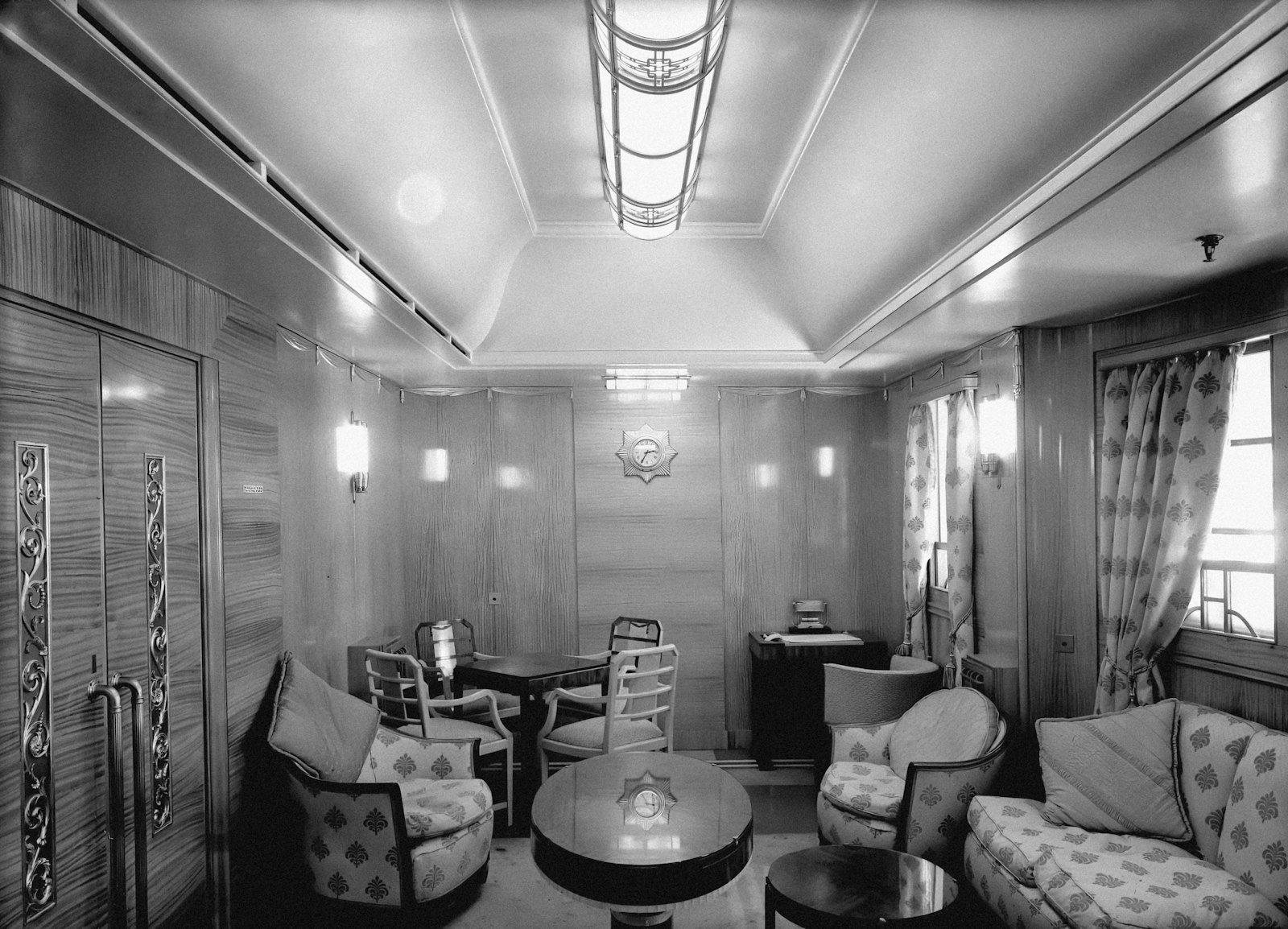
- Full ensuite in every cabin, individual AC, and crew ratios that allow dedicated attention to family needs. Convertible twin cabins (where the two singles push together to form a king) are standard on most vessels in this class. The playable deck space on a 40 to 55-metre luxury phinisi is genuinely substantial — there is room for children to move around freely during transit without being confined below. The inclusion of SUPs and kayaks (near-universal on luxury phinisi) gives older children supervised activity options during anchorage downtime. For multi-generational groups mixing grandparents, parents, and children, the luxury class is the only category where physical accessibility — wider passageways, more stable platforms, better handrails — is reliable.
One worked example: a family of six (two parents, two children aged 9 and 12, two grandparents) on a 4-cabin mid phinisi at USD 4,000 per implied night, for a 3D2N trip from Labuan Bajo. That is 2 nights × USD 4,000 = USD 8,000 for the whole boat, before park fees. Park entrance fees for foreign visitors are IDR 250,000 per person per day (last verified June 2026; verify at booking, not an official decree). At six persons over two active days, that adds roughly IDR 3,000,000 — around USD 180 at current exchange. Ranger fees for two dragon treks at IDR 200,000 per group add a further IDR 400,000. The boat-level total sits around USD 8,300 to 8,500 before fuel adjustments and tips. That is the math at the entry level of the mid class.
Paket Sailing Komodo untuk Keluarga: Recommending the Right Duration
Duration selection is where most family charters go wrong. The pressure to fit more into fewer days — to justify the cost, to match what an adult diving couple would do — consistently produces exhausted, over-stimulated children and parents who spend the last day on deck silently willing the boat back to harbour.
Trip Labuan Bajo 2 Hari 1 Malam: Suitable for Families?
A 2D1N trip from Labuan Bajo into Komodo National Park is the minimum viable family trip, and it works under specific conditions. The itinerary runs tight: depart Labuan Bajo around 08:00, Kelor Island trek and snorkel, Rinca Loh Buaya dragon trek, sail to Kalong Island for the dusk flying-fox exodus, night at anchor, pre-dawn sail to Padar for sunrise, Pink Beach, Karang Makassar manta drift, return to Labuan Bajo by approximately 17:00 on Day 2.
That is achievable with children aged 8 and up who tolerate early mornings and are genuinely interested in the experience. With children under 8, or in a family that travels at a slower pace, the back-to-back early starts on Day 2 (pre-dawn sail, sunrise trek) will likely produce tears before breakfast. In that scenario, I recommend skipping the Padar sunrise on a short trip and anchoring near Pink Beach the night before — you lose the iconic viewpoint but recover two hours of sleep and a much more relaxed morning.
The 2D1N is also the format where a charter boat for 12 people from Labuan Bajo is most often requested for family reunions or multigenerational groups. A mid to large phinisi with 6 cabins sleeping 12 works well at this length — the group is large enough to hire the entire boat comfortably, the itinerary is compressed enough that even members who do not snorkel or trek can enjoy the sailing and anchorage experience.
3D2N: The Family Sweet Spot
The 3D2N signature loop is the format I recommend first for most families with children. The pacing is markedly better — two anchorage nights mean one unhurried morning is structurally available, and the route covers both dragon islands (Rinca and Komodo), Pink Beach, Padar sunrise, and Karang Makassar mantas without feeling like a checklist. The second anchorage night at Gili Lawa Darat bay is genuinely calm, with a short sunset ridge hike that children around 7 and up manage easily. Charter math: 2 nights × USD 3,000–30,000 per night depending on vessel class = USD 6,000–60,000 for the whole boat, before park fees (last verified June 2026).
4D3N and Beyond: The Flex-Day Advantage
Four nights or more is where family charters genuinely breathe. The 4D3N format introduces what I think of as the flex-day buffer — a day where the schedule is deliberately loose and determined the evening before by what the family actually wants rather than by what the itinerary requires. On a family trip this might mean a second morning at Pink Beach because the children found the snorkelling there exceptional. It might mean an anchor day for the grandparents to read on deck while the older children kayak. It is the single biggest comfort upgrade between a 3D2N and a longer charter, and families who have done both consistently report the difference as transformative.
On 6D5N and longer formats, the 9D8N charter explicitly builds the flex day into the itinerary framework — the guest calls the plan the evening before Day 7. For multigenerational groups mixing ages and interests, this is not a luxury. It is a structural necessity. Weather can also absorb into that buffer: Komodo’s park authority (KSOP Class III, Labuan Bajo) can suspend sailing permits during BMKG extreme-weather warnings, a reality documented in both 2024 and late 2025. A flex day gives the itinerary room to respond without cutting anything the family was looking forward to.
Ready to design the right duration for your family? Design your charter with our concierge team — or reach us directly on WhatsApp for a no-pressure conversation about what your particular family needs.
Operator Minimum-Age Recommendations and What to Ask Before Booking
There is no single industry-wide minimum age for Komodo charter guests. What exists is a patchwork of operator preferences, insurance considerations, and practical experience.
The questions worth asking any operator at inquiry stage:
- What is your minimum-age recommendation or policy for guests?
- Do you carry child-size SOLAS life jackets and flotation vests?
- Can you configure twin or triple-berth family cabins and confirm ensuite bathrooms?
- What is the crew count for our specific vessel, and will any crew member have dedicated first-aid training?
- Do you carry a first-aid kit suitable for paediatric emergencies? (Medical evacuation from the park back to Labuan Bajo takes time — basic stabilisation capacity matters.)
- What is your protocol if a child becomes seasick during an overnight passage?
- Can you adjust the itinerary in real time if a child is unwell or the conditions change?
An operator who answers these questions clearly and without defensiveness is one who has taken families before and thought through what they need. An operator who deflects or gives vague reassurances is a risk.
On the question of seasickness: Komodo’s central channels can produce a short, steep chop, particularly on the Padar leg in July and August when the southeast trade winds are running. Most children who are prone to motion sickness will find the longer legs (2 to 4 hours of open water) more challenging than the short hops. Discuss this with your paediatrician before departure; standard seasickness medications approved for children are widely available in Labuan Bajo pharmacy.
Season Notes for Family Charters
The dry season, roughly April through October and into November, is the conventional recommendation for family travel: calmer seas, lower rainfall, better visibility. July and August are the busiest months and bring the southeast trade winds, which means choppier conditions on exposed legs and a livelier night at anchor on some headings. The north and central park route — Kelor, Rinca, Kalong, Padar, Pink Beach, Gili Lawa — remains perfectly manageable in these months for families on a mid or larger vessel. The south Komodo routes (Horseshoe Bay, Manta Alley, Cannibal Rock) are genuinely rough under the July to August trades and are not the family pick in those months.
The wet season, December through March, brings heavier rain and the possibility of short squalls. January and February can see the roughest sea states. That said, the northwest monsoon that drives the wet season also calms the southern coast — south Komodo is its best season for manta diving in those months. For a family where the adults dive seriously and the children snorkel at the central sites, a December to January trip timed outside the peak Christmas and New Year surcharge window can offer both worlds. The caveat: harbour authority suspension of sailing permits during extreme-weather warnings is documented in these months. Build the flex day into your itinerary explicitly.
No operator or charter planner — including this one — can guarantee weather or wildlife. The candid advice is to book a vessel class and itinerary length that gives you room to adapt, then let the conditions determine the daily programme rather than fighting them.
When you are ready to start building the right family itinerary, our concierge team at our charter brief form or on WhatsApp will walk through vessel class, cabin configuration, and pacing — no obligation, just specifics. We are the planning arm within the Juara Holding Group family of brands; if you proceed with a charter operator through our recommendation, they may pay us a referral fee at no additional cost to you.
Family Charter at a Glance
| Factor | Budget wooden boat | Mid-range phinisi | Luxury phinisi |
|---|---|---|---|
| Implied per-night rate (whole boat) | ~USD 1,200–2,500 | ~USD 2,500–8,000 | ~USD 8,000–30,000 |
| Cabins / max guests | 2–4 / 4–10 pax | 3–6 / 6–14 pax | 5–9 / 8–18 pax |
| Ensuite bathrooms | Not standard | Increasingly standard on new builds | Standard, all cabins |
| Individual AC per cabin | Partial / fan only | Standard | Standard |
| Family cabin for 4 (twin + twin / pullman) | Rare | Available on select vessels | Standard configuration |
| Crew count | 3–6 | 6–10 | 10–21+ |
| Child life jackets | Confirm at booking | Confirm at booking | Standard |
| Water toys (SUP / kayak) | Unlikely | Occasional | Near-universal |
| Recommended minimum child age | 10+ (operator-specific) | 6–8+ (operator-specific) | 6+ (operator-specific) |
| Group of 12 passengers feasible? | At upper size limit | Yes — 6-cabin mid boat | Yes — comfortably |
All figures last verified June 2026. Per-night rates are implied from package math; the market quotes per trip. Confirm specifications with your operator at booking.
Frequently Asked Questions
What is the minimum age for a Komodo liveaboard charter?
There is no park-mandated minimum age for non-diving guests on a private charter from Labuan Bajo into Komodo National Park. Operators typically recommend 6 to 8 years as a practical minimum for the standard loop — this reflects the early mornings, tender boarding, and the need to follow ranger instructions on dragon treks. Some operators set their own policy at 6, others at 8 or 10. Ask your specific vessel operator at inquiry and confirm what child-size safety equipment they carry.
Which are the best beginner snorkeling spots in Komodo for families?
Kelor Island, Siaba Besar (Turtle Alley), Kanawa Island, and the inner reef at Pink Beach are the four sites I recommend building family itineraries around. All have gentle entry, minimal current at the right tidal window, and coral depth in the 2 to 8-metre range that works for snorkellers who are not strong swimmers. Karang Makassar (Manta Point) is an option for confident older children and adults, conditions permitting — manta encounters here are year-round, though your guide will assess on the day and the plan stays flexible.
Can I book a charter boat for 12 people from Labuan Bajo for a family reunion?
Yes. A mid-range phinisi with 6 cabins sleeping 12 passengers is a well-matched vessel for groups of this size departing Labuan Bajo for Komodo National Park. At an implied rate of roughly USD 3,000–8,000 per night for a boat in this range, a 3D2N trip works out to approximately USD 6,000–16,000 for the whole boat before park fees and ranger costs. Confirm cabin configuration — you want individual ensuite bathrooms if the group includes multiple families or grandparents — and ask whether the vessel carries child life jackets if children are in the party. All figures last verified June 2026.
Is a 2-night trip from Labuan Bajo suitable for families with young children?
A 2D1N trip from Labuan Bajo is the entry point and is workable for children aged 8 and up who travel without major issues. The constraint is pacing: the itinerary requires a pre-dawn sail on Day 2 for the Padar sunrise, which is a very early start after one night at anchor. Families with children under 8, or anyone who needs a slower rhythm, will find 3D2N significantly more comfortable — the extra night creates an unhurried morning that a 2D1N cannot accommodate. If the shorter trip is the only option, consider skipping the Padar sunrise and anchoring near Pink Beach the night before instead.
How do dragon treks work with children on Komodo National Park tours?
All treks at Loh Buaya (Rinca Island) and Loh Liang (Komodo Island) require a licensed ranger escort, with one ranger per group of up to five persons. The ranger fee is IDR 200,000 per group (last verified June 2026; verify at booking). Children must stay within the group formation and follow the ranger’s instructions precisely — no running, no straying from the path, no sudden movements near the dragons. For families with younger children, Rinca (Loh Buaya) is the preferred site: it is closer to Labuan Bajo, the short circuit is compact, and dragon sightings near the ranger station are highly reliable. Plan treks before 10:00 for cooler temperatures and more active dragons.