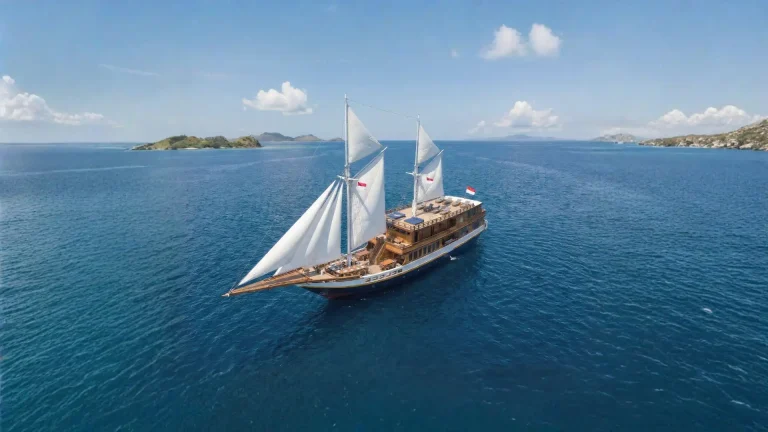
Komodo 2D1N Itinerary: What One Night at Anchor Actually Buys You
Komodo 2D1N itinerary: hour-by-hour guide to Kelor, Rinca dragons, Kalong bat sunset, Padar sunrise & manta drift. Charter math & season tips.
16 min read
A Komodo 2D1N itinerary is the shortest private charter route that genuinely earns the name “expedition” — one night at anchor inside Komodo National Park, departing Labuan Bajo in the morning and returning the following late afternoon with Padar, dragons, bats, and mantas ticked. That is the honest summary. The longer answer is that the 2 day 1 night Komodo sailing itinerary is a precisely engineered sequence: miss one departure window and the whole domino falls. This guide walks you through every hour, explains what you will and will not see, and gives you the charter math so nothing comes as a surprise.
Why Duration Shapes Everything in Komodo National Park
Komodo National Park sits roughly 40–90 nautical miles east of Labuan Bajo depending on your anchorage. A phinisi or sailing charter running at 7–10 knots needs time — and time is the one resource the 2D1N format has least of. That is not a flaw. It is a constraint that sharpens the route into something clean and repeatable.
The classic unlock ladder works like this: 2D1N gives you the core triangle (Kelor – Rinca – Kalong – Padar – Manta Point). Add a night and you reach both dragon islands plus the north ridges. Add two nights and the south coast — Horseshoe Bay, Manta Alley, Cannibal Rock — opens up, but only in the right season. A 2D1N itinerary does none of that southern work. It does the core beautifully and honestly.
Guests flying into Labuan Bajo on a tight Bali-Komodo-Bali trip, couples wanting an anniversary surprise, or anyone testing a longer charter before committing — this is the right duration. Serious divers should know upfront: no time for a proper dive rotation at this length. Snorkelling is excellent; scuba is rushed to impractical.
The Hour-by-Hour 2D1N Komodo National Park Tour Itinerary
Day 1: Labuan Bajo to Kalong Island at Dusk
08:00 — Depart Labuan Bajo. Boarding happens the night before or early that morning depending on vessel class. The 08:00 departure is not a suggestion — it is the pin that holds the whole day in place. Kelor Island is roughly 45–90 minutes out; a late start steals the cool morning light and compresses everything that follows.
09:30–11:00 — Kelor Island. The first stop on almost every best 2D1N Komodo boat tour. Kelor is a small knuckle of hill rising from turquoise water, and the trail to the top takes 15–20 minutes on a moderate path. The view from the ridge — Labuan Bajo’s harbour visible to the west, Rinca’s silhouette to the east, the park’s fractured coastline in every direction — is the calibrating image for the whole trip. From below the hill, the house reef is shallow and clear, good for a first snorkel to shake off the early start.
11:30–14:00 — Sail to Rinca, Loh Buaya ranger station. The crossing to Rinca takes around one to one and a half hours. Loh Buaya is the only ranger-guided dragon trekking point on Rinca and the closer of the two dragon islands to Labuan Bajo — a deliberate routing choice on the 2D1N, since Komodo Island’s Loh Liang station is another 90 minutes further east and there simply is not time for both. The ranger-guided walk takes 30–60 minutes. You will almost certainly see Komodo dragons; encounters are not guaranteed by any operator and wildlife does what wildlife does, but the station’s kitchen area is a reliable gathering point for larger individuals.
One dragon island only. That is the 2D1N trade-off stated plainly. Guests wanting both Rinca and Komodo Island need at minimum three days.
14:30–17:00 — Sail to Kalong Island, anchor for the night. The afternoon leg brings you to Kalong Island, sometimes called Bat Island, sitting in a channel north of Rinca. The sail is roughly an hour. This is where the boat anchors for the night.
The Kalong Bat Flight: Timing and What to Expect
The single most misunderstood event on any Komodo 2D1N liveaboard route is the bat exodus at Kalong. Here is what actually happens.
Kalong Island hosts one of the largest colonies of Pteropus flying foxes in eastern Indonesia — fruit bats with wingspans reaching up to 1.5 metres. As sunset approaches, they stream from the mangroves in their thousands, a sustained river of silhouettes against the sky that can last 20–30 minutes.
What time do the bats fly at Kalong Island? The exodus begins in the 15–20 minutes around local sunset, which shifts across the year in Labuan Bajo from roughly 17:45 in January to 18:15 in June (last verified June 2026). The precise timing is never guaranteed — cloud cover, wind, and seasonal variation all affect it. What operators and guides consistently report is a window bracketing civil twilight: plan to be at anchor by at least 30 minutes before predicted sunset. The bats do not wait.
For Komodo bat island sunset Kalong watching from deck, a wide-angle setting on your camera outperforms telephoto: the exodus is vast and diffuse, not a single subject. Dinner is typically served at anchor under the stars after the flight, with the mangroves settling back into silence.
Night at Anchor
The overnight at Kalong is the moment the trip changes register. The engines are off. The park is around you. On a mid-range or luxury phinisi, the crew serves a full dinner — standard on all private charter classes, full-board with a dedicated cook — and the sky over eastern Flores is dark enough for genuine stargazing. Budget vessels are quieter; larger, newer boats carry kayaks, SUPs, or, at the flagship end, more substantial water toys. Whatever the vessel class, the experience of sleeping at anchor inside Komodo National Park is qualitatively different from a resort night.
Day 2: Padar Sunrise, Pink Beach, Manta Point
04:00–04:30 — Pre-dawn departure from Kalong. This is the mandatory early start. Padar Island’s viewpoint is one and a half to two hours from Kalong by phinisi. To reach the summit for sunrise, the boat needs to be moving before 04:30. Guests who are not morning people will find this uncomfortable. That is the honest truth of the 2D1N Komodo itinerary. The alternative — sleeping in and arriving at Padar for the mid-morning light — is a different, lesser experience.
06:00–07:30 — Padar Island sunrise trek. The climb to Padar’s main viewpoint takes 45–60 minutes at a moderate pace on a stepped trail. Rangers are stationed at the trailhead; a group trekking permit applies (IDR 150,000 per group as of last verified June 2026 — verify at booking, as park fee schedules change). From the ridge, three bays open in different directions, each a distinct shade depending on light: the north bay pale aquamarine, the south bay darker, the far east bay curling out of sight. Dawn hits the ridgeline before it reaches the water below. This is the image people come for, and on the 2D1N route you reach it right as the sky transitions.
08:00–09:30 — Pink Beach. The sail from Padar to Pink Beach takes roughly an hour. Pink Beach — actually two beaches of the same name on Komodo Island’s eastern coast — gets its colour from fragments of red coral mixed into the sand. The effect is subtler than photographs suggest; it is most visible when wet. The reef immediately offshore is a genuine snorkel site with good coral cover and fish density. Allow an hour here; it is a natural decompression after the pre-dawn effort.
10:30–12:00 — Karang Makassar, the manta drift. Karang Makassar, commonly called Manta Point, sits roughly 30–45 minutes from Pink Beach. This is the year-round manta site inside the park — mantas at Karang Makassar are present throughout the year, with higher sighting frequencies in the plankton-rich months of December through March, but reliable encounters are documented across all seasons. The technique is drifting: the current carries snorkellers over the cleaning station while oceanic and reef mantas circle below. No guarantees; some days one manta, some days twelve. The site itself — a mid-channel seamount with strong current and visibility that swings between 10 and 25 metres — is worth the stop regardless.
12:30–13:30 — Siaba or Kanawa snorkel stop. Depending on remaining time and the group’s energy, the route typically includes one final snorkel at Siaba Besar (good for turtles) or Kanawa Island before the run home. This is the flexible segment — the one a captain will shorten if the morning ran long, or extend if conditions are perfect.
14:00–17:00 — Sail home to Labuan Bajo. The return leg is roughly two and a half to three and a half hours. Alongside in Labuan Bajo by 16:30–17:00, in time for a shower and dinner ashore if wanted.
What the 2D1N Komodo Charter Cannot Give You
Transparency about trade-offs is more useful than a brochure. The 2D1N Komodo National Park tour itinerary does not include:
- Komodo Island (Loh Liang) dragon trek. Rinca is the dragon island on this route. Komodo Island requires staying further east, which the schedule does not allow.
- South Komodo access. Horseshoe Bay, Cannibal Rock, Manta Alley, and Padar’s southern sites are only accessible from 4D3N upwards, and only in the October–April season when the NW monsoon calms the south coast.
- North Komodo dive sites. Castle Rock, Crystal Rock, and Gili Lawa Darat’s ridge walk require an overnight further north — that is the 3D2N format.
- Scuba diving rotation. One or two dives could theoretically be squeezed in, but there is no time for the site variety or number of dives that makes a Komodo diving trip worthwhile. The 2D1N is a snorkelling charter.
- A relaxed pace. Every morning involves an early start or an active afternoon. That is the density of the route. Guests who want long lazy mornings at anchor should consider 5D4N and above.
Season Notes for the 2D1N Route
The 2D1N runs year-round from Labuan Bajo into Komodo National Park. That said, conditions vary.
The dry season (April–October) brings calmer seas on the core triangle and good visibility at Manta Point. July and August are the busiest months and bring stronger southeast trade winds — expect some chop on the Padar leg and a livelier night at Kalong anchor. The park is at its most visually dramatic in the dry season: parched amber hills, sharp horizons.
The wet season (December–March) brings higher manta-sighting rates at Karang Makassar, softer green-grey light, and occasional afternoon rain. January and February are the roughest months; the 2D1N remains operable but captains monitor BMKG forecasts and the harbourmaster’s sailing permit (SPB) system closely. Labuan Bajo port has historical precedent for suspending permits during extreme weather warnings — a rare but real contingency that charter agreements should address.
The Kalong bat flight happens year-round. The bats do not migrate.
Vessel Classes for a 2D1N Charter
The route is the same regardless of which vessel class you charter. The experience varies considerably.
| Vessel class | Typical spec | Implied per-night rate (last verified June 2026) | 2D1N total (1 night) |
|---|---|---|---|
| Budget wooden boat / entry phinisi | 2–4 cabins, 4–10 guests, 15–22m, fan or partial AC, shared bathrooms possible | ~USD 1,200–2,500/night (implied from package pricing) | ~USD 1,200–2,500 |
| Mid-range phinisi | 3–6 cabins, 6–14 guests, 22–35m, AC standard, ensuite mix | ~USD 2,500–8,000/night | ~USD 2,500–8,000 |
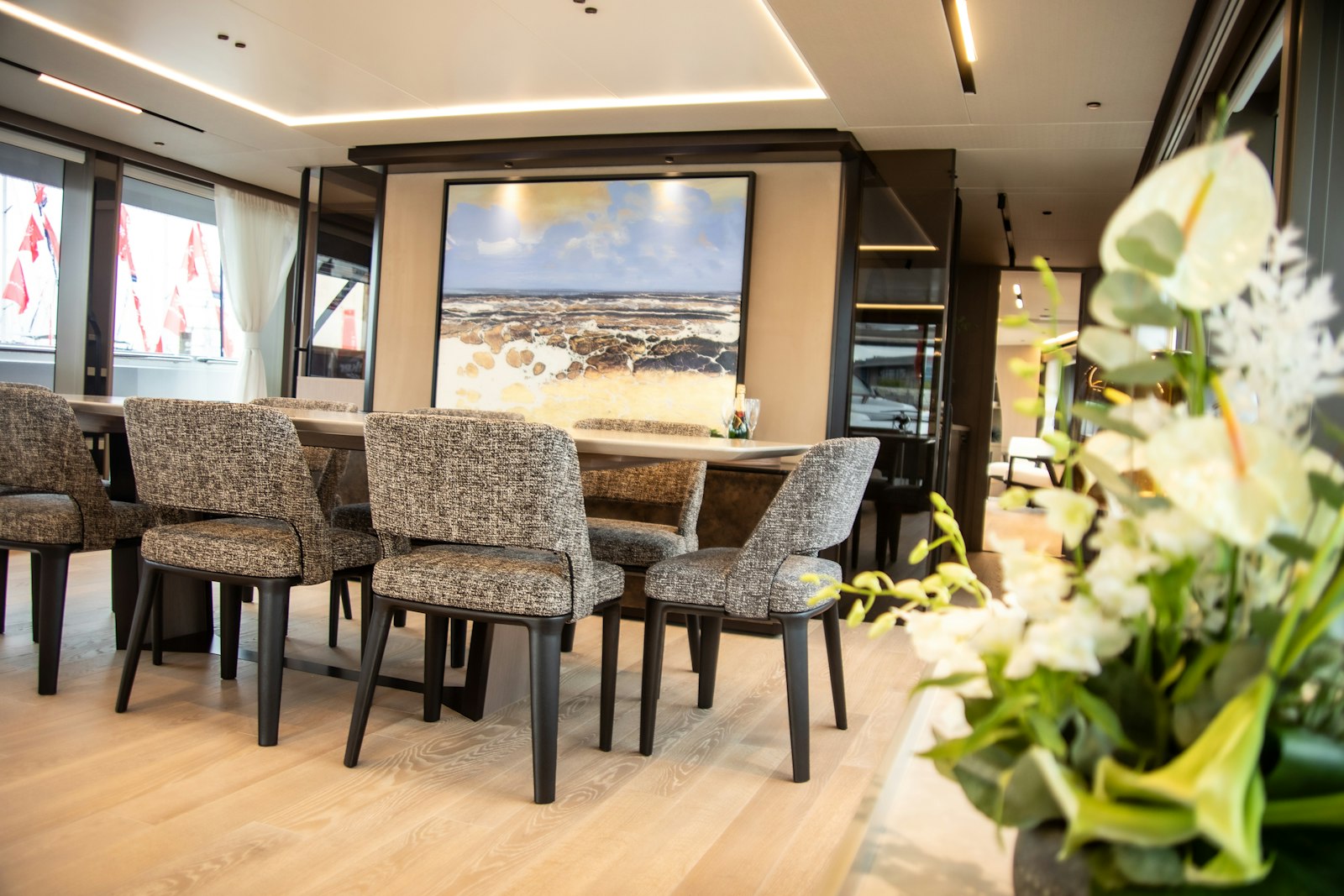
| Luxury phinisi | 5–9 cabins, 8–18 guests, 30–65m, full AC, all-ensuite, large crew | ~USD 8,000–30,000/night | ~USD 8,000–30,000 |
These are implied per-night figures derived from per-trip package pricing — the charter market typically quotes by trip, not by night. Park fees for foreign visitors are additional at IDR 250,000 per person per day (verify at booking, last verified June 2026). Ranger/guide fees, harbour fees, and any diving surcharges are typically excluded from budget and mid-range charters and increasingly bundled into luxury all-inclusive rates — confirm the basis of any quote before signing.
Fuel is generally included for the standard Labuan Bajo–Komodo loop on all-inclusive rates. Alcohol is almost always charged separately.
A worked example: a group of four sharing a mid-range phinisi at USD 4,000/night for 1 night comes to USD 4,000 before park fees and incidentals. That is USD 1,000 per person for the charter component alone — a useful number to plan around.
The Indonesia Juara concierge team — our sister brand within Juara Holding Group, disclosed — handles the planning and can match your group size, budget, and preferred vessel class to the right boat. No one can pay to change what we publish here; if you use our free guidance and proceed with a partner operator, they may pay us a referral fee at no extra cost to you. Ready to map out your trip? Design your charter using our brief form, or reach the team via WhatsApp for a faster conversation.
Is the 2D1N Right for You?
The 2 day 1 night Komodo sailing itinerary suits a specific type of traveller. If any of these match, it is probably your duration:
- You are already in Bali or Flores and want a two-day excursion — a Komodo island tour 2 days 1 night from Bali works logistically (fly Bali–Labuan Bajo, charter, fly back, total four days including travel).
- You are celebrating something — an anniversary, a birthday — and want a private boat experience without committing to a week afloat.
- You have done Komodo before on a group tour and want to experience the same sites privately, at your own pace, with your own crew.
- You are scoping a longer charter: the 2D1N is a reliable proof-of-concept for guests who want to test whether a week at sea is the right format before committing to a 7D6N or 10D9N expedition.
It does not suit guests who want a slow, unhurried pace; families where young children need predictable sleep schedules (the 04:00 start is genuinely disruptive); or divers who came specifically to log dives at Castle Rock, Manta Alley, or the south-coast sites.
Charter Math: 1 Night x USD 3,000–30,000
The 2D1N charter cost is one night multiplied by your vessel tier. The verified market range sits at USD 3,000–30,000 per night for private whole-boat charters from Labuan Bajo into Komodo National Park (last verified June 2026). Budget and entry-class boats come in below that range at roughly USD 1,200–2,500 implied per night.
Peak season (July–August and Christmas–New Year) carries surcharges on most vessel classes. Shorter charters also tend to cost more per night than longer ones — operators absorb fixed crew and provisioning costs across fewer nights. If the per-night figure feels steep for one night, the 3D2N format often delivers better value per day while adding the Komodo Island dragon trek, Gili Lawa Darat’s sunset ridge, and a considerably less pressured rhythm.
When comparing quotes, confirm: what is included (park fees, fuel, meals, alcohol, equipment); what the cancellation policy is; and whether the rate is all-in or plus taxes. Indonesian charter operators sometimes quote plus 11–12% VAT.
Practical Notes Before You Go
Komodo National Park requires advance booking through the SiORA online reservation system (Sistem Informasi Online Reservasi Wisata Alam) — walk-in tickets were discontinued and an approximate daily visitor cap applies. Your operator handles vessel permits; confirm this is in place before departure.
Labuan Bajo airport (LBJ) has direct domestic connections from Bali’s Ngurah Rai airport, multiple times daily — the logical gateway for a Komodo island tour 2 days 1 night from Bali. There is no scheduled international service as of 2026; connect via Bali or Jakarta.
Pack light: one dry bag, one reef-safe sunscreen, a fleece or light layer for the pre-dawn Padar departure, and footwear that can get wet. The boat provides snorkel gear and life jackets. Scuba equipment is typically extra even when tanks are aboard.
Frequently Asked Questions
What can you actually see on a 2 day 1 night Komodo trip?
On a well-run 2D1N itinerary from Labuan Bajo you will visit Kelor Island (hill trek and snorkel), Rinca Island Loh Buaya (ranger-guided Komodo dragon walk), Kalong Island (the flying-fox bat exodus at sunset, overnight at anchor), Padar Island (pre-dawn trek to the viewpoint for sunrise), Pink Beach (sand and snorkel), and Karang Makassar Manta Point (manta drift). That is one dragon island, one sunrise viewpoint, one bat-flight, one manta site, and two snorkel stops in 36 hours. What you will not see: Komodo Island’s Loh Liang station, south Komodo dive sites, or north pinnacles like Castle Rock.
What time do the bats fly at Kalong Island?
The flying-fox exodus at Kalong Island begins in the roughly 15–20 minutes surrounding local sunset. Labuan Bajo sunset times range from approximately 17:45 in January to 18:15 in June (last verified June 2026). The exact timing shifts with the season and is never guaranteed — cloud cover and wind affect it. Arrive at anchor at least 30 minutes before predicted sunset. The spectacle typically continues for 20–30 minutes as bats stream from the mangroves in large numbers.
How much does a 2D1N Komodo charter cost?
Budget and entry wooden boats run at roughly USD 1,200–2,500 implied per night for the whole boat. Mid-range phinisi sit at approximately USD 2,500–8,000 per night. Luxury phinisi and motor yachts range from around USD 8,000 to USD 30,000 per night — this is the verified market bracket, last verified June 2026. Add park entrance fees per person (IDR 250,000/day for foreign visitors as of last verified June 2026), ranger fees, harbour fees, and any diving surcharges, which are typically excluded from mid-range and budget quotes. Confirm the all-in basis with any operator before committing.
Can I do a Komodo 2D1N from Bali?
Yes, logistically. Fly Bali (DPS) to Labuan Bajo (LBJ) on any of the multiple daily domestic services — flight time is approximately one hour. Board the charter the same day or evening. Return to Labuan Bajo on Day 2 by late afternoon, fly back to Bali the same evening or next morning. Total trip including travel days is three to four days. This is one of the most common uses of the 2D1N format. Charter planning works the same way regardless of where you are arriving from.
Is the Padar sunrise worth the 04:00 start?
For most guests, unambiguously yes — but it is worth knowing what you are agreeing to. The pre-dawn sail from Kalong to Padar takes one and a half to two hours, which means the alarm on a phinisi at anchor goes off around 04:00. The trail to the Padar viewpoint takes 45–60 minutes. Arriving at the ridge as the first light separates the three bays is qualitatively different from the mid-morning experience when day-trip speedboats start arriving. If early mornings are genuinely difficult for your group, that is worth raising with your charter planner — the 3D2N route reaches Padar from a closer overnight and allows a slightly more civilised departure time.