5D4N Komodo Charter — The Full Figure-8, North and South in One Pass
5D4N liveaboard Komodo from Labuan Bajo: full figure-8 north and south in one pass. Day-by-day itinerary, per-night pricing, season guide.
16 min read
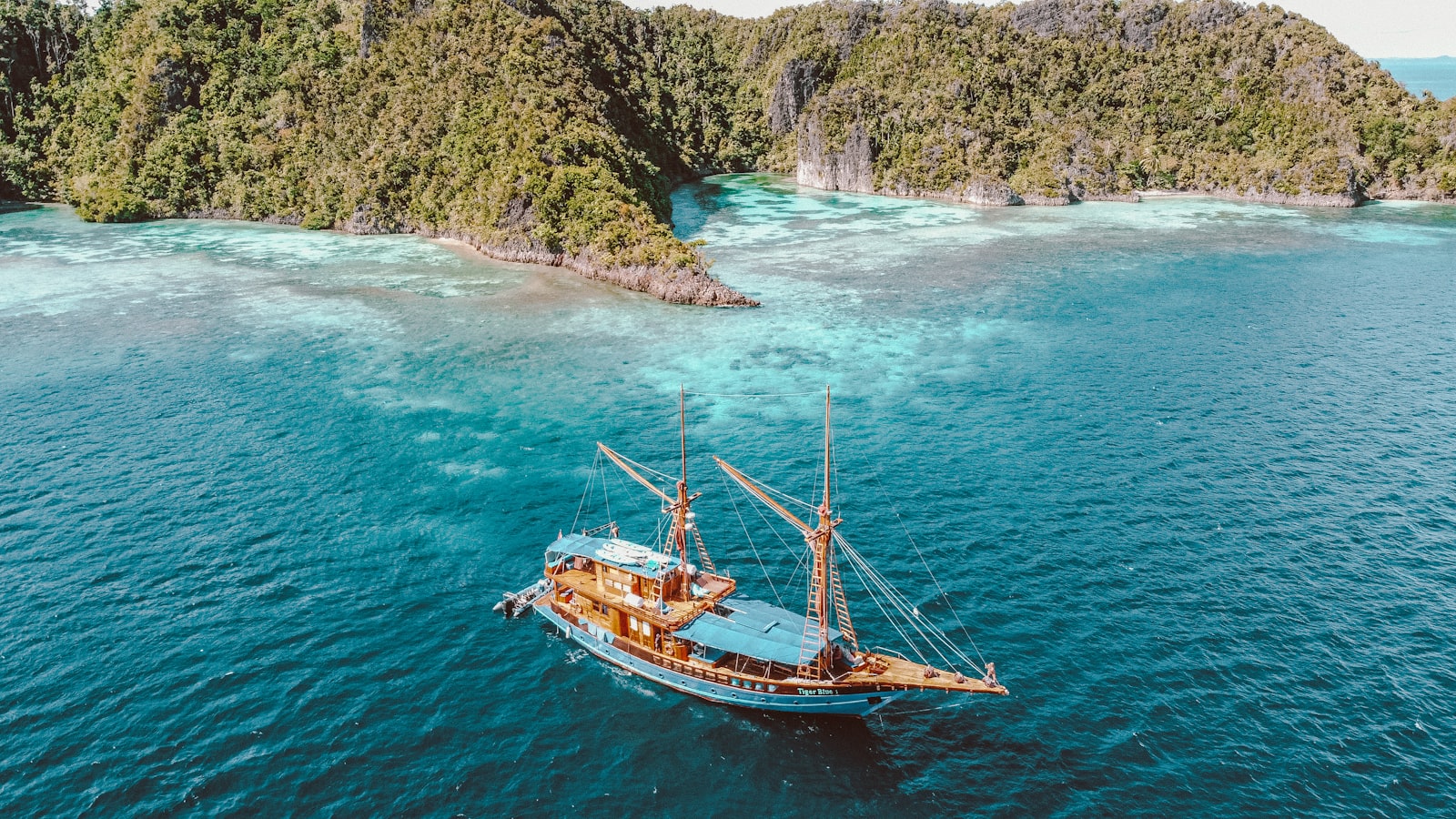
A 5D4N liveaboard Komodo from Labuan Bajo is the shortest charter on which the north and south of Komodo National Park can both be covered properly, without backtracking and without cutting a single site short. Four nights and five days is enough to trace a complete figure-8 through the park — down along Rinca and Padar into the sheltered southern bays, then back north through the dragon forests and the current-swept pinnacles, finishing on the tidal sandbar at Taka Makassar before the run home. Everything fits. Nothing gets crammed.
This is also the duration where the October-to-April season genuinely changes the product. The south Komodo coast — Horseshoe Bay, Yellow Wall, Manta Alley — only opens up under the northwest monsoon. On a 3D2N or 4D3N charter there is rarely enough time to reach it and return. At five days, you can spend two full nights in the south, do the sites at dawn when the water is clearest, and still complete the classic northern circuit before disembarking. Book the season, not just the boat.
What the 5 Day Komodo Charter Actually Covers
The route logic is deliberate. You leave Labuan Bajo and arc south-east, threading past Kelor and Rinca on Day 1 before anchoring at Kalong Island for the dusk bat flight. Day 2 begins before sunrise — a short overnight sail positions the boat beneath Padar for the morning light. From there, instead of turning straight north as shorter itineraries do, the phinisi or yacht continues south around Padar’s lower headlands into Horseshoe Bay. That is the unlock. Two nights in the south (anchorages at Horseshoe Bay and then Loh Sera or Torpedo Bay) give the itinerary its weight: Cannibal Rock, Yellow Wall at dawn, and a proper run to Manta Alley before the wind picks up.
Day 4 moves north. The dragons at Loh Liang on Komodo Island are best visited in the cooler morning, so the timing is good. The afternoon push takes the boat up to Gili Lawa Darat and its sunset ridge — the one climb that rewards with a 270-degree view of the park at golden hour. Day 5 is the return leg, pulling the loop closed at Karang Makassar for the manta drift, then a champagne stop on the Taka Makassar sandbar before Sebayur and the run back to Labuan Bajo harbour.
Divers get a realistic count of 12 to 16 dives across three to four sessions per day, spanning every major biotope in the park. Photographers get every light condition — Padar sunrise, south-coast noon blue, Gili Lawa sunset, dawn diving in flat calm. Honeymoon couples get one anchorage per night and zero nights at sea underway. That combination does not exist at four days or fewer.
Day-by-Day Itinerary: The Full Figure-8
Day 1 — Labuan Bajo to Rinca to Kalong
Departure from Labuan Bajo at 08:00. The first stop, roughly 45 to 90 minutes out, is Kelor Island — a short hill trek on loose red earth with a reef below that earns its reputation as the best quick-start snorkel in the park. From Kelor the course sets for Rinca. The ranger-guided dragon walk at Loh Buaya takes about an hour; keep a ranger between you and the undergrowth, and do not mistake the dragons’ stillness for disinterest. Late afternoon, the boat moves to Kalong Island in time for the dusk flying-fox exodus — tens of thousands of fruit bats launching from the trees against a darkening sky. Dinner at anchor. The night passage to Padar begins after dark, positioning the boat for the morning.
Day 2 — Padar Sunrise into Horseshoe Bay (Oct–Apr)
The pre-dawn sail from Kalong to Padar takes 1.5 to 2 hours. The trek up Padar’s main ridge — 45 to 60 minutes at a moderate pace — earns the view: three bays in different colours, the park laid out below. This works because you slept on the boat and arrived before any day-trip crowds came by fast boat from Labuan Bajo. After the descent, Pink Beach is a brief swim and snorkel stop before the itinerary diverges from shorter routes.
From Padar, the phinisi rounds south — a 2 to 3 hour passage in settled October-to-April conditions — into Horseshoe Bay (Loh Dasami) on Rinca’s southern shore. This is where the itinerary earns its price difference over a 4D3N. Cannibal Rock is one of the most species-rich dive and snorkel sites in the park: schooling fish, reef sharks, hard coral formations that slope into cooler, current-washed water. Wild dragons wander the beach at dusk without ranger intervention; the anchorage is sheltered and usually quiet. Anchor overnight.
Day 3 — Yellow Wall at Dawn, Manta Alley, North to Pink Beach
This is the south coast at full depth. Yellow Wall — a hard-coral wall on the south Rinca coast — dives best in the hour after first light, when visibility is glassy and the current has not yet built. From there, the boat runs west to Manta Alley (Torpedo Bay), roughly three hours in calm water. Manta Alley’s oceanic mantas concentrate here during the northwest-monsoon season, driven by plankton upwellings from the south. Karang Makassar, the manta site on the northern side of the park, has mantas essentially year-round; Manta Alley is different — it peaks in the wet season, roughly November through April, which is exactly when this route is viable. Two are very different experiences; this itinerary delivers both.
By mid-afternoon, the boat is underway north — 3 to 4 hours to Pink Beach on Komodo Island’s eastern shore. The anchor goes down in the late afternoon light. Dinner on board with the park quieter now than it was at noon.
Day 4 — Komodo Dragon Trek, Gili Lawa, Castle and Crystal Rock
The coolest part of the morning is the best time to see the dragons active. The ranger-guided walk at Loh Liang on Komodo Island takes about 90 minutes; the dragons here are larger than Rinca’s, and the dry-season forest is different from the southern bays — drier, more open, the light coming through in slanted bars. Back aboard by mid-morning, the boat tracks north 1.5 to 2 hours to Gili Lawa Darat.
Gili Lawa is where the northern circuit lives. Castle Rock and Crystal Rock are the park’s benchmark current dives for certified divers — grey reef sharks, schools of barracuda, occasional hammerheads in the blue. Non-divers can snorkel the shallower edges or take a tender to the sandbar while the divers are down. As the sun drops, the sunset ridge hike on Gili Lawa Darat rewards with the park’s best panoramic view — arguably better than Padar for the quality of light at that hour. Anchor in the bay overnight.
Day 5 — Karang Makassar, Taka Makassar, Home
The last full morning. Karang Makassar (Manta Point) in the central channel is where manta rays gather year-round to be cleaned by wrasse at the top of the seamount. A morning slack-tide session here tends to be calmer and less crowded than afternoon visits. The boat then crosses to Taka Makassar, the tidal sandbar that appears mid-channel — tide-dependent and not guaranteed, but when conditions are right it is the charter’s most photographed half-hour. A final snorkel at Sebayur or Tatawa, then the 3 to 4 hour return run to Labuan Bajo, alongside by 16:00 to 17:00.
May–September Variant (Dry Season)
The south Komodo coast is not accessible to standard phinisi or sailing yacht operations during the southeast trades of June through August — swell from the south makes Horseshoe Bay rough, Manta Alley is often unworkable, and the crossing south of Padar is uncomfortable or unsafe. The route adjusts rather than shortens.
In the May-to-September variant, Days 2 and 3 move into the northern and central parts of the park: Siaba Besar for green turtle encounters in the shallows, Batu Bolong — the park’s most vertical wall dive, consistently rated among the best in Southeast Asia — and Tatawa Kecil for macro snorkeling. Night anchors shift to Siaba Bay and then Loh Liang. The overall dive count stays similar (the northern sites are excellent), the light conditions are different but often sharper in dry-season air, and the sea state in July and August is brisk at Gili Lawa but generally manageable. What is genuinely missing is the south-coast experience. That is the honest tradeoff.
Who This Duration Suits
- Honeymoon and anniversary couples
- Five days is the sweet spot for a private liveaboard honeymoon from Labuan Bajo into Komodo National Park. One anchorage per night, zero overnight passages while you sleep, and enough time to pace the itinerary with unhurried mornings and long dinners. A 4-cabin yacht or phinisi chartered for two means every cabin is yours; add a private beach dinner, flower arrangements, and a photography session on Padar as optional extras through the concierge brief.
- Divers doing their first serious Komodo charter
- This is where a diver-focused itinerary properly begins. A boat for 8 people in Komodo National Park — typically a 4-cabin phinisi or yacht — can carry 4 to 8 divers comfortably with a dedicated dive guide and enough tank capacity for 3 to 4 dives per day. Twelve to sixteen dives across cold-water south sites, big-animal central channel dives, and current pinnacles in the north covers every habitat type. Shorter durations do not have time for all three zones.
- Groups of 6 to 8 travelling together
- A boat for 8 people in Komodo National Park is most efficiently met by a 4-cabin phinisi or mid-range yacht — two guests per cabin, each with a private ensuite. A yacht with 4 cabins in Komodo National Park at the mid-range level typically carries 6 to 8 guests with 6 to 10 crew; luxury class adds crew and narrows it to 1 to 2 guests per cabin. The 5-day structure gives enough activity variety for mixed-interest groups: one person reads on deck at Siaba while another dives Batu Bolong, both end the evening at the same Gili Lawa sunset.
- Photographers and wildlife specialists
- Every quality of light is on this itinerary. Padar at pre-dawn blue. Horseshoe Bay mid-morning with no day-trip boats. Yellow Wall at first light. Sunset at Gili Lawa ridge. Manta drift at Karang Makassar. Dragon close-focus at Loh Liang in cool-morning stillness. You will not be chasing any of it; the route is built around the light and the tidal windows, not around convenience.
Per-Night Budget and Charter Math
Private charter rates from Labuan Bajo into Komodo National Park are quoted per boat per night for the whole vessel, not per person. The market quotes per trip rather than clean nightly rates, but the implied per-night brackets (last verified June 2026) span roughly USD 3,000 to 30,000 per night depending on vessel class, cabin count, crew ratio, and fit-out.
| Vessel Class | Cabins (typical) | Guests | Implied per night | 4 nights total |
|---|---|---|---|---|
| Mid phinisi / liveaboard | 3–6 cabins | 6–12 | ~USD 3,000–8,000 | ~USD 12,000–32,000 |
| Luxury phinisi | 5–7 cabins | 8–14 | ~USD 8,000–18,000 | ~USD 32,000–72,000 |
| Flagship phinisi / super-yacht class | 7–9 cabins | 12–18 | ~USD 15,000–30,000 | ~USD 60,000–120,000 |
Worked example: a 4-cabin yacht charter from Labuan Bajo for 8 guests at USD 4,500 per night implied rate = 4 nights × USD 4,500 = USD 18,000 before park fees, fuel, and gratuities. All figures last verified June 2026; shorter charters often cost more per night than longer ones, and peak-season surcharges apply in July–August and December–January.
Park fees are typically excluded from mid-range all-inclusive rates and bundled into luxury packages — confirm per quote. Based on travel-site consensus (verify at booking, last verified June 2026): foreign visitor entrance runs approximately IDR 250,000 per person per day, ranger/guide fees for dragon treks are IDR 200,000 per group of up to 5, and a diving surcharge of IDR 25,000 per diver per day applies. Vessel permits are handled by the operator. No published per-vessel charter fee has been verified independently.
Full-board meals — three per day plus snacks, water, coffee, and tea — with a dedicated cook or chef aboard is standard across all private charter classes. Alcohol is nearly always at additional cost. Snorkel gear and life jackets are included; full scuba equipment, dive guide fees, and nitrox are often extras even when tanks and a compressor are aboard. Confirm what your quote includes line by line.
Ready to build your itinerary? Design your charter with our concierge team — or reach us directly on WhatsApp for a faster response during peak season.
Season Notes for the 5D4N Route
The figure-8 route as described — with the south Komodo loop on Days 2 and 3 — is an October-to-April product. The northwest monsoon keeps the south coast sheltered and the sea state manageable; Manta Alley is at its most active; Cannibal Rock and Yellow Wall dive in flat calm. January and February bring rain squalls but rarely lose full activity days — the anchorages in Horseshoe Bay are genuinely protected.
May through September, the route moves north. This is not a lesser itinerary; Batu Bolong in clear dry-season water is a world-class dive by any measure, and the summer light is often sharper than the hazy wet season. What it is not is the south Komodo experience. The honest position: if Horseshoe Bay, Manta Alley, and the Padar south sites matter to you, choose an October-to-April departure and commit to the season.
July and August add a practical note for non-divers. Southeast trade winds make Gili Lawa nights brisk and can make the Padar leg choppy in the afternoon. Mornings are typically glassy. Motion sickness tablets are worth packing regardless of season.
Park entry through the SiORA online reservation system is mandatory; walk-in tickets are no longer accepted. A reported cap of approximately 1,000 visitors per day applies (single-source figure — verify at booking). Your operator handles permit logistics; the concierge team confirms your window at the time of booking.
Vessel Class Notes for an 8-Guest Charter
A 4-cabin phinisi boat in Komodo National Park is the most common match for a group of 8 — two guests per cabin, all-ensuite at mid-range and above, dedicated cook, 6 to 8 crew. For a honeymoon charter for two, a 4-cabin yacht from Labuan Bajo chartered privately gives you effectively a floating villa: crew ratio approaches or exceeds 1:1, the master cabin is yours, the other cabins become a dressing room and a private salon.
Vessel specs vary widely even within the same implied price bracket. At the mid-range tier — roughly USD 3,000 to 8,000 implied per night — a 4-cabin liveaboard typically runs 22 to 35 metres, with air-conditioning in all cabins, a mix of en-suite and shared bathrooms in older builds (all-ensuite increasingly standard on new builds from 2022 onward), kayaks and snorkel gear, and a compressor for diving. At the luxury tier from around USD 8,000 per night upward, expect all-ensuite as standard, SUPs and kayaks, a proper galley, a sundeck, and a crew-to-guest ratio above 1:1 on the better vessels. Seabobs and jet skis are rare in Komodo given the park’s environmental constraints — verify per spec sheet.
The Labuan Bajo-to-Komodo sailing charter market does not have standardised naming: the same vessel might be listed as a phinisi, a luxury yacht, a liveaboard, or a private cruise depending on the operator. Treat all those terms as describing one intent — a private overnight boat with a crew, full meals, and dedicated access to the park. What matters is cabin count, ensuite configuration, crew size, dive equipment, and whether the itinerary is truly tailored or a fixed-departure group boat. Ask for the spec sheet and check all four.
Frequently Asked Questions
Is 5 days enough to see all of Komodo National Park?
Five days covers the full figure-8 — both dragon islands, Padar sunrise, the south coast sites (October to April), the central manta channel, and the northern dive pinnacles at Gili Lawa. That is the complete park in one charter. What 5D4N does not include is the frontier diving north of the park at Gili Banta, or the Sangeang volcano crossing further into Sumbawa; those open at 6 nights and 7 nights respectively. If your priority is Komodo National Park itself rather than the wider region, five days is genuinely complete.
How many dives can I do on a 5D4N Komodo liveaboard?
Between 12 and 16 dives is a realistic target on a dive-focused 5-day Komodo charter from Labuan Bajo, at 3 to 4 dives per full day. The itinerary puts you at Cannibal Rock, Yellow Wall, Manta Alley (October to April), Castle Rock, Crystal Rock, Karang Makassar, and Batu Bolong (May to September variant) — every major site across north, central, and south zones. Nitrox, dive guide fees, and tank rental are often charged separately from the charter rate; confirm what is included in your quote.
What does a 5-night Komodo charter cost?
The 5D4N charter covers 4 nights on the boat. Implied per-night rates range from approximately USD 3,000 for a mid-range phinisi or liveaboard to USD 30,000 for a flagship luxury vessel — so total charter cost runs roughly USD 12,000 to USD 120,000 for the whole boat, before park fees, fuel (typically included for standard Labuan Bajo–Komodo routes), and gratuities. A practical mid-tier example: 4 nights at USD 5,000 per night implied = USD 20,000 for a group of 6 to 8. All figures last verified June 2026; peak-season surcharges apply in July–August and December–January. No one in this market can pay to change what we publish; if you proceed with a charter partner through our concierge, they may pay us a referral fee at no extra cost to you.
Can I customise the day-by-day route?
Every itinerary on a private charter is adjustable at the brief stage. The figure-8 route described here is the logical default for October-to-April departures because it minimises backtracking and maximises south-coast access. But if your priority is more dive time at a specific site — a second morning at Manta Alley, or skipping Kelor entirely to add an evening dive at Batu Bolong — the concierge team builds that in. The framework is the starting point, not the contract. Start your charter brief and note your priorities.
Is the south Komodo route safe in the wet season?
The northwest monsoon (October to April) is actually the settled period for the south Komodo coast — swell comes from the north or northeast, which leaves Horseshoe Bay and the Rinca south shore sheltered. This runs counter to what many visitors expect. The southeast trades (June through August) generate swell from the south, which makes the south coast rough or inaccessible. January and February bring rain but the anchorages remain protected; captains will always make a go/no-go call on Manta Alley based on swell on the day. Weather cannot be guaranteed on any sailing trip.