Phinisi Charter Labuan Bajo — Traditional Wooden Schooners for Komodo, Tailored by the Night
Phinisi charter Labuan Bajo: transparent per-night pricing from ~$1,200 to $20,000+, honest cabin-to-group matching and tailored Komodo routes.
16 min read
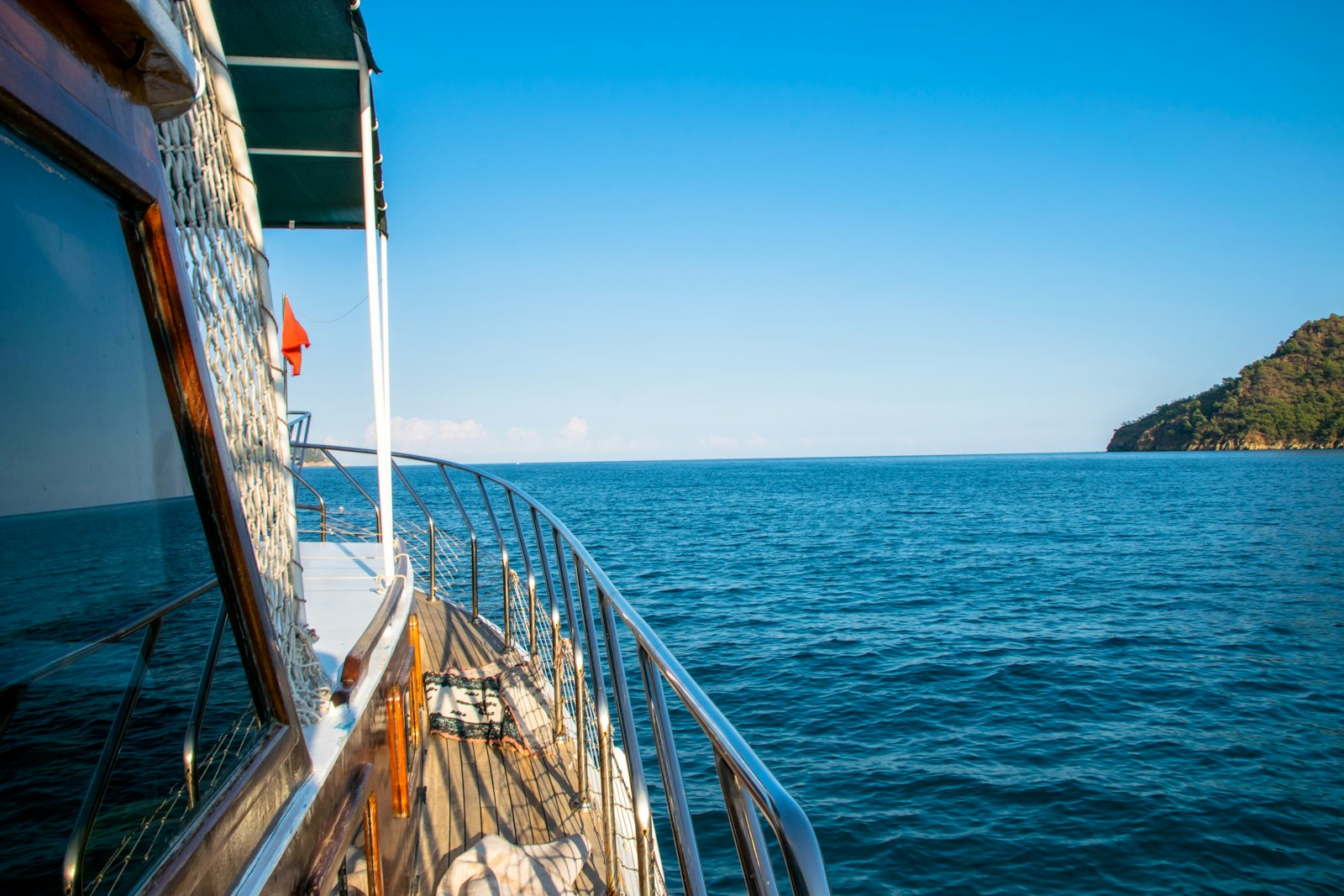
A phinisi charter from Labuan Bajo means hiring a hand-built Indonesian wooden schooner — whole boat, entire crew, every night — to explore Komodo National Park on your own schedule. The phinisi is not a cruise-line ship or a glass-sided motor yacht; it is a Bugis and Konjo sailing tradition translated into a live-aboard platform, with a hull shaped from ironwood or teak, a cook who buys fresh fish from passing fishermen, and anchorages chosen by a skipper who has read these waters his whole life. Trips depart from Labuan Bajo harbour and move through the park — Pink Beach, the dragon islands, manta-drift sites, volcanic caldera walls — treating Labuan Bajo and Komodo as the single destination they are.
What Makes Phinisi the Signature Charter Choice Here
No vessel type is more identified with this corner of Indonesia. The phinisi form — two masts, a raked bow, a wide shaded deck — evolved on Sulawesi and the Bugis shipyards of Bira, and it fits Komodo’s shallow bays and coral-fringed islands better than deep-draft motor yachts. Most purpose-built charter phinisi are 22 to 55 metres. They anchor close to beaches. The social deck — where guests gather for meals, sundowners, and sleeping under open sky when the mood takes them — is at the heart of why a labuan bajo phinisi charter feels different from any hotel-based trip.
There are honest tradeoffs. Speed is one. A phinisi cruises at seven to ten knots under engine, so legs of three to five hours are common on this route. That pace is part of the pleasure for most guests. It becomes a constraint only on the very shortest charters, where every hour at sea is an hour not on a dive site. The other variable is build quality, and that is where the price brackets really diverge.
Phinisi Classes and Per-Night Price Ranges (Last Verified June 2026)
Reading the Numbers: One Worked Example
A group of six adults — two couples and two solo travellers — books a four-cabin mid-range vessel at USD 4,000 per night for six nights. The charter fee comes to USD 24,000 before park fees. On top of that, each foreign visitor currently pays IDR 250,000 per person per day in Komodo National Park entrance fees (travel-site consensus; verify at booking, last verified June 2026), plus ranger fees of IDR 200,000 per group per trek. Park and ranger costs for six guests over six days of trekking run to roughly USD 500–700 depending on activities. Fuel and crew gratuity (typically ten percent of charter) round out the total. Alcohol is nearly always charged separately. Snorkel gear, life jackets, and full-board meals — three meals a day, snacks, water, tea, and coffee — are standard on every private phinisi charter, at every budget level.
Cabin Count and Group Size: How to Match Them
This is the question I am asked most often at the initial briefing, and it is one the aggregator sites never answer properly. The logic is straightforward once you know it.
- Couple / honeymoon (2 guests)
- One master cabin on a mid-range or luxury boat. Budget boats technically work at this price point, but honeymooners should stipulate ensuite bathroom and individual AC as non-negotiables — these are not guaranteed on budget-class vessels. A private phinisi labuan bajo rental for two people on a mid boat starts around USD 2,500/night; for a luxury phinisi the entry is nearer USD 8,000.
- Small group (4–6 guests)
- Two to three cabins. Fits comfortably on a mid-range vessel. Pairs of couples often prefer a four-cabin boat so each couple has genuine privacy; the extra cabins also store dive kit cleanly.
- Large group (8–12 guests)
- Four to six cabins on a mid-range boat, or three to five cabins on a luxury phinisi where cabin sizing is generous. A family of eight across four cabins on a 30-metre vessel is comfortable; the same family on a 22-metre entry boat will feel it. Check cabin dimensions, not just count.
- Full-fleet group (14–18 guests)
- Luxury phinisi with seven to nine cabins, or two mid-range boats chartered in convoy. The convoy option carries a coordination overhead — separate cooks, potentially different anchorage timing — but it roughly halves the per-person cost.
One point worth flagging: children are welcome on private phinisi charters, and mid-range builds commonly have family cabins with bunk or pullman configurations. Komodo’s tidal currents are genuinely strong at certain dive and snorkel sites — captains route children away from high-current points, and operators set age minimums for scuba. This is standard practice, not an anomaly. Ask at booking.
What the Charter Includes — and What It Does Not
Full-board catering — three meals a day, a dedicated cook or chef, fresh water, coffee, and tea — is standard across all classes of private phinisi charter. That is not marketing copy; it is the baseline the market has set. Here is where the honest divergence sits:
- Park and ranger fees: on budget and mid-range boats these are almost universally excluded from the charter rate and charged separately at boarding or invoiced at the end of the trip. Luxury all-inclusive charters increasingly bundle them. Confirm in writing which basis applies to your quote.
- Fuel: standard Labuan Bajo–Komodo loop routes include fuel. One-way repositioning legs — say, finishing in Bali after a ten-night crossing — attract a separate repositioning or fuel surcharge; ask for it explicitly.
- Diving equipment: snorkel gear and fins are included everywhere. A full scuba tank and compressor setup is present on most mid and all luxury phinisi, but dive guides, rental regulators, and nitrox fills are frequently charged as extras even when the hardware is aboard. Clarify before you load your BCD.
- Alcohol: nearly always charged at cost or a small markup. Soft drinks and juice vary — ask.
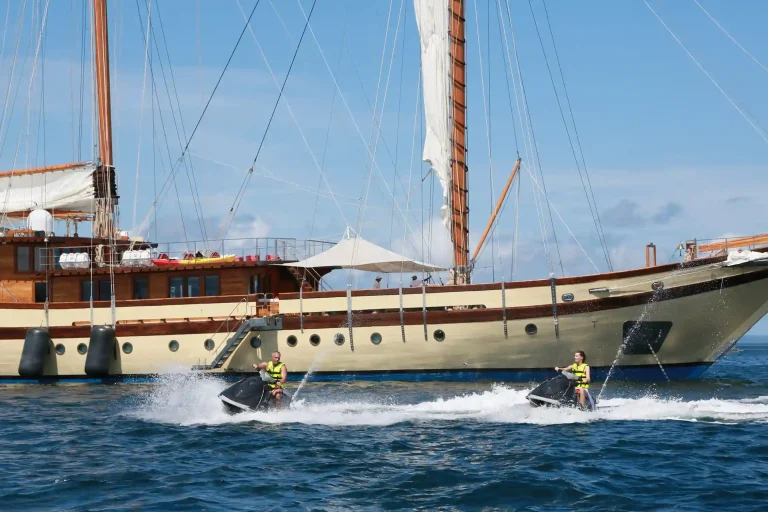
- Watersports toys: SUPs and kayaks are near-universal on luxury boats; Seabobs appear on top-tier vessels and are sometimes surcharged. Jet skis are rare in Komodo National Park due to environmental constraints.
Ready to match your group to the right vessel class? Design your charter with our concierge team — we will find the right hull, confirm current pricing, and handle the permit paperwork.
The Labuan Bajo–Komodo Route: What Each Duration Unlocks
Two Days, One Night — The Core Triangle
Depart Labuan Bajo at 08:00. Kelor Island hilltop trek and first snorkel — the island is forty-five to ninety minutes from the harbour. Rinca (Loh Buaya) in the afternoon for the ranger-guided komodo dragon walk. Anchor off Kalong Island for the dusk flying-fox exodus from the mangroves. The following morning: pre-dawn sail to Padar for sunrise from the ridge, then Pink Beach for swimming and snorkel, then Karang Makassar for manta drift on the incoming tide. Return to Labuan Bajo alongside by late afternoon.
This is a tight circuit — one dragon island, one manta site, the two most-photographed viewpoints. It suits travellers appending a phinisi night to a longer Flores itinerary, or couples trying the experience before committing to a longer booking. At one night’s charter rate, the math is straightforward: USD 3,000–30,000 depending on vessel class, plus park fees.
Three Days, Two Nights — The Signature Loop
The classic labuan bajo phinisi charter length. Both dragon islands — Rinca and Komodo — are possible. Padar sunrise and Pink Beach on the second morning. A sunset ridge hike above Gili Lawa Darat on the second evening, anchored in the sheltered bay below. Karang Makassar mantas and the Taka Makassar tidal sandbar on the final morning before the run home.
This is the honeymoon sweet spot at entry length and the benchmark for first-time visitors who want the postcard set — Padar panorama, pink sand, komodo dragons, mantas, sunset ridge — without repetition or a rushed day. Two nights × USD 3,000–30,000 = USD 6,000–60,000 by vessel class.
Four to Five Nights — South Komodo and the Figure-Eight
From four nights onward, the south Komodo circuit opens — but only from October through April, when the northwest monsoon keeps Horseshoe Bay and Manta Alley calm. In July and August the southeast trades make the south coast rough and at times inaccessible; the honest version of a four-night charter in those months substitutes additional north sites (Castle Rock, Crystal Rock, Batu Bolong) rather than promising a south swing that the swell may cancel.
The south loop adds Horseshoe Bay (Loh Dasami) with its wild dragon sightings from the tender, Cannibal Rock and Yellow Wall for divers, and Manta Alley — where the manta ray density peaks in the plankton-rich rainy months. Note the seasonal distinction: Karang Makassar in central Komodo is a year-round manta site; Manta Alley in the south is an October-to-April product. Presenting both as identical is one of the most common errors in Komodo charter copy.
Four nights × USD 3,000–30,000 = USD 12,000–120,000. Five nights = USD 15,000–150,000.
Six to Seven Nights — Gili Banta and the Sangeang Volcano
Six nights adds Gili Banta, just north of the park boundary — advanced dive walls where groups often anchor as the only boat in the bay. Seven nights extends the crossing east to Sangeang, an active volcano off the Sumbawa coast. The Bubble Reef dive site at Sangeang has volcanic gas seeping through black sand; the critter photography is genuinely unlike anything inside the park. Check current PVMBG volcano activity advisories before booking (last verified June 2026). The seven-night entry point at USD 3,000/night produces a charter total of USD 21,000 — the start of what most operators call a full week.
Ten Nights and Beyond — The Sumbawa Crossing to Lombok and Bali
From ten nights onward, the itinerary crosses into Sumbawa: Satonda’s crater lake, Moyo’s waterfall treks (the site that drew global attention when a prominent visitor arrived by private aircraft in the 1990s), and the chain of Gili islands off Lombok. The standard shape is one-way from Labuan Bajo to Lombok or Bali, which eliminates backtracking and adds genuine voyage narrative — the boat IS the transfer to your next destination. One-way repositioning pricing can represent strong value in the shoulder months of April–May and October–November when fleets migrate between bases.
A fourteen-night full expedition covers roughly 430–470 nautical miles from a Flores-coast shakedown anchorage through every site in the ladder: Komodo National Park north and south, Sangeang volcano, Satonda, Moyo, the Gilis, and a tide-timed Lombok Strait crossing to Amed or Benoa in Bali. At thirteen nights: USD 39,000–390,000 depending entirely on vessel class. That range is not imprecision — it is the honest span from a clean, well-crewed mid-range wooden schooner to a sixty-five-metre flagship with a crew of twenty-one.
Season, Weather, and What Happens When Conditions Change
The dry season — April through October or November — brings calm seas and the best underwater visibility in the north and central park. July and August are the busiest weeks of the year, with stronger southeast trade winds that produce chop on exposed legs and livelier anchorages at night. The wet season runs December through March; January and February are the roughest months, with rain and heavy swells, though the manta activity at both Karang Makassar and Manta Alley is at its peak during this window.
Labuan Bajo’s harbour authority (KSOP Class III) suspends sailing permits when BMKG issues extreme-weather warnings — documented closures occurred in March 2024 and in late 2025 and early 2026. A night-sailing ban for tourist boats has also been in force following a shipwreck incident. These are real operational constraints. A reputable operator factors them into the itinerary by building slack days into longer charters and giving the captain weather discretion over the specific routing. No charter — on any vessel, at any price — can guarantee access to a specific site on a specific day. We will always say so plainly.
Park entry uses the SiORA e-ticketing system (Sistem Informasi Online Reservasi Wisata Alam). Walk-in tickets are no longer available; advance booking through the operator is mandatory. Visitor numbers at the main landing sites are capped; confirm current availability for your dates, particularly for Loh Liang and Loh Buaya, when you finalise the booking.
Frequently Asked Questions
What does a phinisi charter from Labuan Bajo cost per night?
Per-night rates are implied from package pricing, since most operators quote per trip. Budget-class wooden boats run roughly USD 1,200–2,500 per night. Mid-range phinisi with AC and ensuite or near-ensuite cabins sit between USD 2,500 and 8,000 per night. Luxury phinisi — full AC, all-ensuite, five to nine cabins, high crew ratios — range from approximately USD 8,000 to USD 20,000+ per night based on broker listings active in June 2026. The largest flagships are price-on-application with weekly minimum bookings. All figures should be confirmed at enquiry; peak-season surcharges and shorter-charter premiums apply.
Do budget phinisi have air conditioning and private bathrooms?
Not reliably. Budget and entry-level wooden boats typically have fan cooling or partial AC in one or two cabins, and shared bathrooms are common. If a private ensuite bathroom and individual cabin AC are non-negotiable — for a honeymoon couple or for family travel — stipulate both in writing when requesting a quote and verify the specific vessel’s spec sheet. Mid-range phinisi have made these standard in newer builds, but the fleet is diverse and not all older vessels have been refitted.
Are park fees included in the phinisi rental price from Labuan Bajo?
On budget and mid-range charters, park entrance fees are almost always charged separately and not bundled into the vessel rate. Foreign visitors currently pay IDR 250,000 per person per day in Komodo National Park (travel-site consensus, last verified June 2026; verify at booking). Ranger and guide fees for dragon-trekking sites add IDR 200,000 per group per trek. Luxury all-inclusive charters increasingly bundle park fees, but confirm per quote. A vessel permit is handled by the operator; no separate per-vessel fee figure has been verified in this research.
When is the best season to book a phinisi charter from Labuan Bajo?
The dry season from April to November offers calm seas and good visibility at the north and central sites — Padar, Pink Beach, Komodo dragon islands, Karang Makassar mantas. July and August bring the southeast trade winds; conditions are manageable but breezier, and the south Komodo circuit (Horseshoe Bay, Manta Alley) is rough to inaccessible in those months. October through April is the season for south Komodo diving and the best manta concentrations at Manta Alley. Karang Makassar is a year-round manta site with higher hit-rates in the wet season. January and February are the wettest and roughest months — plan a longer charter so the itinerary has built-in slack days.
Can I book a phinisi charter direct from Labuan Bajo without using an agent?
Yes — many boat owners and local operators take direct bookings at the Labuan Bajo harbour, and this route can save on brokerage margins, particularly for budget-class vessels. The tradeoffs are real: direct booking gives you no quality check on hull condition, safety equipment, and crew certification; no clearly documented cancellation terms; and sometimes limited English communication for a detailed itinerary discussion. A concierge or specialist service adds a layer of planning and vetting. We work with operators across all classes and are happy to help you compare options — start with our charter brief form or reach us on WhatsApp and we will be candid about what each route involves.