14D13N Charter — The Full Expedition: Flores, Komodo, Sumbawa, Lombok, Bali
Plan a 14-day private yacht trip from Labuan Bajo through Komodo, Sumbawa, Lombok and Bali. Full day-by-day itinerary, $39k–$390k pricing, season notes.
19 min read
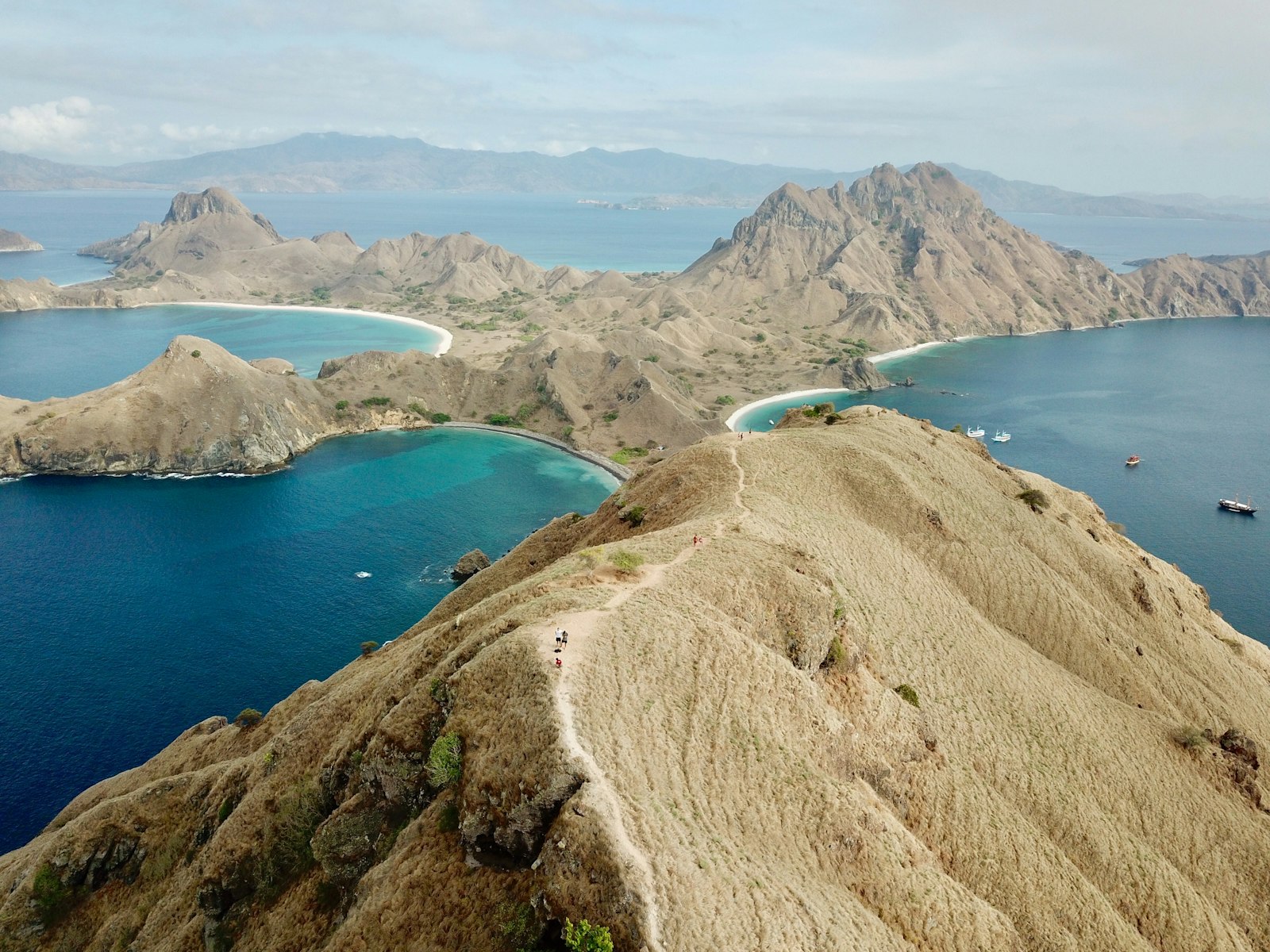
A 14-day private yacht trip from Labuan Bajo through Komodo National Park and onward to Sumbawa, Lombok, and Bali is the longest single charter in our portfolio — roughly 430 to 470 nautical miles, 13 nights aboard, and every site in the Komodo universe unlocked without compression. Guests who ask about combining a 14 day private yacht trip Komodo and Raja Ampat in one sailing will find an honest answer here: the two parks run in different seasons (Komodo is best April through October; Raja Ampat’s peak runs November through April), and the distance between them — well over 1,000 nautical miles each way — makes a back-to-back charter impractical. We plan them as two separate voyages in consecutive seasons, and this page covers the Komodo leg in full detail. If Raja Ampat is on your radar, speak with our concierge team and we will map the sequencing.
The 14D13N expedition suits a specific kind of traveler: the sabbatical charterer who has cleared two weeks, the dive group intent on logging 35 to 40 dives across five distinct marine regions, the multigenerational family whose milestone calls for something a resort cannot replicate. It is not a route for guests on the fence about extended time at sea. It is for people who already know they want the whole thing.
What the Two Weeks Actually Cover
Most private charters out of Labuan Bajo run three to seven nights and circle the core of Komodo National Park. The 14D13N route does something different: it begins with a gentle Flores coast warm-up east of Labuan Bajo, works through the full Komodo Grand Tour including the south loop, crosses to Gili Banta and the active Sangeang volcano off Sumbawa’s coast, continues west through Satonda’s crater lake and Moyo’s jungle waterfalls, and finishes at the Gili Islands before a tide-timed Lombok Strait crossing to Amed or Benoa in Bali.
Each of those destinations represents a distinct unlock in the charter ladder. The south Komodo sites — Horseshoe Bay, Cannibal Rock, Manta Alley — only open properly on the October-to-April northwest monsoon window. Gili Banta typically has no other vessels at anchor. Sangeang is an active stratovolcano; the dive sites around it (Bubble Reef, Techno Reef) are unlike anything in the core park. Moyo’s Mata Jitu waterfall — the site that drew international attention when a prominent royal visited in the 1990s — requires a jungle trek from the anchorage at Labuan Aji. These are not filler days added to stretch a duration. They are sites that shorter charters simply cannot reach without rushing.
Day-by-Day Itinerary
Day 1 — Flores Coast: Shakedown and First Anchorage
Noon departure from Labuan Bajo. The late start is deliberate: guests need time to board properly, stow gear, and meet the crew without the alarm-clock pressure of a six-AM dragon trek. The first afternoon goes to Sebayur Island or Seraya Kecil — both within easy reach east of Labuan Bajo, both with house reefs that serve as an honest gear check for divers. The crew calibrates buoyancy, equipment fits get sorted, and everyone eats their first dinner at anchor with the Flores hills behind them. Short day. Important day.
Day 2 — Kelor, Manjarite, Rinca, Kalong
Depart early. Kelor Island is 45 to 90 minutes west: a limestone hill with a 15-minute climb that earns a view across the park entrance. Snorkel the base on the way back to the tender. Manjarite or Sebayur for a second reef stop, then the 1.5-to-2.5-hour crossing to Rinca’s Loh Buaya bay for the dragon walk — ranger-guided, typically 45 minutes to an hour on the trail. By mid-afternoon, sail to Kalong Island and anchor before the dusk flying-fox exodus. Several thousand bats leave the mangroves just before sunset. It is not a subtle spectacle. Dinner at anchor.
Day 3 — Padar Sunrise, South Komodo (Oct–Apr)
Pre-dawn departure from Kalong — approximately 1.5 to 2 hours to position below Padar before light. The Padar summit trek takes 45 to 60 minutes in the dark with headlamps; the three-bay panorama at first light is the image most guests arrive hoping for, and at this hour on a 14-night charter there is almost no one else on the trail. After sunrise and the descent, head south: approximately 2 to 3 hours to Horseshoe Bay (Loh Sera area) on Komodo’s south coast. Cannibal Rock is the dive here — a seamount drop-off that turns up ghost pipefish, nudibranchs, and schools of fish at a density that surprises even experienced Komodo divers. Wild dragons have been sighted on the beach at Horseshoe Bay without a formal ranger trek. Anchor in the bay for the night.
May–September variant: replace Days 3–4 south legs with Siaba Besar (sea turtles), Batu Bolong pinnacle, and Tatawa Kecil; nights at Siaba and Pink Beach. The south-coast swell under the southeast trades makes Horseshoe Bay uncomfortable and Manta Alley operationally risky — we say so at booking, not on the day.
Day 4 — Yellow Wall, Manta Alley, North Passage
Dawn dive at Yellow Wall before the light gets high and the current switches. Then the 3-hour run southwest to Manta Alley (also called Torpedo Bay): a channel on Komodo’s southern tip where oceanic mantas aggregate on plankton-rich upwellings during the wet season. Mantas here peak from November through April; outside that window this site can be flat. Afternoon: 3 to 4 hours north to anchor at Loh Sera or Pink Beach. Total dive count after Day 4: eight to ten dives across four distinct habitats. Divers who want a third afternoon dive on this day should discuss the schedule with the guide the evening before — current timing at Manta Alley can compress or extend the passage north.
Day 5 — Pink Beach, North Transit
Morning at Pink Beach: the blush sand comes from fragments of red coral in the white mix. Snorkel or a leisurely dive on the house reef. No rush — the afternoon leg north toward Loh Liang is not long, and this is the itinerary’s designated breath day between the south coast intensity and the dragon trek. Anchor at Loh Liang or along the Komodo Island coast.
Day 6 — Komodo Dragon Trek, Gili Lawa
Morning: Loh Liang ranger station on Komodo Island. This is the larger, more cinematic of the two dragon sites — open savannah, giant fig trees, the occasional monitor lizard sharing the path. Ranger-guided, typically 60 to 90 minutes. Afternoon: 1.5 to 2 hours north to Gili Lawa. Castle Rock and Crystal Rock are the dive sites at the northern park boundary — strong currents, big schools of fish, regular reef shark and eagle ray passes. Non-divers take the Gili Lawa Darat ridge hike at sunset: a 20-minute scramble to a hilltop with a 360-degree view of the park islands. Anchor in the Gili Lawa Darat bay.
Day 7 — Karang Makassar, Taka Makassar, Gili Banta
Morning: Karang Makassar (Manta Point). This is the park’s most reliable manta site — oceanic mantas use the cleaning station here essentially year-round, with higher hit-rates in the plankton-rich December-to-March period. Drift snorkel or dive the channel at slack tide. Taka Makassar sandbar afterward: a tide-dependent white sand spit in the middle of the park that appears and disappears with the tidal range. Champagne or coconut on the sandbar if it is above water. Afternoon: cross the park boundary, 1.5 to 2.5 hours to Gili Banta. The K2 wall on Banta’s south face is advanced — current-dependent — but the anchorage in the sheltered northern bay is calm and typically empty. Dinner with no other boats in sight is one of the trip’s quiet pleasures. Anchor Gili Banta.
Day 8 — GPS Point, Sangeang Crossing
Dawn: GPS Point on Gili Banta’s north tip, if the dive guide gives the go-ahead on current. Experienced divers only; the dive guide makes the final call on the day. By mid-morning, depart for Sangeang: 3 to 4.5 hours across open water. The volcano is visible from distance — a smoking cone rising to over 1,900 meters. Approach passes through its ash-fall shadow on still days. Bubble Reef is the first dive: volcanic gas seeps through black sand, warming the water locally, supporting hard coral growth among the fumaroles. Hot Rocks is the snorkel site if conditions have reduced bottom visibility. Anchor off Bontoh village. Sangeang is active; check current PVMBG (Indonesian volcano authority) advisories before this leg — last verified June 2026.
Day 9 — Sangeang Critters, Satonda Crossing
Morning at Sangeang: Techno Reef or Deep Purple. These black-sand muck sites produce the critter list that serious underwater photographers plan trips around — rhinopias, frogfish, blue-ringed octopus, rare nudibranchs at density. The contrast with the big-animal energy of central Komodo is total, and most divers say it is the day they did not expect to be a highlight. Village walk at Bontoh for guests who prefer the surface. Afternoon: 4.5 to 6.5 hours west to Satonda Island. Arrive in time for the sunset crater-lake walk: a brackish lake inside the caldera rim, still and green, ringed by fig trees. Anchor.
Day 10 — Satonda Reef, Moyo Island
Morning: Satonda’s fringing reef — healthy hard coral in relatively undived water. Afternoon: 3 to 4.5 hours west to Pulau Moyo, anchoring at Labuan Aji. Moyo is a nature reserve; the anchorage is calm and the island jungle-dense. Dinner at anchor as an early night; tomorrow is a full day.
Day 11 — Moyo Full Day
The trip’s scheduled slow day, and one that guests consistently rank among the most memorable. Mata Jitu waterfall: a 30-to-45-minute jungle trek from the beach leads to a multi-tiered falls dropping into a freshwater pool. Diwu Mbai rope swings upstream. Birdlife is extraordinary — Moyo sits within a reserve and the canopy is relatively undisturbed. Beach BBQ at the anchorage in the afternoon. Second night at Labuan Aji. The two Moyo nights are the charter’s designated buffer: if a weather delay anywhere earlier in the route has shortened the schedule, this is where the program absorbs it without cancelling anything significant.
Day 12 — Moyo to Medang
4.5 to 6.5 hours west to Medang Island (northeast Lombok region). The passage is open Flores Sea — manageable in both monsoon windows, though July and August bring a rolly westbound swell that the crew will brief guests on in advance. Afternoon anchorage at Medang: a sandbank stop, reef snorkel, and sunset on deck. The first sense of the Lombok arrival sequence begins here.
Day 13 — Gili Islands: Farewell Dinner
3 to 4 hours to the Gilis. Gili Meno wall for turtles — one of the densest turtle snorkel sites in the region, reliably accessible, current-free in the right tide window. Gili Air or Gili Trawangan for the afternoon and evening anchor. Farewell dinner on deck: the crew typically prepares something more elaborate than the standard evening meal on this night. Guests who want a Lombok day ashore — Sire Bay, waterfalls via tender and pre-arranged vehicle — can add it here if the pacing allows.
Day 14 — Lombok Strait Crossing, Disembark
The Lombok Strait has strong tidal currents in both directions; captains time the crossing on the tide regardless of season. 2.5 to 3.5 hours to Amed on Bali’s northeast coast for a quiet finish, or 7 to 11 hours to Benoa or Serangan harbor near the airport if guests are flying the same day. Disembark late morning at Amed or late afternoon at Benoa.
Who This Duration Suits
- Sabbatical and milestone charterers
- Guests who have cleared two full weeks for a single experience — significant birthdays, anniversaries, retirement milestones, or extended leave — find the 14D13N structure holds a complete narrative arc: warm-up, deepening, climax at Sangeang and Moyo, resolution at the Gilis and Bali. The voyage feels finished rather than cut short.
- Serious dive expeditions
- 35 to 40 dives across five distinct marine regions — Flores warm-up reef, Komodo central pinnacles, Komodo south cold-water color, Sangeang volcanic black sand, and Lombok/Gilis turtle shallows — is the most comprehensive single-charter dive itinerary in the region. Nitrox availability varies by vessel; confirm at booking. Scuba diving yacht charter Komodo at this level requires a vessel with a compressor and a dedicated dive guide; our concierge team maps the right vessel class for your group size and certification mix.
- Multigenerational families
- The two Moyo nights function as a built-in flex buffer for any family that needs a weather day, a slow morning, or a repeat of yesterday’s snorkel. Komodo currents are real and require honest briefing for younger children; the itinerary sequences the high-current north sites on Day 6 and Day 7 when the group has found its sea legs.
- Owner-research guests
- Some guests chartering at this length are evaluating whether to purchase or build a vessel of their own. The full ladder — budget through luxury phinisi — can be experienced across a 14-night voyage by booking the right class of vessel and asking the captain the right questions. Our concierge team is frank about what each vessel class handles well and where its limits are.
Vessel Classes and Per-Night Budget
The market for a komodo luxury phinisi cruise quotes per trip rather than per night; the per-night figures below are implied from package math and should be read as planning benchmarks. All figures last verified June 2026.
| Vessel Class | Typical Spec | Implied Per Night | 13 Nights (worked total) |
|---|---|---|---|
| Mid phinisi | 3–6 cabins, 6–14 guests, 6–10 crew, AC, mix ensuite | ~USD 3,000–8,000/night | $39,000–104,000 before park fees and fuel |
| Luxury phinisi | 5–9 cabins, 8–18 guests, 10–21 crew, full AC, all-ensuite, SUPs/kayaks | ~USD 8,000–20,000/night | $104,000–260,000 before park fees and fuel |
| Top-tier / flagship | 7–9 cabins, 12–18 guests, 16–21+ crew, near 2:1 crew-to-guest ratio | ~USD 20,000–30,000+/night | $260,000–390,000+ before park fees and fuel |
Worked example: 13 nights × $4,000/night (mid-range phinisi, 4-cabin, 8 guests) = $52,000 charter fee before park fees, fuel surcharge (for the Bali repositioning leg — quoted separately per route), and Komodo National Park entrance fees. Park entrance for foreign visitors runs approximately IDR 250,000 per person per day as of June 2026 — verify at booking, as fees are set by ministerial decree and travel-site figures may lag official updates. Ranger fees, diving surcharges, and drone permits are additional; most mid and luxury charters quote these items separately, while top-tier vessels increasingly bundle them in an all-inclusive rate.
Shorter charter durations consistently cost more per night than longer ones in this market. A 14-night booking often negotiates a lower per-night rate than back-to-back 7-night bookings on the same vessel — particularly in shoulder months (April to June and September to November) when operators value longer fills.
Ready to see what a two-week expedition looks like for your group? Design your charter with our concierge team or reach us on WhatsApp — we will match your group size, budget, and season to the right vessel class and send you an indicative quote.
Season Notes for the Full Expedition
The 14D13N route as written — with the south Komodo loop on Days 3 and 4 — is an October-to-April product. This is not a booking preference; it is a routing reality driven by the southeast trades that make Horseshoe Bay uncomfortable and Manta Alley operationally risky from roughly May through September.
The dry-season version (May to September) replaces the south loop with additional north and central Komodo days: Siaba Besar, Batu Bolong, Tatawa Kecil. These are excellent sites — the dry season brings calmer seas, better visibility in the north, and the most reliable surface conditions for passage days. The product changes but does not diminish. What it loses is Manta Alley and Cannibal Rock; what it gains is glassy mornings on the Sangeang crossing and a more comfortable Moyo-to-Lombok passage.
January and February are the wettest months. Rain at Moyo is warm and brief and barely interrupts a waterfall trek. The concern in those months is the open-water passages — particularly the Sangeang and Satonda crossings. The two Moyo nights are built into the schedule partly as weather insurance: if a squall pins the boat at anchor for a day somewhere in Sumbawa, those nights absorb it without cutting the Gilis.
The Lombok Strait to Bali crossing has strong tidal currents that the captain times regardless of season. Mantas at Karang Makassar appear year-round; their frequency is higher in plankton-rich December-to-March conditions. Sangeang’s volcanic gas dive sites are not seasonal, but the volcano’s activity status should be checked against current PVMBG advisories before the Sumbawa crossing — standard practice for any responsible operator.
On Komodo and Raja Ampat: Two Seasons, Two Voyages
The primary keyword that brings many guests to this page — a 14-day private yacht trip covering both Komodo and Raja Ampat — reflects a real ambition. Both parks are world-class. The honest answer is that back-to-back coverage in one charter is not how professional operators design this: Raja Ampat is best from November through April; Komodo’s full south loop requires October through April at the overlap. The navigation distance between the parks exceeds 1,000 nautical miles each way on any practical coastal route. A guest who attempts both in 14 days spends roughly half of those days under passage rather than in the water.
The approach that works: a Komodo expedition (this charter, or a 10-to-12-night version) in one season, and a separate Raja Ampat voyage — its own distinct planning exercise — in a subsequent November-to-April window. Our concierge team handles both. If you are at the research stage for this kind of multi-year Indonesian ambition, start the conversation now — vessel availability at the top tier in Raja Ampat books 6 to 18 months ahead.
What the Phinisi Charter Includes — and What It Does Not
A phinisi yacht charter Komodo at any vessel tier includes full-board catering — three meals, snacks, water, coffee and tea — prepared by a dedicated onboard cook or chef. Crew is full complement throughout. Snorkel gear and life jackets are standard. Alcohol is nearly always an additional cost; soft drinks and fresh coconuts vary by vessel. Confirm at booking.
What is typically excluded on mid-range vessels: park and ranger fees (verify per quote), full scuba equipment and dive guide fees (tanks and compressor are often aboard, but regulator sets, BCD, wetsuits, and a certified dive guide are often quoted separately), and the fuel surcharge for any one-way repositioning leg beyond the standard Labuan Bajo–Komodo circuit. The Bali finish on a 14D13N charter is a one-way west; repositioning fuel and crew logistics are quoted per route.
On top-tier vessels the trend is toward a single all-inclusive quote that bundles park fees, dive packages, and fuel. Ask specifically what “all-inclusive” covers in writing — luxury market practices vary.
The Indonesia Juara concierge team (sister brand within Juara Holding Group, disclosed) works across vessel classes and handles the full planning sequence: vessel match, SiORA park permit bookings (advance reservation is now mandatory; walk-in tickets have been discontinued), crew briefings, and post-charter logistics. No one can pay to change what we publish; if you proceed with an operator through our referral, they may pay us a fee at no extra cost to you.
Frequently Asked Questions
Can I combine Komodo and Raja Ampat in a single 14-day charter?
Not practically. Raja Ampat and Komodo National Park are over 1,000 nautical miles apart by any coastal route. The seasons also conflict: Raja Ampat diving peaks from November through April, which overlaps with but does not cleanly align to the Komodo expedition calendar. Professional operators plan these as two separate voyages in consecutive seasons. If you want both, our concierge team can sequence them across two trips — speak with us early, as the best Raja Ampat vessels book 6 to 18 months ahead.
What is the all-in cost for a 14-night phinisi sailing trip from Labuan Bajo to Komodo and Bali?
Charter fees run roughly USD 39,000 to 390,000 for 13 nights, depending on vessel class — implied per-night rates of approximately $3,000 to $30,000/night (last verified June 2026; the market quotes per trip). Add Komodo National Park foreign entry fees (approximately IDR 250,000/person/day, verify at booking), ranger and diving surcharges, the one-way fuel and repositioning fee for the Bali finish, and any crew gratuity. A worked example: 13 nights × $4,000/night = $52,000 charter fee, plus roughly $500–700 per person in park and ranger fees for 14 days, plus fuel surcharge for the Sumbawa–Lombok–Bali legs quoted separately per route.
What happens if weather cancels part of the itinerary?
Weather, tides, and park rules always get the final vote on this route — and any operator who promises otherwise is not being honest with you. The two Moyo nights (Days 10 and 11) are the charter’s built-in flex buffer: if a squall delays the Sangeang crossing or the Satonda visit, those nights absorb the delay without cutting the Gilis. For the south Komodo legs (Days 3 and 4), the captain and dive guide make a collective go/no-go decision on conditions; the standard alternative is the north Komodo variant, which is a strong program in its own right. The KSOP harbor authority in Labuan Bajo can also suspend sailing permits during extreme weather events — this has happened during documented storm periods and is part of why itinerary framing here uses “framework” rather than “contract.”
How many dives can I log on a 14-night scuba diving yacht charter through Komodo?
35 to 40 dives is realistic across the full expedition: two to three dives daily on active dive days, with passage days and land-excursion mornings reducing the count on roughly a third of days. The dive regions covered are Flores warm-up reef, Komodo south (Cannibal Rock, Yellow Wall, Manta Alley), Komodo central (Batu Bolong, Castle Rock, Crystal Rock, Karang Makassar), Gili Banta (K2 Wall, GPS Point), Sangeang volcano (Bubble Reef, Techno Reef, Deep Purple), and Gili/Lombok turtle walls. Nitrox is available on some vessels; confirm at booking. Advanced or specialty certification is recommended for the Gili Banta and Sangeang sites due to current and depth.
Is this route available year-round, and when is the best time to book?
The expedition runs in two seasonal shapes. The October-to-April version includes the full south Komodo loop (Horseshoe Bay, Manta Alley) and is the definitive product. The May-to-September version replaces the south loop with north and central Komodo sites — it is a strong itinerary but a different one. January and February are the wettest months; the built-in Moyo flex nights help absorb disruptions. Book the top-tier vessel class at least 6 months ahead for the October-to-April season; mid-range vessels have more availability but peak weeks (December–January and July–August) still fill early. Talk to our concierge team to check availability for your preferred window.