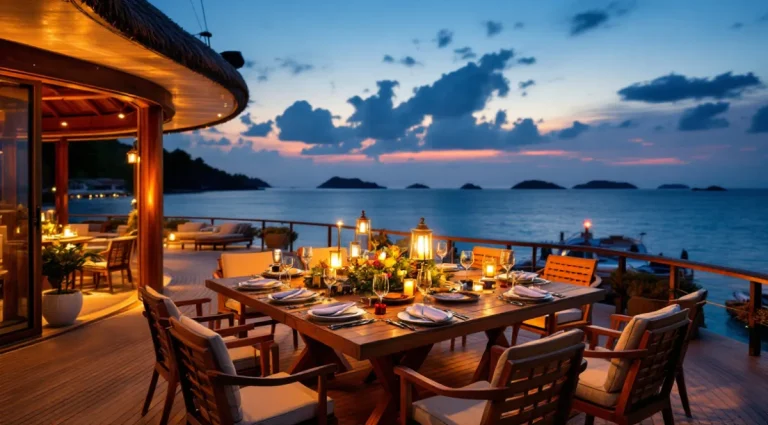
7D6N Komodo Charter — One Full Week, Sangeang Volcano Unlocked
7 day Komodo yacht charter from Labuan Bajo: full park + Gili Banta + Sangeang volcano. Day-by-day itinerary, per-night pricing from $3,000, season notes.
16 min read
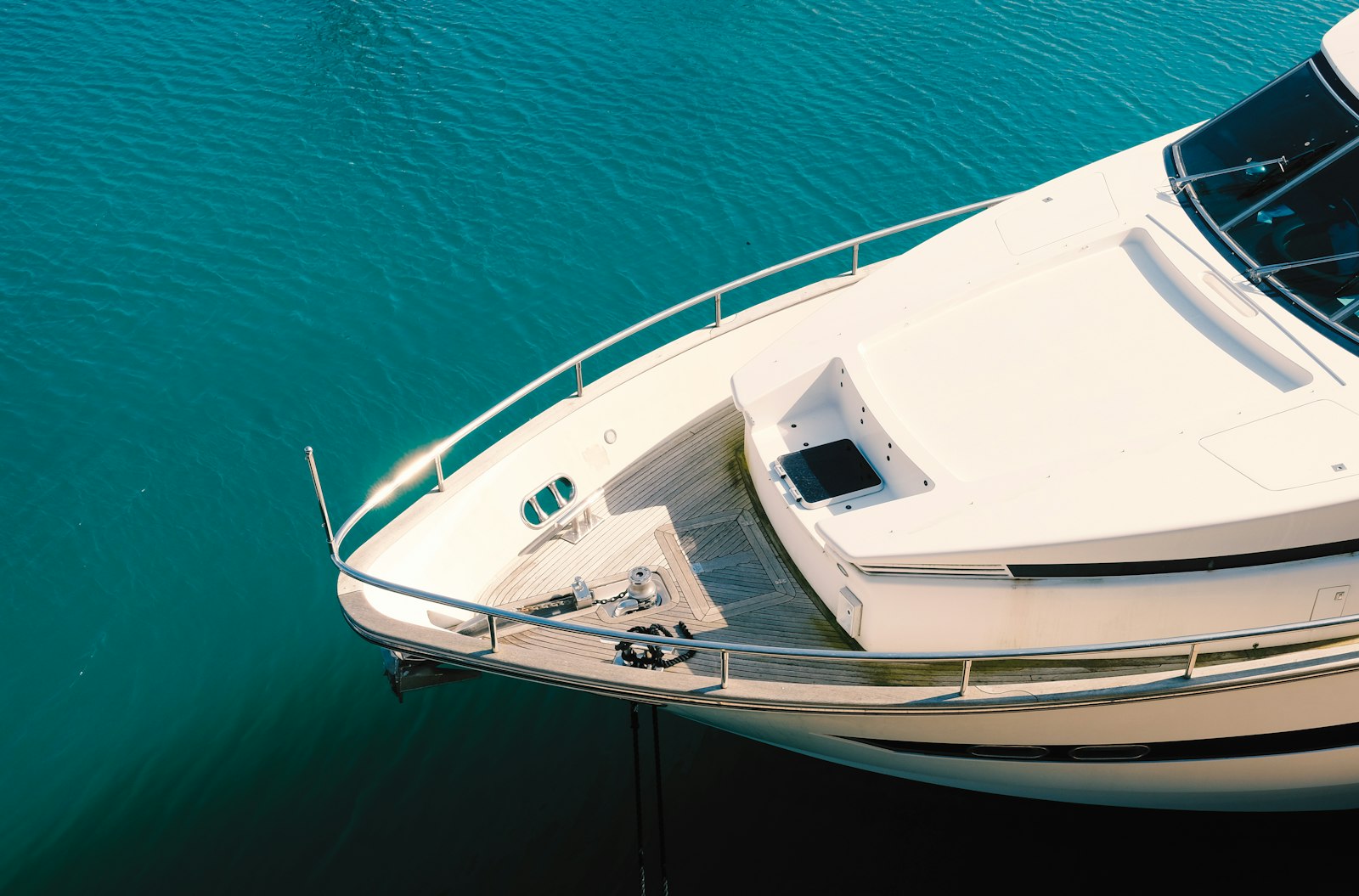
A 7 day Komodo yacht charter from Labuan Bajo is the shortest duration that unlocks every headline in the destination — Komodo National Park’s complete circuit, the remote frontier of Gili Banta, and an overnight at Sangeang Api, the active stratovolcano rising off Sumbawa’s northwest coast. Six nights. Twenty to twenty-four dives if you want them. One week is exactly enough, if the week is planned right.
This is the itinerary I reach for first when serious divers ask what a full week can hold, and when adventurous couples want something that goes beyond the standard Komodo loop. The park gives you dragons, mantas, and the world-class central pinnacles. Banta and Sangeang give you the feeling that you have genuinely gone somewhere most travellers never reach. On the right phinisi, sailing liveaboard or motor yacht, that combination is hard to beat at any price point.
Who This Week Is For
The 7-day, 6-night charter suits three distinct groups. First, divers who want volume and variety: Komodo’s central sites (Batu Bolong, Castle Rock, Crystal Rock, Karang Makassar) are world-class, but Sangeang adds an entirely different marine environment — black-sand muck, volcanic gas seeps, rare critters that have no business being photogenic but are. Twenty to twenty-four dives across the week is realistic, spread across big-animal reefs, current-swept pinnacles, and critter-dense volcanic substrate.
Second, adventurous couples and honeymooners who have already heard about Pink Beach and want something more. Anchoring off Bontoh village with a smoking volcanic cone on the horizon is a different evening from any anchorage inside the park. The week still includes Padar at sunrise and the Komodo dragon trekking that everyone comes for — it just adds a layer.
Third, full-boat groups of 8–12 people — families combining birthday celebrations with a proper expedition, corporate teams, friend groups splitting one vessel. Charter boat for 10 people from Labuan Bajo works well on a 6-cabin liveaboard in the luxury phinisi class; that size of group fills a boat designed for it and absorbs the per-night cost across enough passengers to make the maths feel sensible. More on the numbers below.
What this week does not suit: first-time snorkellers who want easy, stress-free days and early returns to port. The open-water crossing to Sangeang is real sailing — calm in the right season, lumpy in the wrong one. Guests who might struggle with motion on exposed water should either choose the 4-day or 5-day itinerary inside the park, or wait for the shoulder-season window.
Day-by-Day: 7D6N Komodo Charter Itinerary
Day 1 — Labuan Bajo Departure: Kelor Island and Rinca Dragons
Depart Labuan Bajo at 08:00–09:00. The first leg is short — 45 to 90 minutes to Kelor Island, depending on vessel speed — which gives everyone time to settle, sort dive gear, and eat breakfast on the crossing. Kelor’s hill trek is brief (20 minutes up, rewarding views across the Flores Sea) and the house reef below is a solid warm-up snorkel. After Kelor, the boat moves to Rinca’s Loh Buaya for the ranger-guided Komodo dragon walk. Rinca is closer to Labuan Bajo than Komodo Island and the trails tend to be quieter in the afternoon. Anchor overnight near Kalong Island and watch the flying fox colony stream out at dusk — tens of thousands of fruit bats against an orange sky. It never gets old.
Day 2 — Padar Sunrise, Seasonal South Swing or Pink Beach
Pre-dawn sail to position under Padar (1.5–2 hours from Kalong). The sunrise trek takes 45–60 minutes and delivers the three-bay panorama that defines the park for most visitors. After descending, the week’s route diverges by season. In the October to April window, the afternoon swell along Komodo’s south coast is manageable, and a run to Horseshoe Bay (Loh Dasami) adds Cannibal Rock — one of the genuinely great dive sites in Southeast Asia — plus the chance of wild dragons on the beach at dusk. May to September replaces the south swing with Pink Beach and Manta Point: a lighter day, easier on non-divers, and still excellent. Anchor per season — Horseshoe Bay or Siaba.
Day 3 — Komodo Island Dragons and Gili Lawa
Morning: sail to Komodo Island’s Loh Liang for the official ranger-guided dragon trek. Komodo is larger and the trail network more varied than Rinca’s; seeing dragons at both islands inside one charter is the complete version of the experience. Afternoon: head north to Gili Lawa — Castle Rock and Crystal Rock for the divers, the sheltered lagoon of Gili Lawa Laut for snorkellers, and the ridge hike on Gili Lawa Darat for the sunset. Anchor in the bay below the ridge. This is arguably the best anchorage in the whole park: calm, scenic, and rarely crowded once the day-trip boats leave.
Day 4 — Gili Banta Crossing and First Sight of Sangeang
One of the two days that justify the full week. Morning: 1.5–2.5 hours north from Gili Lawa to Gili Banta, an uninhabited island just outside the park boundary. The K2 Wall and GPS Point are advanced dive sites — fast current, deep walls, large pelagics — and the dive guide decides on the go whether conditions are right. Even if the current is too strong for the main sites, Banta’s sheltered bay is one of the emptiest anchorages you will find this close to Labuan Bajo. Lunch at anchor. Afternoon: the 3–4.5 hour crossing to Sangeang Api. The volcanic cone appears on the horizon about an hour out — a perfect grey-white triangle with a plume of smoke or steam at the summit, depending on the day. Check current PVMBG advisories before departure (last verified June 2026) — the island is inhabited and the volcano is active; your operator will pull the crossing if there is an elevated alert level. Arrive late afternoon. Bubble Reef (volcanic gas seeps rising through black sand, warm patches, otherworldly fish aggregations) and Hot Rocks are the first afternoon’s sites. Anchor off Bontoh village overnight.
Day 5 — Sangeang Full Day: Critters, Village Walk, Photographer Gold
The best day of the trip for underwater photographers and macro divers. Deep Purple and Techno Reef are black-sand muck sites: nudibranchs in species you have probably never seen, frogfish, ghost pipefish, rare shrimp in volcanic crevices. The substrate itself is visually arresting — dark sand, faint warm patches, occasional jets of bubbles, coral growing sideways off volcanic rock. Morning dives, surface interval, afternoon dives. Between sessions, a walk to Bontoh village is worthwhile: a small Bugis community living at the base of an active volcano, with traditional wooden boats hauled up on the black-sand beach. The contrast of that village against the smoking peak is the kind of image that stays with you. Second night at Sangeang or reposition in the afternoon — your captain weighs the next morning’s crossing against overnight conditions.
Day 6 — Recross to Banta, Re-enter the Park, Pink Beach
Morning: recross from Sangeang to Gili Banta (3–4.5 hours). A second dive at Banta, or a rest morning with snorkelling off the boat — after two intensive Sangeang days, the quieter pace is welcome. Afternoon: 3–4 hours back south into Komodo National Park. Pink Beach in the late afternoon, when the day-trip crowd has gone, is a different experience from the midday version. Swim, snorkel the house reef, watch the light change on the pink-tinged sand. Anchor Pink Beach or Siaba.
Day 7 — Manta Point, Taka Makassar, Return to Labuan Bajo
Final morning: Karang Makassar (Manta Point) at or near the tide change. Mantas are present at this site year-round, with higher hit-rates during the plankton-rich December to March period, but reliable sightings across all months. Drift snorkel or dive the cleaning station. Afterwards, the Taka Makassar sandbar — a tide-dependent white sand strip in the middle of the channel — for a champagne stop if the charter includes it, or simply a swim in impossible-coloured water. Final snorkel at Kanawa or Sebayur on the way home. Alongside in Labuan Bajo by 16:00–17:00.
Per-Night Budget: What a Week Actually Costs
The charter market prices by the trip, not cleanly by the night, but per-night thinking is the clearest way to compare vessel classes. All figures below are implied per-night rates, last verified June 2026; actual quotes will vary by vessel, season, group size and what is bundled.
| Vessel Class | Implied Per Night | 6-Night Example Total | Typical Cabins | Typical Crew |
|---|---|---|---|---|
| Mid-range phinisi | ~$3,000–5,000/night | ~$18,000–30,000 | 4–6 cabins | 6–10 |
| Upper-mid / boutique liveaboard | ~$5,000–10,000/night | ~$30,000–60,000 | 5–7 cabins | 8–14 |
| Luxury phinisi (e.g. $7k–$15k/night class) | ~$7,000–15,000/night | ~$42,000–90,000 | 6–9 cabins | 12–21 |
| Flagship / top-tier (price on application) | ~$15,000–30,000/night | ~$90,000–180,000 | 7–9 cabins | 16–21+ |
Worked example: A mid-range 6-cabin Komodo liveaboard at $4,000/night × 6 nights = $24,000 for the whole boat before park fees. Split across 10 guests, that is $2,400 per person for a private week-long charter — comparable to a premium resort, but with 20+ dives, crew meals included, and itinerary flexibility that no land-based operation can match.
What is typically included in an all inclusive Komodo yacht charter package: three meals per day plus snacks, filtered water, tea and coffee, full crew, snorkel gear, and life jackets. Alcohol is nearly always extra. Park entrance fees (IDR 250,000/person/day for foreign visitors, verify at booking, last verified June 2026) and ranger fees are excluded on most mid-range boats and increasingly bundled on luxury vessels — confirm per quote. Full scuba kit, nitrox, and a dive guide are often an add-on even when tanks and a compressor are aboard.
For groups specifically: a big group Komodo yacht charter of 10–12 people will want a vessel with at least 5–6 private ensuite cabins. The 6-cabin liveaboard class built for 10–12 guests is the natural match. Get the cabin plan and bathroom configuration in writing before booking, not after.
Ready to run numbers for your group? Design your charter with our concierge team, or reach us directly on WhatsApp — they will send you 2–3 specific vessel options within your bracket inside 24 hours.
Season Notes: When to Go and What Changes
The Sangeang crossing is the week’s most weather-sensitive element. The open-water leg from Gili Banta to Sangeang (3–4.5 hours) and back crosses exposed Flores Sea and Sape Strait water. Here is an honest read by season:
- April–June (shoulder, recommended)
- The single best window for this itinerary. The dry season is establishing, the SE trades have not yet peaked, and swell on the crossing is typically manageable. Park is less crowded than July–August. Mantas at Karang Makassar are active. South coast access (Horseshoe Bay, Cannibal Rock on Day 2) is still viable in April and early May.
- July–August (peak, doable with honest caveats)
- SE trade winds are at their strongest. The Sangeang crossing is achievable on most weeks but expect short-period chop on exposed legs; guests prone to seasickness should plan accordingly. The park is at its busiest. Central and north Komodo sites are excellent. South coast (Horseshoe Bay, Manta Alley) is not advised — substitute with additional north and central dives. The week is still very good, just different from the shoulder-season version.
- September–November (shoulder, second recommendation)
- Conditions mirror the April–June window. Excellent visibility, diminishing crowds post-August, calm crossing days. October brings the south coast back into play, adding Cannibal Rock and Horseshoe Bay to the Day 2 options again.
- December–March (wet season)
- January and February are the squall months. Short, intense rain is normal; sea state varies day to day. The Sangeang crossing is most likely to be delayed or skipped in this window — build in a Banta hold day as weather insurance. Mantas at Karang Makassar are at their year-round peak (plankton bloom). Manta Alley on the south coast is at its seasonal best for those willing to work with the weather. Experienced sailors who accept flexibility will find this period rewarding; guests who need a guaranteed schedule should choose April–June.
The Labuan Bajo harbour authority issues suspension of sailing permits during BMKG extreme-weather warnings — this is standard practice and your operator will monitor forecasts throughout. It is one reason why scheduling slack (an extra Banta night rather than a rigid Day 4 schedule) is worth building in.
Sangeang volcano status: always check current PVMBG (Indonesian volcano monitoring) advisories before departure, last verified June 2026. The island has permanent residents and the volcano is classed active — operators will cancel or redirect if the alert level is elevated.
Phinisi, Liveaboard or Motor Yacht: Which Vessel Class Fits This Route?
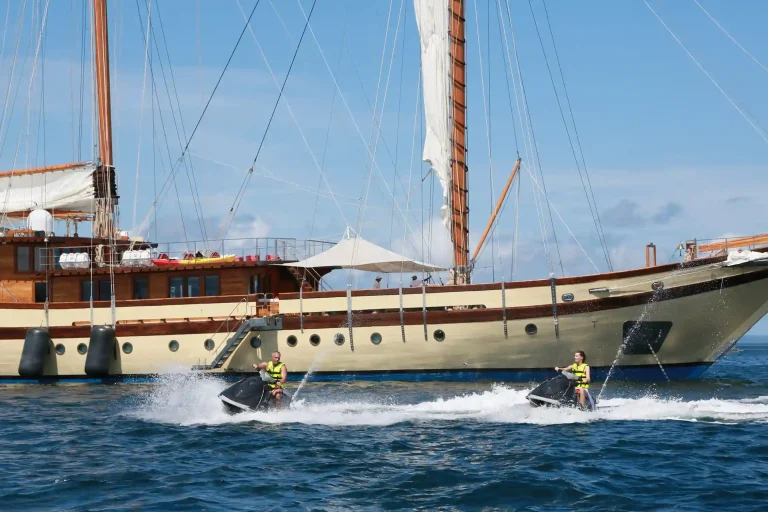
For a one week phinisi charter in Komodo waters, the traditional wooden sailing vessel remains the most atmospheric choice — spacious sun decks, a social layout that works well for groups, and the iconic profile. Modern phinisi builds combine that silhouette with full air-conditioning, ensuite bathrooms in every cabin, and a proper galley. The slower cruising speed (7–9 knots) means some legs — particularly the Sangeang crossing — are done as afternoon moves rather than quick hops, which suits a relaxed pace.
Motor yachts cover the same route roughly 30–40% faster, which can add an extra dive site per travel day but loses the unhurried phinisi rhythm. They tend toward fewer cabins and a more clinical interior. The best motor yachts in this market pair serious speed with serious comfort and are the right call for guests who want to maximise dive time rather than sail time.
For a 6-cabin Komodo liveaboard private charter — the format that suits 10–12 guests sharing costs — purpose-built liveaboards in the luxury phinisi class (30–50m, 6–9 cabins, 10–18 crew) are the standard match. Look for confirmed ensuite bathrooms per cabin and individual cabin AC; on longer charters in the heat, these stop being luxuries and start being practical requirements.
Planning a Komodo Charter With Crew and Meals: What We Do
We are a Komodo Luxury planning authority for private charters out of Labuan Bajo into Komodo National Park. Our concierge team is operated by Indonesia Juara, a sister brand within Juara Holding Group (disclosed relationship). We do not operate boats ourselves; we match your group’s size, budget, dates and priorities to specific vessels and handle the brief-to-booking process.
Our pricing information comes from verified market sources and direct operator quotes — all bracketed and dated because this market moves. No operator can pay to appear in our recommendations or change what we publish. If you proceed with an operator through our introduction, they may pay us a referral fee at no additional cost to you.
To start the conversation, fill in our charter brief form or message the Indonesia Juara concierge team on WhatsApp. Tell us: dates, number of guests, cabin requirement, whether your group dives or snorkels, and whether the Sangeang leg is non-negotiable or nice-to-have. That is enough to send you two or three specific vessel options, each with a per-night rate, a cabin plan, and a day-by-day route proposal calibrated to your season.
Frequently Asked Questions
What is the minimum budget for a 7-day Komodo charter from Labuan Bajo?
The entry point for a private one week komodo boat charter is roughly $18,000 for 6 nights on a mid-range phinisi at the $3,000/night level (implied per-night rate, last verified June 2026). Park entrance fees for foreign visitors run approximately IDR 250,000 per person per day — verify the current rate at booking as official figures are set by the national park authority and can change. For a group of 10 splitting a mid-range vessel, that works out to around $1,800–2,500 per person for the boat plus park fees. Luxury and flagship vessels run from $7,000 to $30,000/night and up; the same 6-night trip on a top-tier yacht reaches $90,000–180,000 for the whole boat.
Is Sangeang safe to visit, and can my charter guarantee we go?
Sangeang Api is an active stratovolcano and its status changes. Your operator monitors PVMBG (Indonesian Volcanology and Geological Hazard Mitigation) advisories and will cancel or redirect the Sangeang leg if the alert level is elevated — this is standard safety practice, not a rare event. No charter can guarantee the Sangeang crossing because weather and volcanic status are outside anyone’s control. The itinerary structure on this page builds a Gili Banta hold night as natural buffer, so the week retains value even if Sangeang is skipped on a given departure.
How many dives can I realistically do on a 7-day Komodo liveaboard charter?
On a purpose-dive-focused week — meaning the group structures the day around dive windows rather than land excursions — 20 to 24 dives is a realistic target. That is typically 3 dives per diving day (morning, midday, afternoon or night) with one or two travel-heavy transition days yielding only 1–2 dives. Komodo’s central pinnacles (Batu Bolong, Castle Rock, Crystal Rock), the Gili Lawa sites, and Sangeang’s black-sand muck cover four distinct dive environments within a single charter. Nitrox and full scuba kit rental are usually charged separately from the boat rate — confirm what is included in your all inclusive komodo yacht charter package quote before signing.
Is Karang Makassar (Manta Point) reliable in every season?
Manta sightings at Karang Makassar occur year-round according to operator records — this is a cleaning and feeding station driven by consistent current upwelling, not strictly seasonal. Hit-rates tend to be highest during the December to March plankton bloom, but sightings in July and August are common. Manta Alley, on Komodo’s south coast, is a separate site with a different seasonal pattern — it peaks roughly October to April and is not accessible on this route’s July–August variant. The final morning at Karang Makassar on Day 7 is the most reliable manta window in the whole charter.
Can a group of 10 people charter a boat together, and how do cabins work?
Yes, a charter boat for 10 people from Labuan Bajo is a standard product. A 6-cabin vessel in the luxury phinisi class typically accommodates 10–12 guests across private ensuite cabins, often with one larger master cabin and five standard doubles or twins. Confirm the exact cabin plan, whether bathrooms are ensuite, and whether the master cabin carries a surcharge — on some vessels it does. For a group of exactly 10, a 5-cabin boat (10 people in 5 double cabins) may also work if the group pairs up cleanly. The concierge team can map your headcount to specific vessel options; request this detail explicitly in your brief.