12D11N Charter — Full Komodo Coverage + the Sumbawa Chain
12-day sailing trip from Flores to Komodo: full south loop, Sangeang volcano, Satonda crater lake, two Moyo nights, Gili Air finish. USD 33k–330k.
16 min read
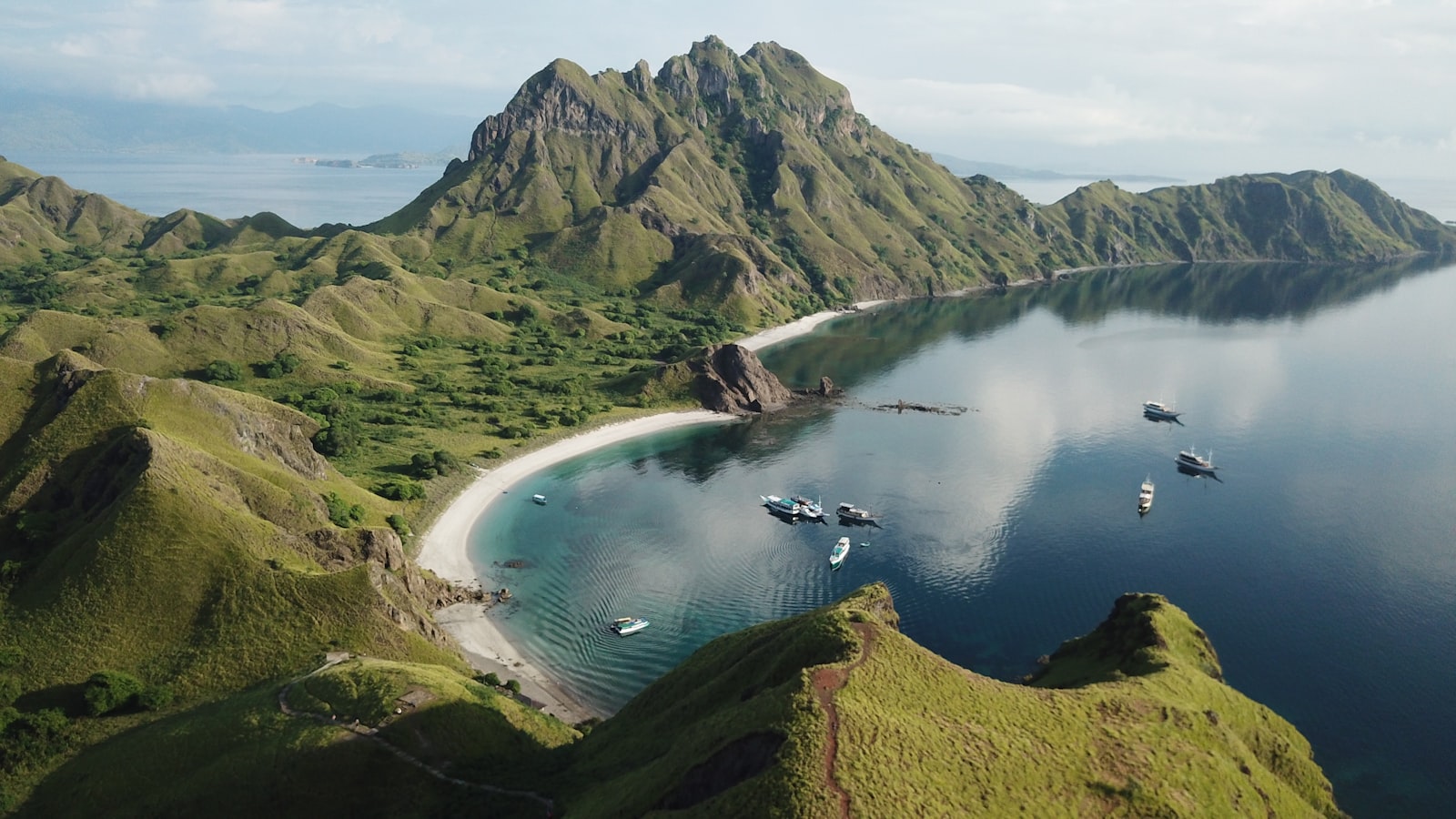
A sailing trip from Flores to Komodo National Park covering every site in the destination — not just a sampler — takes eleven nights at minimum. The 12D11N charter is the architecture that makes that possible: it runs the complete 8-day Grand Tour inside Komodo National Park without cutting a single site, then continues west through the Sumbawa chain (Sangeang volcano, Satonda crater lake, two nights at Moyo, Medang) and finishes at Gili Air or Bali. For guests who must return to Labuan Bajo, Shape B rounds the same route home on one overnight passage, trading the one-way finish for the satisfaction of having gone as far as Moyo and come back.
Eleven nights at USD 3,000–30,000 per night (implied per-night from package rates, last verified June 2026) puts the total range at USD 33,000–330,000 depending on vessel class and season. A worked example: 11 nights × USD 6,000/night on a well-appointed mid-range phinisi liveaboard = USD 66,000 before park fees, fuel, and VAT. That figure is high in absolute terms. In context, it buys a private vessel, a dedicated cook, full crew, bilingual English-Indonesian guiding, and a route that no fixed resort can replicate.
Two Route Shapes
Shape A — One-Way: Labuan Bajo to Lombok (or Bali)
This is the no-compromise route. The boat moves west throughout: Komodo National Park in full, then Gili Banta, then the Sumbawa chain, ending at Gili Air for guests flying from Lombok, or a further crossing to Amed or Benoa for those connecting to Bali. No leg is rushed because there is no doubling back. The repositioning fuel surcharge for a one-way crossing is quoted per route by the operator — ask for it upfront. Repositioning windows are most economically timed in April–May and October–November when fleets migrate between Bali and Labuan Bajo.
Shape B — Round-Trip: Labuan Bajo to Moyo and Back
Identical through Day 9. On Day 10 the vessel makes an overnight steam from Moyo back toward the park boundary — roughly 12–16 hours, mostly at night while guests sleep. Day 11 covers Gili Banta and Gili Lawa Darat. Day 12 finishes at Karang Makassar and Taka Makassar before returning to Labuan Bajo. The overnight return leg is most comfortable April–June and September–November; heading east into the July–August southeast trades is genuinely uncomfortable, and we say so at booking rather than after departure.
Day-by-Day Itinerary (Shape A — Oct–Apr Version)
Day 1 — Depart Labuan Bajo: Kelor, Rinca, Kalong
Depart the Labuan Bajo marina at 08:00. The first sail is short — Kelor Island is 45–90 minutes at cruising speed. The hill trek takes less than 30 minutes and the bay below it rewards an early-morning snorkel. From Kelor the route turns south to Rinca’s Loh Buaya ranger station: the oldest, most reliably populated dragon habitat in the park. A ranger-guided walk here typically lasts 60–90 minutes. Late afternoon, anchor off Kalong Island for the dusk flying-fox exodus — several thousand bats clearing the trees just before dark. Dinner at anchor.
Day 2 — Padar Sunrise, South Turn (Oct–Apr)
Pre-dawn departure. The sail to Padar takes roughly 1.5–2 hours from Kalong, putting you at the base of the trail before first light. The summit walk is 45–60 minutes; the three-bay panorama at sunrise is the image most guests carry home longest. After breakfast anchored below Padar, the route makes its first south commitment of the trip: two to three hours to Horseshoe Bay. Afternoon: Cannibal Rock, one of the park’s most color-saturated walls. Occasional dragons appear on the beach here with no fencing between them and you. Anchor Horseshoe Bay.
Day 3 — Manta Alley and the Full South Loop
Yellow Wall at dawn — the cold upwelling that makes the south coast different from anything in the park’s north. Three hours west to Manta Alley, also called Torpedo Bay. Manta Alley peaks in the wet season: mantas come for the plankton that the northwest monsoon pushes in, so October through April is your window. Encounters are not guaranteed — nothing in the ocean is — but this is as good a structural setup as exists in Indonesia. Afternoon: anchor at Loh Sera on the south Komodo coast.
Day 4 — North Run: Pink Beach and Dragons
The last south dive of the trip before the three-to-four-hour run north. Pink Beach mid-afternoon: the color comes from crushed red coral mixed into the white sand, most vivid in midday light. Evening: Loh Liang on Komodo Island, the second dragon site. The Komodo dragon population here is larger than Rinca’s and the forest setting is more dramatic. Anchor Loh Liang.
Day 5 — Gili Lawa: Pinnacles and the Sunset Ridge
Morning: north to the park’s central dive cluster. Castle Rock and Crystal Rock are current-driven pinnacles — the kind of site where a dive guide matters, not because novices cannot be managed, but because reading the current window makes the difference between twenty minutes drifting past Napoleon wrasse and grey reef sharks, or an hour watching the same fish from a distance. Afternoon: Gili Lawa Darat. The sunset ridge hike takes 30–40 minutes and the view back over the archipelago at dusk is the north park’s equivalent of the Padar payoff. Anchor the sheltered bay.
Day 6 — Gili Banta, Then the Crossing to Sangeang
Gili Banta sits just outside the national park boundary, which means no crowds and no park-fee complications for the day’s diving. The K2 wall and GPS Point are advanced sites — current-dependent, guide-led, and not on any aggregator’s itinerary. One to two dives here, then the afternoon crossing to Sangeang: roughly three to four and a half hours. The volcano comes into view well before arrival, trailing a thin column of smoke from a summit that last had a significant eruption in 2014. Anchor off Bontoh village.
Day 7 — Sangeang Volcano Dives
Sangeang’s Bubble Reef is named for the volcanic gas that seeps through the black sand substrate. The critters that colonize this environment — frogfish, ghost pipefish, blue-ringed octopus — do not exist on the coral-and-current sites inside the park. Morning: Bubble Reef and Hot Rocks. Afternoon: the deeper Techno Reef for photographers who understand that black sand backgrounds change everything. Optional: a walk through Bontoh village, where fishermen still use traditional methods and the volcano is simply the neighbor on the hill. Volcano activity status: check current PVMBG (Indonesia’s volcanological agency) advisories before departure — last verified June 2026.
Day 8 — West to Satonda: Crater Lake at Sunset
The crossing from Sangeang to Satonda is four and a half to six and a half hours. Satonda is a small island with an ancient marine crater lake — saltwater, cut off from the sea by a narrow strip of land, and ringed by forest that has had no hunting pressure for decades. The afternoon walk to the crater edge takes 20–30 minutes. The evening light on the lake is unlike anywhere else on this trip, which is saying something after seven days. Anchor off Satonda’s reef.
Day 9 — Satonda Reef, Then Moyo
Morning snorkel on Satonda’s house reef before the three-to-four-and-a-half-hour sail to Moyo Island. Moyo is a nature reserve — no hotels on the coast that faces the charter anchorage at Labuan Aji. The beach is wide and the anchorage sheltered. Arrive afternoon; settle in. The pace here is deliberately different from the park.
Day 10 — Moyo: Waterfalls, Jungle, Beach
A full day ashore. Mata Jitu waterfall — sometimes called the Lady Di waterfall after her 1993 visit — is a 30-minute walk through Moyo’s forest from the beach landing. The Diwu Mbai rope swings sit over a lower pool in the same river system; the birdlife on the walk in is legitimate enough to reward binoculars. Afternoon: back to the boat, beach barbecue, or simply nothing. Second night at Moyo. This second night is the itinerary’s clearest upgrade over the 10D9N charter — the first Moyo night is arrival; the second is actually Moyo.
Day 11 — Medang to Gili Air
Long leg: Moyo to Medang takes four and a half to six and a half hours. A reef stop at Medang breaks the passage. Then the final two-to-three-hour run to Gili Air as the sun drops. The Gili Islands are the trip’s decompression before disembarkation — Gili Meno wall snorkel, a quiet anchorage, a last dinner on deck. Anchor Gili Air.
Day 12 — Disembark Lombok, or Continue to Bali
Disembark at Lombok’s marina or tender dock, morning. Guests flying from Lombok International are typically 45–60 minutes from the dock. Those continuing to Bali have two options: Amed on Bali’s northeast coast is two and a half to three and a half hours from the Gilis — a quiet finish. Benoa/Serangan near Denpasar airport is seven to eleven hours and works best as an overnight leg or a very early departure.
May–September Variant
The south loop (Days 2–3 above) is replaced with an extended north and central programme: Siaba Besar for its turtle-cleaning stations, Batu Bolong for the wall dives, and Tatawa Kecil for current-swept schooling fish. The anchorage sequence shifts north — Siaba, Pink Beach, Loh Liang, Gili Lawa — and the overall day count into Komodo National Park remains identical. The Sumbawa chain from Day 6 onwards is unchanged. This version loses Manta Alley but gains conditions that are genuinely better for the central and northern dives: the southeast trades push clear water in from the open Indian Ocean.
Who This Duration Suits
- Divers closing the destination in one trip
- The 12D11N logs 28–34 dives across four distinct marine ecosystems: south cold-water color, central manta aggregations, north current pinnacles, and Sangeang volcanic muck. A komodo charter with dive guide on this route covers every biotope the destination holds. Nitrox, compressors, and full scuba kit availability vary by vessel class — confirm at booking.
- Honeymooners and couples wanting a voyage, not a resort
- A private charter komodo with english guide handles everything from the paperwork (SiORA park reservations, ranger bookings) to the beach barbecue setup. The crew-to-guest ratio on luxury phinisi classes runs near 2:1; on mid-range vessels, six to ten crew serve eight to fourteen guests. Private ensuite cabins are standard on mid-range and above.
- Multigenerational families and groups up to 16
- A private boat max 16 guests komodo in the luxury phinisi class — 5–9 cabins, 30–65m LOA — gives grandparents the deck lounge while teenagers dive and younger children snorkel from the tender. Komodo’s currents are a real safety factor for children; the operator and your dive guide will advise site by site. Non-diving days like Moyo waterfall and Satonda crater lake work for every age.
- Guests on a one-way Flores-to-Bali journey
- Flying into Labuan Bajo (domestic connections via Bali/Denpasar or Jakarta daily) and out of Lombok or Bali eliminates both a return flight and any anxiety about missing a departure. The boat is the transfer. Ask about repositioning pricing in the shoulder months when operators move fleets; the economics can shift meaningfully.
Charter Budget by Vessel Class
The market prices charters per trip rather than per night, but per-night thinking is more useful for comparisons. All figures are implied from package rates, last verified June 2026, and subject to FX movement (IDR/USD) and peak-season surcharges (July–August, Christmas/New Year).
| Vessel class | Cabins / guests | Per night (implied) | 11 nights total (approx.) |
|---|---|---|---|
| Mid-range phinisi liveaboard | 3–6 cabins / 6–14 guests | USD 3,000–8,000 | USD 33,000–88,000 |
| Luxury phinisi (private charter komodo) | 5–9 cabins / 8–18 guests | USD 8,000–20,000 | USD 88,000–220,000 |
| Flagship class (price on application) | 7–9 cabins / 12–18 guests | USD 15,000–30,000 | USD 165,000–330,000 |
Worked example: 11 nights × USD 5,000/night (mid-luxury phinisi) = USD 55,000 base. Add park entrance fees (IDR 250,000/person/day for foreign visitors, verify at booking — last verified June 2026, travel-site consensus, not official decree), ranger and trekking fees, and a one-way repositioning fuel surcharge for Shape A. VAT at 11–12% applies on some charter contracts — confirm per quote. Tips are discretionary but customary on charter vessels.
Park vessel permits are handled by the operator; no verified per-vessel entry fee figure exists in public sources, so we do not print one. Budget this as an operator-quoted line item.
Ready to see per-night figures for specific vessels? Design your charter with our concierge team, or send a brief via WhatsApp — the Indonesia Juara planning desk responds within a few hours during business days. Indonesia Juara is a sister brand within Juara Holding Group; if you proceed through our free planning service and book with a vessel partner, they may pay us a referral fee at no extra cost to you.
Season Notes for a 12-Night Route
October through April is the premium Shape A product. The northwest monsoon makes the south Komodo coast navigable and Manta Alley reliable; crossings to Sangeang and Satonda are smoother than in the trade-wind months. January and February bring rain, but rain bursts on a phinisi liveaboard charter rarely cost activity hours — the two Moyo nights built into this itinerary act as the schedule’s weather buffer.
July and August: the southeast trades push north through the strait. Northbound dives at Castle Rock and Batu Bolong are excellent. The south loop should not be promised. Shape B’s eastbound overnight return into the trades is the itinerary’s one genuinely uncomfortable leg — we flag this at briefing, not after the fact.
April–June and September–November are the crossings’ sweet spots: the Sangeang–Satonda–Moyo legs are calmer, Sangeang’s open-water hop is manageable, and the one-way Lombok or Bali finish carries no seasonal anxiety. Harbors in Labuan Bajo can close during BMKG extreme-weather warnings — documented closures have occurred in both 2024 and late 2025. Build a day of flexibility into your arrival schedule.
What the Phinisi Liveaboard Charter Includes
Full-board is standard across all vessel classes: three meals plus snacks, water, tea, and coffee prepared by a dedicated cook or chef. Alcohol is almost always extra; soft drinks vary by vessel. Snorkel gear and life jackets are included everywhere. Full scuba equipment, dive guides, and nitrox are often extra even on vessels with compressors aboard — confirm the dive package scope when you brief the concierge. SUPs and kayaks are near-universal on luxury phinisi; seabobs appear on top-tier vessels only and are sometimes surcharged.
One-way Shape A charters carry a repositioning fuel surcharge. Standard loops to Komodo National Park from Labuan Bajo typically include fuel in the all-in rate; the Sumbawa extension is a different calculation. Ask for it quoted as a separate line before you confirm.
Park Access in 2026
Komodo National Park operates advance-booking ticketing through the SiORA system (Sistem Informasi Online Reservasi Wisata Alam). Walk-in tickets are discontinued; a reported 1,000-visitor daily cap is in place at peak sites (single-source figure — verify at booking). A qualified operator handles SiORA reservations as part of the charter service. Foreign visitor entrance is IDR 250,000 per person per day (travel-site consensus, last verified June 2026 — not an official government decree; verify at booking). Ranger and trekking fees for Padar and dragon-walk sites are additional and operator-managed.
Planning Your 12-Day Sailing Trip from Flores to Komodo
Every detail of this trip — vessel class, Shape A or B, dive guide scope, dietary requirements, photography preferences, family logistics — is worked out before the boat leaves the dock. Our concierge team speaks English and Indonesian and knows which anchorages are crowded on which days, which vessels have the right cabin configuration for your group size, and how to time the SiORA bookings for Loh Liang and Loh Buaya without running into quota limits.
Use our charter brief form to share your dates, group size, and priorities. If you prefer to start the conversation informally, WhatsApp works equally well — the team is based in Labuan Bajo and responds in context, not from a script.
Frequently Asked Questions
What is the difference between Shape A and Shape B on a 12-day charter?
Shape A is a one-way sailing trip from Labuan Bajo into Komodo National Park and through the Sumbawa chain, ending at Gili Air, Lombok, or continuing to Bali. It covers every site without backtracking and suits guests flying out of Lombok or Bali. Shape B covers the same route through Moyo but returns to Labuan Bajo on one overnight steam — roughly 12–16 hours eastward — which makes sense for guests who have return flights from Labuan Bajo already booked. The overnight eastbound leg is most comfortable in April–June and September–November; doing it in July–August trades is bumpy, and we say so clearly.
How many dives is realistic on the 12D11N phinisi liveaboard charter komodo?
A dive-focused group can log 28–34 dives on this route: south Komodo sites (Cannibal Rock, Yellow Wall, Manta Alley), the central park cluster (Karang Makassar, Batu Bolong, Castle and Crystal Rock), Gili Banta advanced walls, and Sangeang’s volcanic muck sites. The Moyo days are non-dive leisure. A komodo charter with dive guide ensures current briefings at Gili Banta and the Sangeang crossing sites where amateur-level guessing is genuinely risky. Nitrox availability and equipment rental vary by vessel — confirm before booking.
What does a private boat max 16 guests komodo actually look like for a family group?
A 9-cabin luxury phinisi carrying 16–18 guests is the top of the published market. More typical for a family private charter is a 5–7 cabin vessel carrying 10–14 guests, which means every family unit gets its own ensuite cabin and there is shared deck space that does not feel crowded. Komodo’s currents are a genuine safety consideration for children; your dive guide and captain brief site-by-site rather than by a blanket policy. Non-diving days on this itinerary — Satonda crater lake, Moyo waterfalls, Kalong bat flight, Padar sunrise — work for every age and require no certification.
Does the charter price include Komodo National Park entrance fees?
It depends on the vessel contract. Mid-range charters typically exclude park fees, which are charged separately at IDR 250,000 per foreign visitor per day (travel-site consensus, last verified June 2026 — verify at booking as official rates can change). Luxury all-inclusive contracts increasingly bundle fees. On a 12-night itinerary where roughly seven to eight days are spent inside the park, the fee line adds up to a meaningful number; ask for it quoted explicitly before you confirm so there are no surprises on the water.
When is the best time for the full one-way sailing trip from Flores to Komodo and the Sumbawa chain?
October through April is the premium window for Shape A as written — the full south Komodo loop is navigable, Manta Alley is active, and the Sangeang–Satonda–Moyo crossings run under the calmer northwest monsoon. The shoulder months of April–June and September–November offer the calmest crossing conditions specifically. July and August are perfectly viable for a north-weighted phinisi charter komodo national park itinerary, but the south loop should not be part of that plan and the eastbound Shape B return is uncomfortable. January and February bring rain; the two Moyo nights and a flex day at Sangeang are your schedule buffer.