How Many Days Do You Need in Komodo? An Honest Ladder from 1 to 13 Nights
How many days in Komodo National Park? An honest ladder from 2D1N to 14D13N — what each night unlocks, budgets, and getting there from Bali.
23 min read

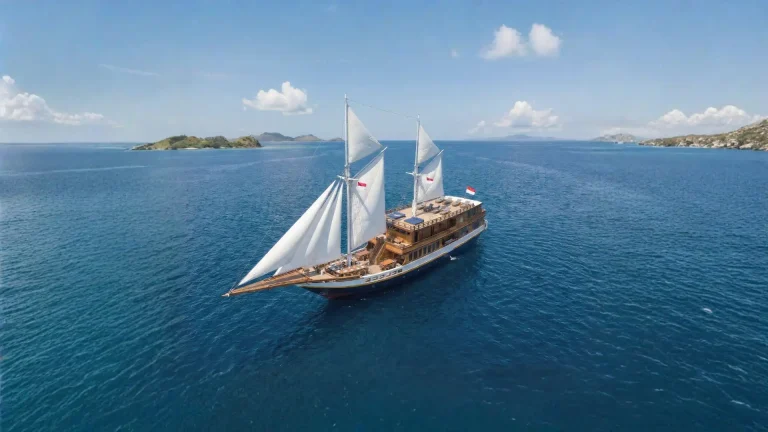
How many days do you need in Komodo National Park? The honest answer is: two nights gets you the essential triangle, three nights adds a second dragon island and a north-ridge sunset, and every night after that unlocks a coastline or marine site that the previous duration simply could not reach. There is no single correct answer — but there is a correct answer for your group, your season, and your budget. This guide walks the full ladder from 2 days and 1 night to 14 days and 13 nights, shows what each added night actually buys, and explains the logistics of getting to Labuan Bajo, the gateway port where every private charter begins.
Why “Minimum Days” Is the Wrong Question
Most planning advice frames Komodo as a destination you can tick off. It cannot be ticked off. Labuan Bajo and Komodo National Park are one continuous destination: you fly into Labuan Bajo, board your charter there, and sail into the park within an hour. Guests who treat them as separate trips miss the point entirely. The question is not how little time you can spend; it is how much of the park you want to see and what the sea conditions will be when you go.
Komodo National Park covers roughly 1,817 square kilometres of land and sea. The northern dive sites — Castle Rock, Crystal Rock, Batu Bolong — are different ecosystems from the southern sites like Manta Alley and Cannibal Rock, and those differ again from the volcanic waters around Sangeang off the Sumbawa coast. A single overnight charter samples one slice. Each night beyond that opens a new one. The ladder below is honest about what you gain and what you skip at each step.
Getting to Labuan Bajo: Flights, Airports, and the Ferry Question
Which airport serves Komodo National Park?
Komodo Airport (LBJ) in Labuan Bajo, West Flores, is the only practical entry point for a Komodo charter. As of June 2026, there is no scheduled international service into Labuan Bajo — the routes occasionally discussed with Singapore carriers remain prospective only. All international visitors connect through a domestic hub.
The Bali to Labuan Bajo flight time on a direct service is typically 1 hour 30 minutes to 1 hour 45 minutes. Garuda Indonesia, Lion Air, Wings Air, and TransNusa all operate this route, with multiple departures daily from Denpasar (DPS). Jakarta to Labuan Bajo runs around 2 hours direct; Surabaya connections exist but vary by season — check schedules at booking time. Budget roughly USD 50–150 each way depending on how far ahead you book and which airline you choose.
Is Labuan Bajo worth visiting just for a charter?
Yes — unambiguously. The town itself is a functional embarkation point with good restaurants, a growing number of decent hotels for pre- and post-charter nights, and a harbour front worth an evening. But the destination is the park, not the town. Plan to arrive the evening before your charter departs; that way a delayed morning flight does not shorten your time on the water.
Can you take a ferry from Bali to Labuan Bajo?
Technically yes; practically, very few international visitors do. The overland-and-ferry route runs Bali to Lombok, Lombok to Sumbawa, Sumbawa to Flores — roughly two to three days of bus and ferry travel. It is a legitimate way to see the Lesser Sunda Islands if the journey is part of the point, but as a route to your Komodo charter departure, it adds days you could spend on the water. Fly.
Labuan Bajo vs Bali: are they comparable?
They serve completely different purposes, so the comparison only makes sense if you are choosing how to split limited Indonesia time. Bali offers cultural depth, a mature tourism infrastructure, and a wide range of land-based activities. Labuan Bajo offers one of the world’s great marine parks, a UNESCO World Heritage Site, and a sailing experience with no real equivalent in Southeast Asia. If the sea calls you, Labuan Bajo wins — but the flight from Bali to reach it is 90 minutes, so many guests combine both.
How Charter Pricing Works: The Per-Night Framework
The charter market in Labuan Bajo quotes per trip, not per night, but the cleanest way to compare vessels and durations is to think in nightly rates. The verified market range runs from roughly USD 3,000 per night for a mid-range phinisi to USD 30,000 per night for a flagship luxury liveaboard — and the top tier extends further for the largest named vessels (last verified June 2026). Budget wooden boats imply lower nightly costs but typically come with shared bathrooms, partial air-conditioning, and smaller cabins that change the experience meaningfully.
| Vessel class | Implied per-night range | Typical cabins | Typical max guests | Key features |
|---|---|---|---|---|
| Budget wooden / semi-phinisi | ~USD 1,200–2,500/night | 2–4 cabins | 4–10 pax | Fan or partial AC; often shared bathrooms; 15–22 m |
| Mid-range phinisi | ~USD 2,500–8,000/night | 3–6 cabins | 6–14 pax | AC throughout; increasingly all-ensuite; 22–35 m |
| Luxury phinisi | ~USD 8,000–20,000/night | 5–9 cabins | 8–18 pax | Full AC; all-ensuite; SUPs, kayaks; 30–55 m; 10–21+ crew |
| Flagship (Lamima / Prana class) | ~USD 15,000–30,000+/night (price on application) | 7–9 cabins | 12–18 pax | Near 2:1 crew-to-guest; 47–65 m; typically 5–7 night minimum |
Park and ranger fees are typically excluded from the charter rate on budget and mid-range boats and increasingly bundled on luxury charters — confirm explicitly when you quote. Foreign visitor park entry runs IDR 250,000 per person per day (verify at booking; last verified June 2026). Fuel is generally included for standard Labuan Bajo to Komodo loops; long one-way repositioning legs to Bali or Lombok carry a separate fuel surcharge.
The worked math below uses vessel-class brackets so you can calibrate. Prices carry volatility: peak July–August and Christmas–New Year attract surcharges; shorter charters cost more per night than week-long charters on the same vessel.
The Duration Ladder: What Each Night Unlocks
2 Days, 1 Night — The Essential Triangle
Two days and one night is the Komodo national park minimum days for a meaningful private charter. You will not see everything — nobody does — but you will see the core: one dragon site (Rinca’s Loh Buaya is the closest to Labuan Bajo, about 1.5 to 2.5 hours under sail), the Padar viewpoint at sunrise, Pink Beach, and the manta rays at Karang Makassar. The dusk flying-fox exodus at Kalong Island is dinner-at-anchor theater that never gets old.
What you miss: Komodo Island itself (Loh Liang) — the larger island needs half a day you do not have — the northern dive pinnacles, and anything south of Padar. Not ideal for serious divers; there is no time for a proper dive rotation. Very early starts are mandatory. In July and August expect wind chop on the Padar leg and a lively night at anchor.
Charter math: 1 night × USD 3,000–30,000/night = USD 3,000–30,000 total before park fees.
3 Days, 2 Nights — The Signature Loop
Three days and two nights is where most first-time guests should start. The itinerary runs clockwise: Kelor Island trek and snorkel on day one, Rinca dragons and the Kalong bat flight at dusk; Padar sunrise trek and Pink Beach on day two, then the second dragon site at Komodo’s Loh Liang, north to Gili Lawa Darat for the sunset ridge hike; Karang Makassar mantas and the Taka Makassar tidal sandbar on the morning of day three before the run home.
Both dragon islands. The postcard set completed. Room to breathe between sites. This is the honeymoon sweet spot at entry length — the itinerary is varied enough to feel like a proper expedition without the pace of the one-night charter. Families with children aged six and older find this duration manageable. The backbone route runs year-round; December to March brings the best manta odds at Karang Makassar; July and August are breezier at the Gili Lawa anchorage but glassy in the mornings.
Charter math: 2 nights × USD 3,000–30,000 = USD 6,000–60,000.
4 Days, 3 Nights — First Unlock: South Komodo
Four days in Komodo National Park is the first duration where the itinerary splits by season, and that split matters. From October to April, the northwest monsoon calms the south coast: day four adds a swing down to Horseshoe Bay (Loh Dasami), Cannibal Rock for snorkeling or diving, and wild dragon sightings from the tender without a ranger queue. From May to September, the southeast trades make the south coast uncomfortable to rough; the fourth day goes north instead — Castle Rock, Crystal Rock, a second Gili Lawa sunset, or a dedicated snorkel day at Sebayur.
For divers, 4 days in Komodo National Park gives a genuine taste: eight to ten dives is realistic at three to four per day. Couples who want the full park without the feeling of constant transit should consider this duration their floor. The per-night rate on a mid-range phinisi across three nights works out to a meaningful but not prohibitive total.
Charter math: 3 nights × USD 3,000–30,000 = USD 9,000–90,000.
5 Days, 4 Nights — How to Plan a 5-Day Sailing Komodo Charter
Five days is the full figure-eight: north and south coverage in one pass, no doubling back. The shape is efficient and satisfying. Day one is Kelor and Rinca; day two pushes to Padar at sunrise and then south to Horseshoe Bay (October to April) for Cannibal Rock and dragon sightings from the beach at dusk; day three covers Yellow Wall at dawn and Manta Alley for south-coast mantas — October to April peak — then sails north to anchor at Pink Beach; day four handles the Komodo Loh Liang dragon trek in the morning and the Gili Lawa pinnacles in the afternoon; day five closes with Karang Makassar mantas and Taka Makassar before the run home.
For divers, 12 to 16 dives is realistic across three to four per day. This is also the shortest duration where the October to April south season genuinely changes the product from good to exceptional. A five-night charter on a mid-range vessel at USD 4,000 per night comes to USD 20,000 before park fees — a useful anchor for budgeting.
The May to September variant replaces the south swing with Siaba Besar turtle snorkeling, Batu Bolong, Tatawa Kecil, and a Sebayur night dive — a different trip, equally full, equally honest.
Charter math: 4 nights × USD 3,000–30,000 = USD 12,000–120,000. Example: 4 nights × USD 5,000 = USD 20,000 before park fees.
6 Days, 5 Nights — Gili Banta and Empty Anchorages
Six nights adds Gili Banta: a small, forested island just north of the park boundary that most charter guests never reach. The K2 wall and GPS Point dive sites here are current-dependent and advanced — your guide will make a go/no-go call — but even on a moderate dive day, anchoring overnight in Banta’s sheltered bay when you are the only vessel there is an experience worth the extra two days. The crossing from Gili Lawa takes 1.5 to 2.5 hours.
The sixth night is also the first time the itinerary has genuine slack: a morning where the plan is simply to sit in a bay, swim off the transom, and let the cook prepare a beach lunch. Returning guests who have done the three- to five-day classics often cite this as the duration that finally felt like a holiday rather than a tour.
Charter math: 5 nights × USD 3,000–30,000 = USD 15,000–150,000. Example: 5 nights × USD 6,000 = USD 30,000.
7 Days, 6 Nights — The Sangeang Volcano Crossing
Seven nights is the classic week charter — the format most commonly booked by dive groups and couples who have more time than the weekend crowd. The unlock here is Sangeang: an active stratovolcano 45 kilometres north of Komodo, visible as a smoking cone on the approach. The crossing from Gili Banta takes three to four and a half hours; anchor off Bontoh village and the night sky is free of light pollution. The Bubble Reef site runs volcanic gas seeps through black sand; Hot Rocks does exactly what it sounds like.
Sangeang muck sites complement Komodo’s big-animal dives perfectly — different water, different critters, genuinely different ecosystem. The approach crossing is open water and is calmest in the April to June and September to November shoulder months. July and August are doable but rolly; January and February squalls can force a hold day at Banta, which is not a hardship.
Check current PVMBG volcanic activity advisories before departure; status last noted June 2026.
Charter math: 6 nights × USD 3,000–30,000 = USD 18,000–180,000. Entry point worked example: 6 nights × USD 3,500 = USD 21,000.
Ready to map your specific nights and vessel class? Design your charter with our concierge team — or reach out on WhatsApp for a quick duration-match call before you commit to dates.
8 Days, 7 Nights — The Grand Tour (October to April)
Seven nights is where nothing gets skipped. Full south loop AND the Sangeang excursion, back to back. Nights track: Kalong, Horseshoe Bay, south Komodo (Loh Sera/Torpedo Bay), Pink Beach, Gili Lawa, Sangeang, Gili Banta. Diver count hits 24 to 28 dives across every Komodo biotope: cold-water southern color, central manta maneuvers, north current pinnacles, black-sand Sangeang critters.
This is candidly an October to April product as written. May to September, the south legs shift to Siaba, Batu Bolong, and Tatawa with an extra Gili Lawa day — a strong trip, but the south-coast magic requires the northwest monsoon window. Sell and buy this honestly.
Charter math: 7 nights × USD 3,000–30,000 = USD 21,000–210,000.
9 Days, 8 Nights — The Flex Day
Eight nights is the Grand Tour spine plus one unstructured day, and that single addition is the biggest comfort upgrade in the whole ladder. The flex day sits on the Sangeang segment: guests choose the morning before whether to do a second full Sangeang day, push west to Wera Bay on the Sumbawa coast for a traditional boat-building village, or simply run a dawn-to-dusk four-dive day and anchor wherever feels right. Families find this buffer invaluable — it absorbs weather, tired children, or the simple pleasure of repeating a site you loved.
In January and February, the flex day doubles as weather insurance.
Charter math: 8 nights × USD 3,000–30,000 = USD 24,000–240,000. Example: 8 nights × USD 4,000 = USD 32,000.
10 Days, 9 Nights — The Crossing Begins: Moyo and Satonda
Ten nights is the first duration where sailing west past Sangeang to Satonda’s volcanic crater lake and Moyo Island’s waterfall jungle is genuinely honest rather than rushed. At nine nights, pushing to Moyo would mean either cutting Komodo short or doing overnight steam passages every second day. At ten, the shape works cleanly — particularly as a one-way charter from Labuan Bajo to Lombok or Bali.
Satonda is an extinct volcano whose crater fills with a teal brackish lake; the island’s fringing reef snorkels well. Moyo is where the so-called Lady Di waterfall (Mata Jitu) sits in monsoon-fed jungle: a 45-minute trek to reach, completely worth it. Anchor off Labuan Aji village and you have the bay largely to yourself.
One-way charters from Labuan Bajo to Gili Air (Lombok) or Amed and Benoa (Bali) make strong logistical sense if your return flight is from either island anyway. Discuss repositioning pricing in April–May and October–November when the fleet migrates seasonally; rates can be meaningfully lower than a full round-trip charter.
Charter math: 9 nights × USD 3,000–30,000 = USD 27,000–270,000.
11 Days, 10 Nights — The Crossing, Done Properly
Ten nights adds a second Moyo night to the one-way shape, converting the Sumbawa chapter from efficient to indulgent. The itinerary keeps the full Komodo Grand Tour in its October to April south-season form, then runs west through Sangeang, Satonda, and two nights at Moyo before the Lombok strait crossing. Divers accumulate 30 or more dives across four distinct marine regions; families never face two big passages back to back; honeymooners typically name the second Moyo morning — waterfall, fruit breakfast on the beach, no other boats in sight — as their most-remembered moment of the entire trip.
Charter math: 10 nights × USD 3,000–30,000 = USD 30,000–300,000.
12 Days, 11 Nights and Beyond — Full Coverage
At eleven nights you have enough time for the complete Komodo Grand Tour (both dragon islands, full south loop, all north pinnacles) plus the complete Sumbawa chain (Sangeang, Satonda, two Moyo nights), the Medang reef, and the Gili Islands as a real stop rather than a transit. Guests often describe this length as “the boat is the holiday” — land excursions happen at every stop but nobody counts the days.
For guests who must return to Labuan Bajo by flight, a round-trip shape is also viable at eleven nights: the return passage overnights from Moyo to Banta (sleeping through the crossing), with a final park day before home. That overnight return leg is most comfortable in the April to June and September to November windows; eastbound against the July–August southeast trades is the route’s one genuinely uncomfortable leg — flag it at booking.
Charter math: 11 nights × USD 3,000–30,000 = USD 33,000–330,000.
13 Nights — The Expedition: Flores, Komodo, Sumbawa, Lombok, Bali
Thirteen nights covers approximately 430 to 470 nautical miles and every unlock in the ladder. A gentle Flores-coast prologue on day one — a shakedown snorkel at Sebayur or Seraya Kecil, gear checks, crew briefing — means no leg feels rushed. The itinerary runs the full Komodo Grand Tour in its October to April form (Kelor, Rinca, Kalong, Padar south sites, Horseshoe Bay, Manta Alley, Pink Beach, Loh Liang, Gili Lawa, Karang Makassar), then Gili Banta’s frontier dive sites, Sangeang volcano, west to Satonda and two Moyo nights, Medang, Gili Air, and a Lombok chapter on day twelve where the Gilis become a destination rather than a waypoint — turtle snorkeling at Gili Meno, a potential land excursion to Sengigi or Lombok’s waterfalls, farewell dinner at anchor off Trawangan. Day fourteen is the tide-timed Lombok Strait crossing to Amed or Benoa.
No resort can replicate this. Dive expeditions log 35 to 40 dives across five marine regions. The October to April version, as written, is the definitive product — the Komodo south coast in the northwest monsoon, then a calming sail west through volcanic Sumbawa and into Lombok’s clear north-facing bays. Viable year-round with the seasonal south-north swap; the two Moyo nights provide natural weather buffer in January and February.
Charter math: 13 nights × USD 3,000 = USD 39,000 at entry. Top-tier flagship: up to USD 390,000.
Duration Comparison at a Glance
- 2D1N (1 night)
- Core triangle: Kelor, Rinca or Padar, Pink Beach, Karang Makassar mantas. Year-round. Budget example: USD 3,000–30,000.
- 3D2N (2 nights)
- Signature loop: both dragon islands, Padar, Pink Beach, mantas, Gili Lawa sunset. Year-round. USD 6,000–60,000.
- 4D3N (3 nights)
- Adds south Komodo swing Oct–Apr (Horseshoe Bay, Cannibal Rock) or north dive days May–Sep. USD 9,000–90,000.
- 5D4N (4 nights)
- Full north-south figure-eight. 12–16 dives. Seasonal south at its best Oct–Apr. USD 12,000–120,000.
- 6D5N (5 nights)
- Adds Gili Banta — frontier dives, empty anchorage, 16–20 dives. Year-round with seasonal awareness. USD 15,000–150,000.
- 7D6N (6 nights)
- Adds Sangeang volcano crossing. 20–24 dives. Best shoulder-season crossing Apr–Jun / Sep–Nov. USD 18,000–180,000.
- 8D7N (7 nights)
- Grand Tour — full south AND Sangeang. Oct–Apr flagship version; north-weighted May–Sep. 24–28 dives. USD 21,000–210,000.
- 9D8N (8 nights)
- Grand Tour plus a flex day. Families, weather insurance, 28+ dives. USD 24,000–240,000.
- 10D9N (9 nights)
- First honest crossing: adds Satonda crater lake and Moyo waterfalls. One-way to Lombok/Bali optimal. USD 27,000–270,000.
- 11D10N (10 nights)
- Crossing done properly: second Moyo night, 30+ dives, four marine regions. USD 30,000–300,000.
- 12D11N (11 nights)
- Full coverage: every Komodo site plus complete Sumbawa chain plus Gilis as destination. USD 33,000–330,000.
- 13D12N (12 nights)
- Lombok chapter: Gilis become a genuine stop, Trawangan farewell dinner, Bali or Lombok disembark. USD 36,000–360,000.
- 14D13N (13 nights)
- The full expedition: Flores prologue, every unlock, ~430–470 nm, 35–40 dives. USD 39,000–390,000.
Season, Seas, and Honest Caveats
No duration answer is complete without a season note. The Komodo national park minimum days question changes by month because the park has two distinct seasons that genuinely alter the product.
Dry season (April to October/November): calm seas in the north and central park, good visibility, reliable sunrise treks. July and August are the busiest months and bring the southeast trade winds — breezier anchorages, livelier passages on longer legs, but still manageable for any duration from 2D1N up. The south coast — Horseshoe Bay, Manta Alley, Cannibal Rock — is rougher or inaccessible during July–August under the full trade-wind load. Sell the north variant honestly for this window.
Wet season (December to March): the northwest monsoon calms the south coast; manta rays at Karang Makassar reach peak density as plankton blooms; Manta Alley in the south is at its best November to April. January and February can bring heavy squalls and rough conditions overall — the longer durations carry a built-in flex day for exactly this reason. Harbour sailing permits (SPB) are suspended by Labuan Bajo port authority during BMKG extreme-weather warnings, as documented in March 2024 and late 2025 to early 2026. Operators factor this into voyage planning; confirm your operator’s weather-delay policy before you sign.
Manta season specifically: mantas at Karang Makassar (Manta Point, the central park site) are present year-round, with higher encounter rates December to March when plankton concentrations peak. Manta Alley in the south is a wet-season site — November to April — driven by the same plankton logic. The two sites are complementary; any charter from 3D2N up will hit Karang Makassar regardless of season.
Wildlife and weather are never guaranteed on any charter, anywhere in the world. What we can offer is the honest probability by season and duration — which is more useful than a promise.
Matching Duration to Your Group
Honeymoon and couples
Three to five nights is the sweet spot. The 3D2N signature loop delivers the postcard set without feeling rushed; 5D4N adds the south-coast wildness and real dive time if your partner dives. A private charter for two is a recognised product on mid-range and luxury vessels: the master cabin, private beach dinners, and photography add-ons are standard requests handled well by the concierge team. Specify ensuite bathrooms and individual cabin AC explicitly when you brief your charter — not all budget boats include these.
Families
Four to six nights works well for most families. The 4D3N charter with the May to September north variant is family-friendly at a measured pace; the sixth night adds Gili Banta’s easy wow factor without grinding early starts. Komodo’s currents are genuinely strong at the dive sites — operators impose age and certification limits, and some sites are adult-only. Children aged six and up typically manage the snorkeling and trekking elements well; the tender rides to beaches are usually the highlight. Family cabins sleeping four with ensuite bathrooms are standard on mid-range phinisi.
Serious divers
Five nights minimum for meaningful dive time; seven nights recommended for the full Komodo–Sangeang contrast. The south sites (Cannibal Rock, Yellow Wall, Manta Alley), the central pinnacles (Batu Bolong, Castle and Crystal Rock), and the Sangeang black-sand critter sites are three genuinely different dives that reward the longer charter. A 7D6N charter with full scuba kit and a dedicated dive guide aboard logs 20 to 24 dives comfortably. Nitrox, tanks, and compressor are often separate charges even when equipment is aboard — confirm the dive package at quoting stage.
Guests on a tight schedule
Two nights and one day is the honest minimum for a private charter that leaves Labuan Bajo and returns to Labuan Bajo with something real in between. A day trip by speedboat is possible — operators run them from the Labuan Bajo harbour — but a speedboat day does not give you Padar at sunrise, a night at anchor, or the manta drift in anything like the charter experience. If you can stay only two days in Labuan Bajo for Komodo, a 2D1N private charter is the right call.
Planning a multi-stop Indonesia trip and want to fit Komodo around Bali? The Bali to Labuan Bajo flight takes under two hours in each direction. A three-night Labuan Bajo segment (arrive evening, depart morning of Day 1, return evening of Day 3, fly out Day 4 morning) fits a 3D2N charter cleanly with one buffer night in Labuan Bajo town at either end.
To start mapping your exact nights against vessel class and budget, use our charter brief form or message the Indonesia Juara concierge team directly on WhatsApp — they typically respond within a few hours and can turn a rough brief (party size, dates, priorities) into a shortlist of real vessels with verified rates. If you book through us, the operator may pay a referral fee at no extra cost to you; no one can pay to change what we publish.
Frequently Asked Questions
How many days in Labuan Bajo for Komodo is the minimum that makes sense?
Two nights and one day on a private sailing charter is the practical minimum — that gives you Padar at sunrise, both a snorkel and a dragon-island landing, the Kalong bat flight at dusk, and the Karang Makassar manta drift on the return. A single day trip is possible but does not include an overnight at anchor, which changes the experience fundamentally. Budget two to three buffer nights in Labuan Bajo town around your charter for flight logistics.
What is there to do on 4 days in Komodo National Park?
On a 4D3N charter (three nights), you can cover the full signature loop — both dragon islands at Rinca and Komodo, Padar viewpoint at sunrise, Pink Beach, Karang Makassar mantas, Taka Makassar sandbar, and Gili Lawa Darat sunset ridge — plus one swing day. October to April, that swing day goes south to Horseshoe Bay and Cannibal Rock. May to September, it adds a second north dive or beach day at Sebayur. Eight to ten dives is achievable for certified divers at this length.
Is Labuan Bajo worth visiting if you only have a few days?
Yes. The town itself is a functional and pleasant embarkation point, but the reason to come is Komodo National Park immediately offshore. Even a 2D1N charter is a genuine expedition — Padar’s three-coloured-bay panorama at sunrise and the manta ray drift at Karang Makassar alone justify the 90-minute flight from Bali. If you are weighing Labuan Bajo vs Bali for how to use limited Indonesia time, they serve entirely different purposes: Bali is cultural depth and a mature resort scene; Labuan Bajo is a UNESCO marine park accessible only by boat.
Can I fly directly from Bali to Labuan Bajo, or do I need to connect?
Direct flights from Bali (DPS) to Labuan Bajo (LBJ) operate daily, typically taking 1 hour 30 minutes to 1 hour 45 minutes. Multiple carriers — Garuda, Lion Air, Wings Air, TransNusa — serve the route. No scheduled international service into Labuan Bajo exists as of June 2026; all international arrivals transit a domestic hub. Jakarta connects directly in approximately two hours; Surabaya services are seasonal.
What happens if the weather forces a route change mid-charter?
Operators build flexibility into every route — the skipper makes daily go/no-go calls on individual sites based on sea state and current. Labuan Bajo port authority can suspend sailing permits (SPB) during BMKG extreme-weather warnings; this has occurred historically in late wet-season months. A reputable charter will include a weather-deviation clause in the booking contract specifying how substitutions are handled and when compensation applies. Ask for this clause in writing before you pay a deposit. Longer charters — from seven nights up — carry natural flex days that absorb most weather disruptions without losing major sites.
Related reading
- Phinisi Charter Labuan Bajo — Traditional Wooden Schooners for Komodo, Tailored by the Night
- Luxury Yacht Charter Komodo — Top-Tier Phinisi & Yachts from Labuan Bajo, Priced Honestly
- Labuan Bajo Boat Charter — Tailored Private Charters into Komodo National Park
- Harga Charter Phinisi Labuan Bajo 2026: Kelas Kapal, Fasilitas & Cara Booking yang Aman