Is There WiFi on Komodo Liveaboards? Signal, Starlink & Dead Zones Mapped
Is there WiFi on Komodo liveaboard boats? Which vessels carry Starlink, where Telkomsel 4G actually dies, and how to plan around the park's dead zones.
7 min read
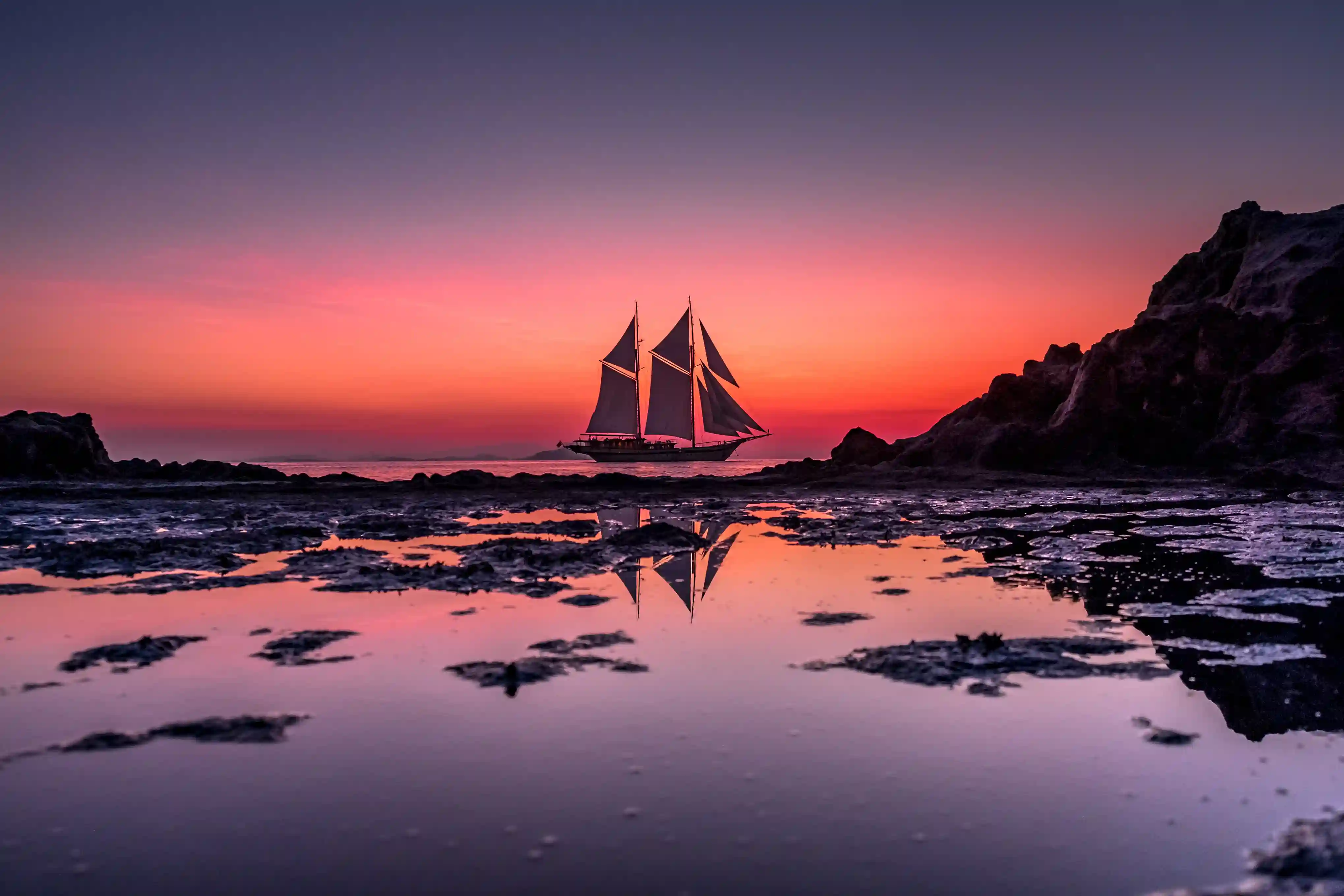
Is there WiFi on Komodo liveaboards? Signal, Starlink and dead zones mapped
Some Komodo liveaboards have WiFi; most do not. In our directory, Semesta Voyage carries Starlink satellite internet, Andalucia 2 lists WiFi in the cabins, and Lamain Voyage runs onboard WiFi. Telkomsel 4G fades within the first hour out of Labuan Bajo, so past Kelor, connectivity means satellite or silence.
By Yohanes Sanggu, journal editor. Reviewed by Kristoforus Jehamat, Fleet Director.
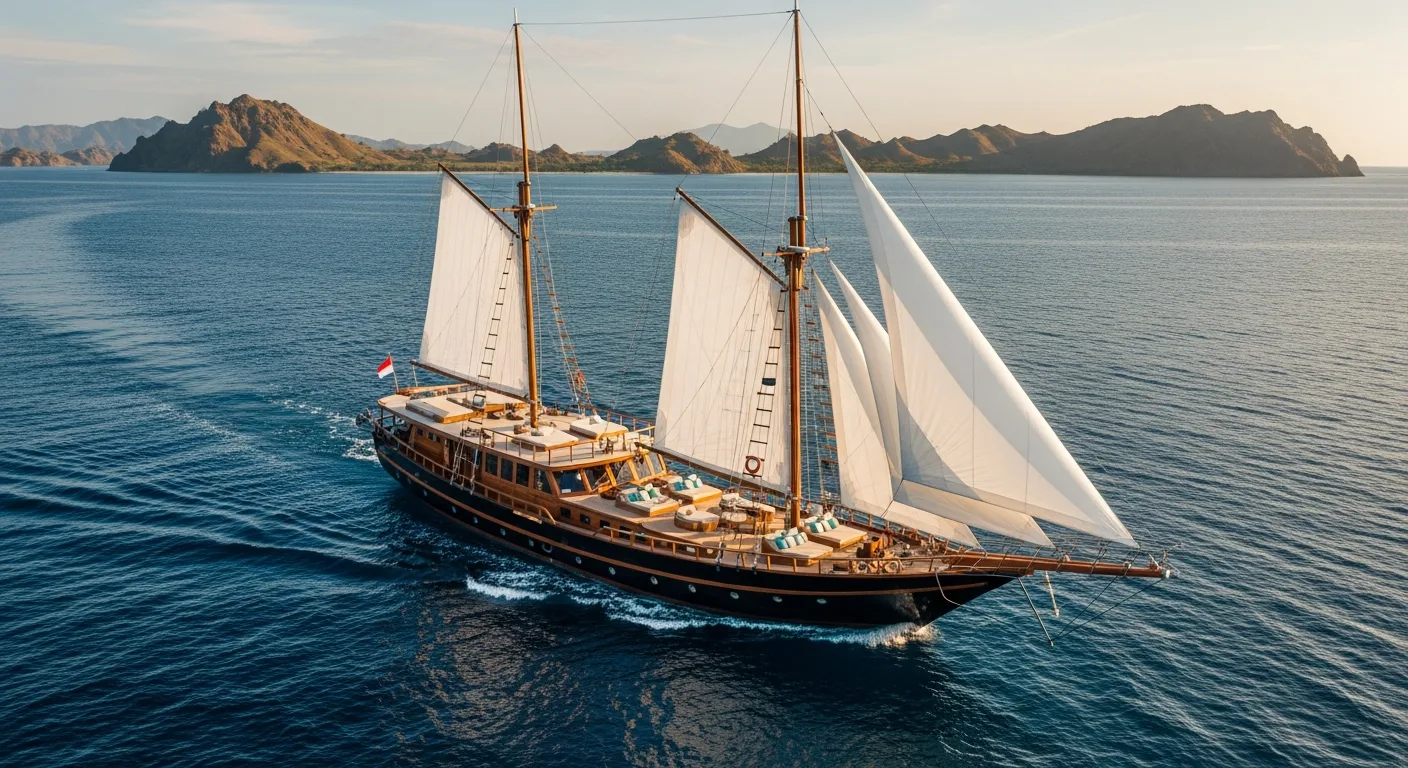
Is there WiFi on Komodo liveaboard boats? At the harbor desk this now comes up as often as cabin counts and departure times. The honest answer depends entirely on which hull you board, because Komodo National Park sits almost completely outside mobile coverage, and a liveaboard charter from Labuan Bajo spends its nights at anchorages no tower reaches. This guide maps where the signal actually dies, names the vessels in our directory with documented connectivity, and shows how to plan a trip where being offline is a decision rather than a surprise.
What “WiFi on board” actually means
Two very different systems hide behind the same word on booking pages. The first is a router that repeats whatever mobile signal the boat can catch. It works at the harbor, limps along the coast for the first stretch, then goes quiet with the towers. The second is a satellite terminal, and in practice today that means Starlink, which keeps working at anchor in the middle of the park because it never needed a tower in the first place.
When a listing says WiFi without saying satellite, assume the first kind. It is not a trick; crews genuinely do share their hotspot where there are bars. But if you are picturing a video call from a bay off Komodo Island on the second evening, only the second kind delivers it. Ask the question in exactly those words before you pay a deposit: is the WiFi mobile-based or satellite?
The boats with documented connectivity
We record only what each vessel’s own listing and our boarding notes document, so this list is short and it is honest.
Semesta Voyage is the clearest case: Starlink satellite internet appears among its listed amenities. She is a 32-meter luxury phinisi with eight air-conditioned ensuite cabins for up to 18 guests, and the terminal means the connection follows the boat rather than the coastline.
Andalucia 2, a 26.5-meter deluxe phinisi with six cabins for up to 16 guests, lists WiFi in the cabins. Lamain Voyage, with six air-conditioned cabins for 16 guests, lists onboard WiFi as well, and Raffles Cruise includes free WiFi among the amenities of its six ocean-view cabins. For day-range work, the speedboat Aquamarine also carries WiFi, which matters less at sea and more for the harbor hours around boarding.
The caution worth repeating: unless the listing names Starlink or satellite, treat these as harbor-and-coast connections. That still covers the boarding morning, the first stretch of the route, and the return approach, which for many guests is all the connectivity a short trip really needs.
The dead-zone map, west to east
Labuan Bajo town and its harbor have solid Telkomsel 4G, and the other Indonesian carriers work in town too. This is where messages send, maps cache, and boarding photos upload. Treat the harbor as your last reliable window.
The first hour out, past Kelor and Manjarite, is the fade. Phones cling to a bar or two facing back toward Flores, then drop it. By the time the boat reaches the central park, the screen says no service and mostly means it.
The central park is the true dead zone. Padar Island, Komodo Island and the Loh Liang ranger station sit outside usable coverage; connectivity guides for the region say plainly to expect no mobile signal on Komodo itself or during the boat legs between islands. South Komodo, including the Manta Alley area, is darker still, further from every tower and visited only by boats.
The practical rule our skippers give guests: send anything that matters before the boat rounds out of Labuan Bajo bay, and promise your contacts a reply on the final morning, not sooner.
Starlink changed the math
Starlink became available in Indonesia in 2024, and since then satellite internet has moved from expedition-grade exotica to a line item on top-tier phinisi. The difference on board is real: messaging and email work at anchor, photo backups run overnight, and a work call from the bow at sunset is genuinely possible on a boat like Semesta Voyage.
Keep two caveats in mind. Bandwidth is shared across everyone on board, so a boat full of guests streaming at once will feel it. And some crews power the terminal down while underway or during weather, so ask at the briefing how and when it runs. Satellite service on a moving wooden boat is very good now; it is still not your fiber line at home.
Planning a connected trip versus a disconnected one
If you must stay reachable, the plan writes itself: choose a vessel with documented satellite service, tell the desk your working hours, and shape the route so the boat is at anchor when your calls are. On a 3D2N charter the boat also re-enters mobile coverage on the final morning approach, which is a dependable window for anything the satellite missed.
If you would rather disconnect, Komodo makes it easy, and a little preparation makes it graceful. Download offline maps, your booking documents and reading material before boarding. Warn the people who worry about you that the quiet is scheduled. Skippers across our fleet report positions to the operating desk at Komodo Luxury throughout each trip, so a boat being out of your reach never means it is out of everyone’s.
Either way, decide before you board. The guests who struggle are the ones who assumed, in both directions.
A realistic connectivity timeline for a 3D2N charter
Here is how the connection actually behaves across a standard three-day loop, told the way crews brief it. Boarding morning: full 4G at the harbor, use it. First afternoon: bars thin past Kelor and Manjarite, and by the time the anchor drops for the first night the phone is a camera. Day two belongs to the park: Padar at dawn, the dragons, the manta channel, all of it offline unless the boat carries satellite, in which case evenings at anchor are your workable window. Final morning: somewhere on the approach to Labuan Bajo the phone shudders awake and three days of messages arrive at once, usually about an hour before the dock.
Guests who know this timeline in advance describe the quiet as the best part of the trip. Guests who discover it at sea describe it differently, which is the entire argument for reading this before you board.
Questions we hear at the desk
Can I take a video call from the boat?
On a Starlink-equipped vessel, yes, most reliably at anchor and best outside peak evening hours when the whole boat is online. On mobile-based WiFi, plan calls for the harbor before departure or the final approach home, and treat anything in between as a bonus.
Which SIM card should I bring?
Telkomsel has the strongest coverage in Labuan Bajo and along the first stretch of coast, and a local eSIM is easy to set up before you fly. Just be clear about what it buys: excellent service in town, a fading hour at sea, and nothing in the park.
Does onboard WiFi cost extra?
Across the boats in our directory that list WiFi, it is presented as an included amenity rather than a paid add-on, but usage rules vary by crew and by weather. Confirm the details at the pre-departure briefing, and see our charter FAQ for how we verify amenities before recommending a boat.
Is there phone signal for emergencies?
Not from your phone in most of the park, which is why the boats do not rely on it. Vessels work their own radio and reporting channels, skippers know where the nearest pockets of coverage sit, and serious matters move ashore quickly even from the dead zones.
Need a boat where the connection holds? Message the fleet desk on WhatsApp at (+62) 811 3823 875 or email [email protected] with your dates and how connected you need to be, and we will shortlist the vessels whose connectivity we have actually tested at anchor.