Best Time to Sail Komodo: Month-by-Month Seas, Seasons & Crowds from a Charter Deck
Month-by-month guide to the best time to visit Komodo: dry season, wet season, Jul–Aug crowds, shoulder sweet spots & park closure rules.
23 min read
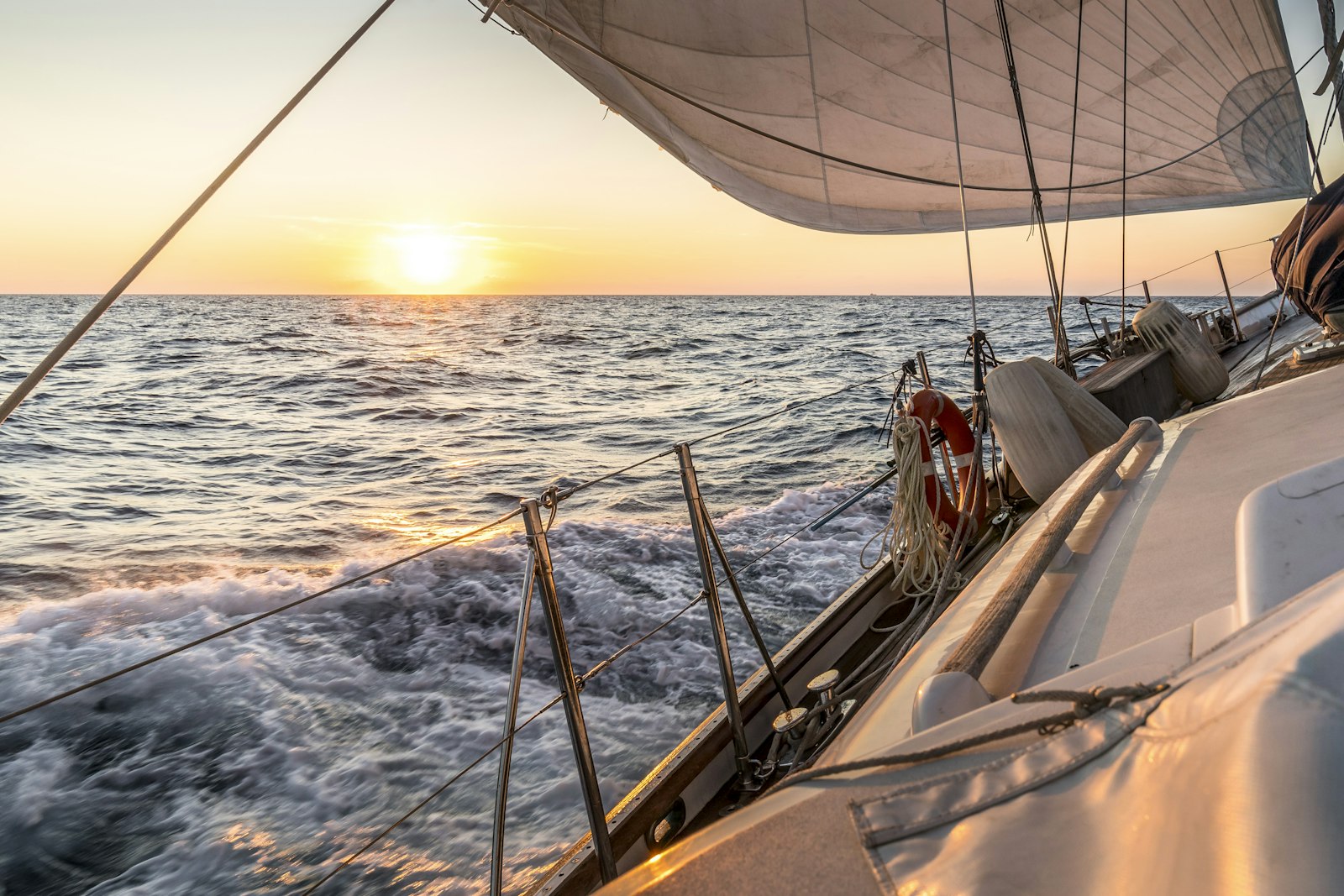
The best time to visit Komodo is April through October — the dry season, when seas across the park calm down and visibility in the water peaks. That said, the full picture is more layered than any simple four-word answer can capture. July and August are the driest and the most crowded, the south coast runs on a completely different seasonal calendar than the north, the park authority suspends sailing permits outright when BMKG issues extreme-weather warnings, and a handful of months that look risky on a rainfall chart actually produce the finest manta diving in the archipelago. This guide breaks it down month by month, from a perspective built on reading Indonesian-language KSOP bulletins, BMKG forecasts, and the route logs from private charters departing Labuan Bajo into Komodo National Park.
Two Seasons, Two Route Families
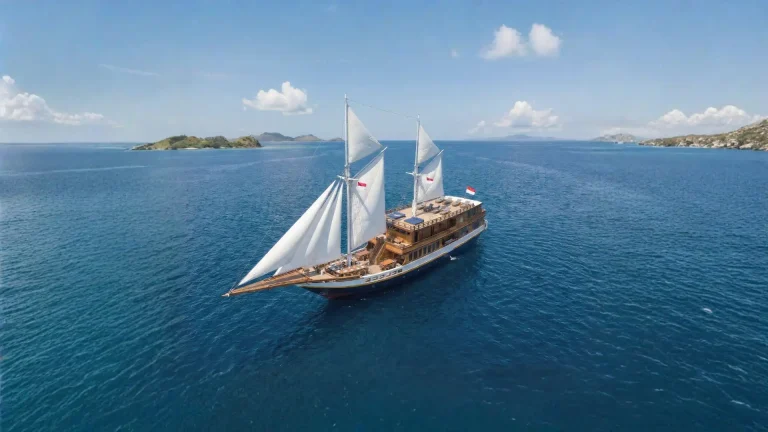
Labuan Bajo sits at the western tip of Flores, and from the marina it is roughly four to five hours by phinisi to the central park — Padar, Pink Beach, Komodo Island. Most guests treat the harbor town and the national park as one seamless destination, which is correct: you board in Labuan Bajo and the voyage itself is the itinerary.
What actually drives the seasonal calendar is the monsoon switch. The northwest monsoon runs from approximately December through March, pushing warm, often unstable weather from the northwest. The southeast trade winds take over from May through September — drier, more consistent, but with stronger afternoon swells in the exposed south. The transition months — April and October to November — are frequently the most cooperative windows on the water.
Because of this, the park divides roughly into two route families:
- North and central loop (May–September)
- Kelor Island, Rinca (Loh Buaya), Kalong, Padar sunrise, Pink Beach, Komodo Island (Loh Liang), Taka Makassar sandbar, Karang Makassar manta point, Gili Lawa Darat and Laut, Castle Rock, Crystal Rock, Batu Bolong. This is the backbone of the dry season and runs confidently year-round for charters of 2D1N through 5D4N.
- South Komodo loop (October–April)
- Horseshoe Bay (Loh Dasami), Cannibal Rock, Yellow Wall, Manta Alley (Torpedo Bay), Padar south. The southeast trades turn this coast rough to inaccessible from June through August. When the northwest monsoon settles the sea in October and November, it opens. The reward — Manta Alley — is discussed below.
Shorter charters (2–4 nights) almost always stay in the central and north zone; it is from 4D3N onward, and especially on 5-night-plus itineraries, that the seasonal south swing becomes the differentiating element. Design your charter around the month you intend to travel and we will map the routing accordingly — no guesswork needed on your end.
Month-by-Month: Komodo Weather, Seas, and Conditions
January — Wet Season Peak, Rough South, Mantas North
January sits at the heart of the northwest monsoon. Rain comes in heavy, sometimes fast-moving squalls rather than week-long grey drizzle; mornings can be glassy even in this month. The south coast — Horseshoe Bay, Manta Alley — is accessible in the NW monsoon, and manta hit-rates at Karang Makassar are actually high right now because nutrient-rich currents peak in the wet season. But the honest caveat is real: January and February are the roughest months statistically, and KSOP Class III Labuan Bajo — the harbor authority — does suspend SPB (sailing permits) when BMKG issues extreme-weather warnings. A March 2024 closure lasted nine days (documented via Tempo, named official Stephanus Risdiyanto). A late-2025 to early-2026 closure affecting the Komodo and Padar routes was reported by ANTARA. These events are not predictable in advance.
Bottom line for January: bookable with a flexible itinerary and a captain you trust to read the BMKG forecast. The south coast is technically open. Build at least one unstructured buffer day into any charter of five nights or longer — the 9D8N framework specifically carries a flex day designed for exactly this kind of weather insurance. Not the wrong month; just not the one where you fight for a fixed schedule.
February — Similar to January, Dragon Activity Low
The wettest month across most of Flores and the Komodo area. Dragon sightings at Loh Buaya (Rinca) and Loh Liang (Komodo Island) continue year-round — these animals do not hibernate — but ranger guides note that dragons are less active in the heat of midday during the wet season and more commonly spotted moving around in the early morning. Book early-morning trek slots. Manta Alley and the central Manta Point at Karang Makassar are both productive. Seas similar to January; the same SPB-suspension risk applies.
Crowd factor: genuinely low. If weather flexibility is built into your dates, February delivers an almost private park experience, particularly on liveaboard and phinisi charters departing Labuan Bajo mid-week.
March — Transitioning Out, Shoulder Opportunity
By mid-to-late March the northwest monsoon begins to ease. Squalls become less frequent, though the sea does not flatten overnight. The documented March 2024 KSOP closure is a reminder that conditions can still force a permit suspension in this month. From the third week of March onward, experienced captains start opening the south coast routing again with more confidence. Mantas remain excellent. Crowds are building toward school-holiday travel but have not yet peaked.
April — First Shoulder Season Sweet Spot
April is where the calendar turns. The SE trades have not fully established their pressure, the northwest monsoon has retreated, and the sea settles into a cooperative interim state. Both the north and south route families are accessible. Manta Alley is still producing (the nutrient pulse from the wet season lingers). Visibility in the water begins to improve sharply. Crowds have not yet reached the May–August peak.
For a 5D4N full figure-8 charter departing Labuan Bajo — covering both Horseshoe Bay in the south and Gili Lawa in the north in a single pass — April is arguably the best calendar month. The worked math: 4 nights at a mid-range phinisi class (implied ~USD 3,000–8,000/night) runs roughly USD 12,000–32,000 before park fees, last verified June 2026. The south sites that would be closed or uncomfortable in July are fully open now.
May — Dry Season Arrives, Routes Consolidate North
The SE trades establish by May. Visibility in the central and north zones climbs to its annual peak — 20–30 metres on good days at Castle Rock and Crystal Rock, where the current pins you against walls of fish. The south coast begins to feel the first SE swell on exposed headlands. By late May, operators start weighing conditions at Horseshoe Bay more carefully. Karang Makassar mantas are year-round; Manta Alley begins its gradual seasonal retreat.
May is genuinely underrated. It is drier and calmer than April, the school-holiday surge has not arrived, and the central park sites are at peak condition. If you are comparing Komodo in May vs August, May typically offers comparable diving conditions in the north with a fraction of the crowd density and significantly more flexibility at the park’s visitor-number cap (reported at 1,000 visitors per day by a single source — verify at booking via SiORA, the official park reservation system).
June — Reliable Dry, Reasonable Crowds, Best Shoulder Value
June runs dry, consistent, and at a crowd level that most charter guests find ideal — busy enough to feel like a functioning destination, not so busy that Padar’s sunrise ridge becomes a queue. The SE trades are established but the July–August intensity has not arrived. Sailing from Labuan Bajo into the central loop is smooth; the passage to Gili Lawa, roughly 4.5 to 6 hours at cruising speed, is usually straightforward. South coast routing transitions to the May–September north-heavy itinerary, meaning the 4D3N classic charter replaces the south Horseshoe Bay day with a north dive day at Castle Rock or Batu Bolong.
June and October–November are the months where repositioning charters — one-way passages from Labuan Bajo toward Satonda, Moyo, and eventually Lombok or Bali — face the most comfortable open-water crossings. If a 10-night or longer itinerary is on your list, plan your voyage window around these months and ask about repositioning pricing, which can differ from round-trip rates when fleets are migrating between their seasonal bases.
July — Driest Month, SE Trades Strongest, Highest Crowds
July is statistically the driest month in the Komodo area and also the most crowded. The SE trades hit their seasonal maximum, which means two things simultaneously: visibility in the water is superb, and the south coast is off-limits for most private charters. Padar’s north bay anchorage can be breezy at night; guests who motion-sensitive will feel the extra chop on exposed legs. Mornings are often glassy before the afternoon trades build.
For Komodo July–August crowds: the central sites — Padar, Pink Beach, Loh Liang — see their highest daily visitor counts. Karang Makassar can have multiple dive boats in the water simultaneously. The park’s reported 1,000 visitors per day cap means SiORA booking pressure peaks here; slots at popular trekking stations can sell out weeks in advance. Private charter guests are partly insulated from this — your phinisi or yacht’s crew can time arrivals at key sites for early morning or post-2pm when tour boats have cycled through — but the park-wide volume is real.
Is August too crowded in Komodo? For day-trippers and shared tours, it genuinely can feel that way. On a private overnight charter departing from Labuan Bajo, the experience is substantially different: you sleep at anchor in bays the day boats do not stay in, and you reach Padar before 07:00 when the light is best anyway. July and August remain excellent months for the north central circuit — just not for the south coast, and not for anyone who wants a late, leisurely start.
August — Peak Season Replica of July
Conditions nearly identical to July. SE trades remain strong; south coast stays in the off-limits column for standard charter routing; the north central loop is at maximum crowd density and maximum underwater clarity simultaneously. Dragon mating season is active through August into September — rangers note increased dragon movement at Loh Liang. This is one detail worth having: if seeing multiple dragons in active, alert posture rather than the midday-heat torpor is a priority, the August trek has an edge.
School holidays in Europe, Australia, and North America overlap here. Book phinisi and yacht charters departing Labuan Bajo in late July and August at least three to five months in advance, and expect peak-season surcharges across vessel classes. Budget mid-range phinisi from roughly USD 3,000–8,000 implied per night; flagship luxury from approximately USD 15,000–30,000 per night (all last verified June 2026; market quotes are per-trip — divide by nights for the implied nightly figure).
September — Trades Ease, Best Second Shoulder Window
September is underappreciated. The SE trades begin to soften in the second half of the month, crowd pressure drops sharply as European school holidays end, and conditions in both the north circuit and the early south openings start aligning. By late September, experienced captains run route surveys on Horseshoe Bay accessibility. Mantas at Karang Makassar continue year-round. Underwater visibility in the central zone remains excellent from the dry-season clarity that has been building since May.
If the question is specifically best time to avoid crowds in Komodo National Park, late September into October is the clearest answer the data supports. You get most of the dry season’s quality with the crowd density cut roughly in half compared to July–August.
October — South Coast Reopens, Second Sweet Spot Begins
October is one of the two best months for a comprehensive charter covering both the north circuit and the south coast. The NW monsoon has not yet established; the SE trades are winding down. Manta Alley’s seasonal plankton cycle begins building again. The 4D3N charter can now include Horseshoe Bay as the designed south swing, which is the whole point of choosing October over a strictly dry-season date.
The Gili Banta crossing (roughly 1.5 to 2.5 hours beyond Gili Lawa into less-visited open water) and the Sangeang volcano approach are both smoothest in the April–June and September–November windows. Any charter of 6D5N or longer that wants to push beyond the park boundary to Banta or onward to Sangeang should seriously consider October departure if the budget and calendar allow.
November — Transition Deepens, Value Month
November sits in the transition toward the northwest monsoon, but the early part of the month still provides reliable sailing from Labuan Bajo into the full park. Manta Alley is producing. Crowds have dropped from their peak. The second half of November can bring the first NW monsoon squalls, though not with January–February regularity. For a Komodo shoulder season experience — nearly empty anchorages, south coast accessible, north circuit pristine — October and November are the closest thing the park has to an off-season that still delivers the full product.
December — Two Characters in One Month
Is December good for Komodo Island? Early December — the first three weeks — often behaves like a late November extension: manageable swell, improving manta conditions as plankton builds, south coast still navigable with appropriate weather judgment. The final week is a different story. Christmas and New Year week brings a surge in luxury bookings (prices carry peak-season surcharges), combined with the early wet-season squall risk. Flagship vessels book out months in advance for the December 24–January 2 window.
Book the first three weeks of December for value and calm. Book the holiday week knowing you may face both premium pricing and genuine weather variability — and build a flex day into a 5-night-plus charter accordingly.
The One Chart That Matters
| Month | Season | Sea State (Central) | South Coast Access | Crowd Level | Manta Alley Conditions |
|---|---|---|---|---|---|
| January | Wet | Variable, squalls possible | Open, weather-dependent | Low | Peak (wet-season plankton) |
| February | Wet (peak) | Roughest month | Open, SPB-closure risk | Lowest | Peak |
| March | Transitioning | Easing mid-month | Opening late-month | Low–Medium | Very good |
| April | Early dry / shoulder | Calm, both coasts good | Fully open | Medium | Still good |
| May | Dry | Calm, visibility rising | Fading south access | Medium | Declining |
| June | Dry | Reliable, north excellent | North-only routing | Medium | Low |
| July | Dry (peak) | Best visibility, SE trades | Closed | Highest | Closed (rough) |
| August | Dry (peak) | Best visibility, SE trades | Closed | Highest | Closed (rough) |
| September | Late dry / shoulder | Easing late-month | Scouting late-month | Medium–Low | Building |
| October | Shoulder | Calm, both coasts reopening | Fully open | Low–Medium | Good |
| November | Shoulder / early wet | Good early, variable late | Open, first squalls late | Low | Very good |
| December | Wet onset / holiday peak | Variable, squalls building | Early-month open | Low then Highest | Peak |
Sea state and manta notes based on regional monsoon patterns and operator field reports; conditions vary year to year. Last verified June 2026. KSOP sailing permits may be suspended without advance notice during BMKG extreme-weather alerts — confirm with your captain in the 48 hours before departure.
The Manta Question: Two Sites, Two Seasons
This is the most misunderstood piece of Komodo seasonal planning, and it is worth spelling out clearly.
Karang Makassar (Manta Point) in the central park is productive essentially year-round. It sits at the intersection of converging currents and hosts the largest resident manta population in the park. Whether you are sailing in April or August, a drift over this site almost always produces mantas. Hit rates may be slightly higher in the nutrient-rich wet season, but the gap is small enough that no operator should tell you “come in January for the mantas at Manta Point.”
Manta Alley on the south coast is a different story. This site requires both physical access — the south coast is rough or inaccessible June through September — and the plankton conditions that drive aggregations. Both conditions align roughly from November through April, with December through February typically the most productive window. Coming specifically for Manta Alley and booking in July is a contradiction: the site is inaccessible and the plankton cycle is not running. An honest operator will tell you this upfront.
So: can you visit Komodo in rainy season for manta diving? Yes — and in some respects the wet season (roughly December to March) produces the most spectacular Manta Alley aggregations. The tradeoff is real weather variability. A private charter with an experienced captain and a flexible daily plan handles this well; a fixed-schedule group tour does not.
Harbor Closures and the Night-Sailing Ban: What the Rules Actually Say
Two regulatory realities that almost no booking platform mentions clearly:
SPB suspension: KSOP (Kantor Syahbandar dan Otoritas Pelabuhan) Class III Labuan Bajo holds authority over sailing permits for tourist vessels in the park. When BMKG issues an extreme-weather warning, KSOP suspends the SPB — no sailing permits issued, no departures for tourist boats. The March 2024 suspension ran nine days. The late-2025 closure targeting Komodo and Padar routes was reported by ANTARA. These are not predictable events and they can happen in any month, though the risk is highest January through February and occasionally in December.
Night-sailing ban: Following a shipwreck incident, Indonesian maritime authorities introduced a ban on night sailing for tourist boats in certain Komodo-area waters. All phinisi, yacht, and liveaboard charters departing Labuan Bajo are required to anchor by dark. This is built into every reputable operator’s itinerary planning — it is not a negotiable shortcut. It also means early-morning departures for sites like Padar (where the sunrise trek requires arriving before first light) are staged from an overnight anchorage, not from Labuan Bajo itself.
Both rules are part of why the itinerary frameworks used on private charters from Labuan Bajo build in overnight anchorages at Kalong, Gili Lawa, or Horseshoe Bay: compliance with the night-sailing ban is seamless when your boat is already positioned where the next day’s activities begin.
How Season Changes the Product by Trip Length
Season is not just background context — it materially changes what a charter can deliver at each duration.
2D1N and 3D2N: Year-Round Core
The 2D1N and 3D2N loops (Kelor, Rinca, Kalong, Padar, Pink Beach, Karang Makassar, Gili Lawa) operate reliably year-round from Labuan Bajo. July and August add some wind chop on exposed anchorages; January and February add weather-watch discipline. The core product — dragons, Padar sunrise, Pink Beach, mantas at Karang Makassar — does not seasonally close. A 2-night charter at a mid-range phinisi class runs roughly USD 6,000–16,000 (2 nights × USD 3,000–8,000 implied per night, last verified June 2026).
4D3N–5D4N: Season Becomes the Point
From 4 nights onward, whether you sail in October–April or May–September genuinely determines what you see. October to April: the charter adds Horseshoe Bay, Cannibal Rock, Manta Alley. May to September: it extends deeper into the north — Crystal Rock, Castle Rock, Batu Bolong — and substitutes more diving on the central pinnacles for the south swing. Neither variant is inferior; they are different itineraries. A 4-night charter at a mid-range class costs roughly USD 9,000–24,000 (3 nights × the same bracket, last verified June 2026).
6D5N and Beyond: Open the Full Map
At 6 nights and longer, the departure point for Gili Banta and Sangeang volcano becomes feasible. The best windows for the open-water Banta and Sangeang crossings are April–June and September–November — the shoulder periods when neither monsoon is at full force. A 7-night charter (6 nights × USD 3,000–30,000, implying USD 18,000–180,000) at the entry bracket is the classic one-week expedition; for divers, it delivers 20–24 dives across Komodo’s central-north circuit plus Sangeang’s rare black-sand muck sites. For reference: 6 nights × USD 4,000/night on a comfortable mid-range phinisi = USD 24,000 before park fees, last verified June 2026.
At 10 nights and beyond, the itinerary begins crossing toward Satonda crater lake, Moyo Island’s waterfalls, the Gili Islands, and Bali — a one-way expedition that the April–May and October–November windows handle most smoothly. The Lombok Strait and open Sumbawa passages are calmest in these shoulder months.
Ready to map your dates against the itinerary that fits your season? Design your charter with our concierge team or reach us on WhatsApp — we will tell you exactly which routes are open and which are honest tradeoffs for the month you have in mind. Our planning help is free; if you proceed with a partner or operator through us, they may pay us a referral fee at no extra cost to you.
Crowds, SiORA, and the 1,000-Visitor Limit
Komodo National Park moved to mandatory advance booking via SiORA (Sistem Informasi Online Reservasi Wisata Alam) — walk-in tickets are no longer available. One widely-cited source reports a cap of approximately 1,000 visitors per day across the park, though this figure is single-source and should be verified at booking. Foreign visitor entrance fees are IDR 250,000 per person per day (last verified June 2026; travel-site consensus, not an official KLHK decree — verify at booking). A ranger guide fee of IDR 200,000 per group of up to five people applies to the dragon treks at Loh Buaya and Loh Liang; Padar trekking carries a separate IDR 150,000 per group. Divers pay an additional IDR 25,000 per diver per day.
These fees are almost universally excluded from budget and mid-range charter quotes; luxury all-inclusive charters increasingly bundle them but it is worth confirming explicitly. Per-vessel charter-boat entry fees: no verifiable published figure exists for these — treat them as handled by the operator and ask for written confirmation of what is included.
Private charters from Labuan Bajo provide a structural crowd advantage that shared tours do not: you anchor overnight and reach peak-demand sites — Padar, Loh Liang — at first light, 90 minutes before day-trip boats from the harbor arrive. In July and August this timing difference is the most effective tool for a private experience that does not feel crowded, regardless of the park-wide visitor count.
Quick Verdict: Best Month by Traveler Priority
- Best overall sailing conditions
- April–June and September–October. Both monsoon transitions, both coasts accessible, visibility excellent, crowds moderate.
- Best diving visibility (north circuit)
- June–August. SE trades drive the clearest water of the year at Castle Rock, Crystal Rock, Batu Bolong. Accept that the south stays closed.
- Best manta diving (Manta Alley, south coast)
- November–February for the south-coast site specifically; year-round for Karang Makassar in the central zone.
- Best time to avoid crowds in Komodo National Park
- Late September, October, November, and February–March. The park is quietest; private charter availability is better; some operators offer off-peak rates.
- Best for a 7-night expedition including Sangeang
- April–May or October–November. Open-water crossings are at their most cooperative in these windows.
- Best for budget-conscious shoulder season
- May and October consistently offer the best ratio of conditions to crowd pressure to charter availability.
Frequently Asked Questions
Is there an off season for Komodo?
Not in the conventional sense. The park itself stays open year-round, and private charters depart Labuan Bajo in every month. What exists instead is a seasonal split: dry season (April–October) delivers calm seas on the central and north circuit, while the wet season (November–March) opens the south coast and produces the year’s best manta aggregations at Manta Alley. February has the lowest visitor numbers and the roughest seas simultaneously — it is the closest the park comes to a true off season, but experienced charter crews navigate it regularly. The practical limitation is the harbor authority (KSOP) suspending sailing permits during BMKG extreme-weather warnings; this can happen without advance notice, mostly January–February and occasionally in late December.
Can you visit Komodo in rainy season, and is it worth it?
Yes, and for the right traveler it absolutely is. The northwest monsoon (December–March) brings rain, warmer water, and the nutrient conditions that drive Manta Alley’s peak season. Visibility in the water can be lower than the dry-season peak, especially after heavy rain disturbs runoff, but Manta Alley dives with 10–15 visibility in the rainy season routinely outperform dry-season north circuit dives for sheer animal spectacle. Build in a weather-flex day on any charter of 5 nights or more, choose a vessel class with stabilizers or adequate beam for overnight comfort at anchor, and let the captain read the daily BMKG forecast for routing decisions. People who travel with a fixed must-do-every-site mentality will struggle in February; people who travel with a good-boat-and-a-great-captain mindset often call it the trip highlight.
Is August too crowded in Komodo National Park?
For shared tours and day trips from Labuan Bajo, August can genuinely feel crowded at Padar’s summit and Loh Liang’s ranger station. For private overnight charters, the crowd dynamic is substantially different: you time arrivals at the park’s headline sites for before 07:00 or after 15:00, sleep at anchor in bays the day-tripper fleet does not access, and move at your own pace. The park-wide daily visitor cap (reportedly around 1,000 — single source, verify via SiORA at booking) means advance booking is non-negotiable in August for trek permits. August offers the year’s best underwater visibility in the north central zone. It is not the wrong month for a private liveaboard or phinisi charter; it is the wrong month for anyone who cannot tolerate crowds at the headline viewpoints between 08:00 and 14:00.
What is the best time to visit Komodo for someone comparing May vs August?
Both months offer excellent conditions in the central and north circuit. The practical differences: May has moderate crowds, opening-week south-coast access (Manta Alley still viable early in the month), and no peak-season surcharges on most vessels. August has slightly better underwater visibility in the north, significantly higher crowd density at Padar and Loh Liang, closed south coast, peak-season pricing across vessel classes, and the year’s most dramatic dragon mating activity at Loh Liang. If the south coast and Manta Alley are on your list, choose May. If the north circuit dive sites and you are indifferent to crowds on the top-of-hour viewpoints, August delivers. For honeymooners or anyone who prefers a private anchorage to themselves at night, May wins on every dimension except the narrow underwater-visibility margin.
How far in advance do I need to book a private charter from Labuan Bajo?
For shoulder months (April–May, October–November) at mid-range phinisi class: four to eight weeks is typically sufficient. For July and August at any vessel class, and for the Christmas–New Year period at flagship luxury level (vessels in the USD 15,000–30,000+ per night bracket, last verified June 2026), three to five months is the realistic minimum for confirmed availability. The SiORA park reservation system also requires advance booking for trek slots, which your operator handles — but if you arrive at a date with a confirmed boat and no trek permits, you will be waiting ashore. Booking the vessel and the park permits in one coordinated step, through a concierge team that handles both, avoids this. Message us on our charter brief form or WhatsApp with your target dates and group size and we will check real availability across the vessel classes that match your budget.