Diving Komodo from a Private Charter vs a Dive Resort: Range, Rotation & Cost
Private dive liveaboard Komodo vs shore-based resort: real range, dive rotation, costs (USD 3,000–30,000/night), and what tanks-aboard means for your week.
15 min read
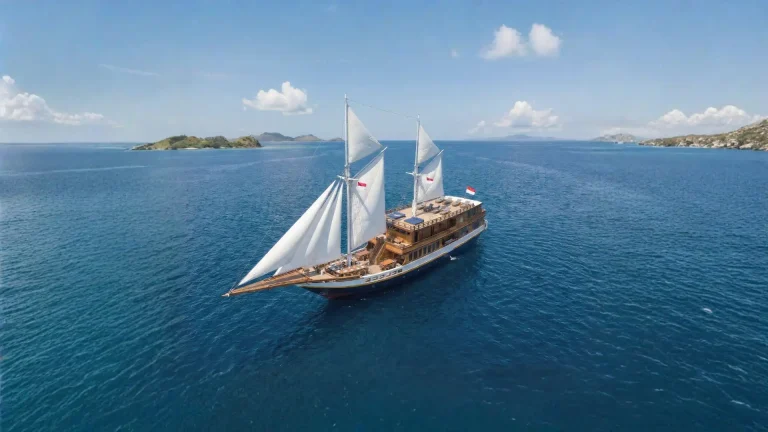
A private dive liveaboard Komodo charter gives you something a shore resort structurally cannot: the boat moves to the dive site, not the diver to the boat. On a liveaboard sailing out of Labuan Bajo into Komodo National Park, you can be anchored thirty seconds from Batu Bolong at first light, slip into the current before tour-boat crowds arrive, and by afternoon be drifting Manta Point without having shared a tender ride with twenty strangers. That spatial freedom — moving anchorage every night, choosing south-coast sites when season allows, reaching Gili Banta or Sangeang on longer charters — is the core argument for the private phinisi or yacht over any land operation.
The resort or dive centre model works differently. You sleep ashore, depart by day-boat each morning, return by afternoon, and your dive range is constrained by travel time. A Labuan Bajo resort can reach the central sites well — Karang Makassar (Manta Point), Siaba, Tatawa — in under ninety minutes. The south coast sites and the outer frontier sites are possible as day-trips, barely. Sangeang volcano and Gili Banta are not. That difference compounds across a week.
What the Range Actually Means, Site by Site
Komodo National Park and the waters immediately beyond it span roughly 1,733 square kilometres. The sites serious divers want are not clustered — they run from Kelor and Sebayur in the north-central zone, down to Cannibal Rock and Manta Alley in the south, east to Castle Rock and Crystal Rock off Gili Lawa Darat, and north-west past the park boundary to Gili Banta’s K2 wall and GPS Point. Sangeang, an active volcano with genuinely rare muck-diving, sits another three to four-and-a-half hours from Gili Banta.
From a Labuan Bajo resort, a day-boat running the standard loop reaches the central sites comfortably. Pink Beach and Komodo Island (Loh Liang) are a four-to-five-hour round trip by speedboat or tender. That is already a full travel day. The south — Horseshoe Bay, Yellow Wall, Manta Alley, Cannibal Rock — involves roughly two-to-three hours south from Padar, meaning a very early start and a long return. Operators offer these as day-trips in the Oct–Apr season when the south coast is calm under the NW monsoon. You get there. You dive. You turn around. It is efficient but not indulgent.
Castle Rock and Crystal Rock, the famous north current pinnacles off Gili Lawa Laut, are roughly four-and-a-half to six hours one-way from Labuan Bajo on a phinisi. Day-boats can reach them — at a cost of almost the entire day in transit. A private diving charter from Labuan Bajo solves this by simply moving north and spending the night off Gili Lawa Darat. The dives happen at slack the next morning, fifteen minutes from the anchorage.
Gili Banta and Sangeang are another category entirely. The crossing from the park boundary to Banta is one-and-a-half to two-and-a-half hours from Gili Lawa. Sangeang is a further three to four-and-a-half hours from Banta. These sites — Bubble Reef’s volcanic gas seeps, the critter-dense black-sand muck of Techno Reef and Deep Purple — are genuinely only accessible on a sailing charter of six nights or more. They do not exist on any resort day-boat menu.
Dive Rotation: How Many Dives Per Day, and at Which Sites?
The practical math of dive density is where a luxury liveaboard with dive center komodo setup earns its cost. On a private charter, a dedicated dive day runs three or four dives — a dawn dive, a mid-morning dive, an afternoon dive, and optionally a dusk or night dive if the anchorage suits. There is no shore transfer, no wait for a group to assemble, no scheduled departure window. Your guide, your compressor, your tanks, your timeline.
A 4D3N charter — one of the most popular durations for divers — realistically delivers eight to ten dives spread across the central and (seasonally) south-coast sites. A 5D4N figure-eight charter raises that to twelve to sixteen dives and begins to cover every compass point of the park. By 7D6N, which unlocks the Sangeang excursion, twenty to twenty-four dives across four distinct biotopes — south cold-water colour, central manta sites, north current pinnacles, Sangeang black sand — is a realistic log.
Compare that to a resort week. Seven nights ashore, five dive days after travel days (most guests fly in and out on day one and seven), two dives per day-boat trip, ten dives total — often at the same three or four sites. The resort model works well for divers who want Komodo as one component of a broader Indonesia trip and are not chasing the outer sites. For anyone who has specifically come to dive, the charter maths are hard to argue against.
What Is Included — and What Costs Extra
This is the area where most charter brochures are less than clear. Here is what is typically standard versus typically additional on a paket diving komodo liveaboard dari labuan bajo, verified as of June 2026:
| Item | Usually included on private charter | Usually additional / charter-specific |
|---|---|---|
| Tanks (12L aluminium, 200 bar fills) | Yes — compressor aboard on most mid and luxury phinisi | Verify at booking; budget boats may not carry a compressor |
| Weights and weight belts | Usually included | — |
| BCD, regulator, wetsuit, mask, fins | Not usually — standard is bring-your-own or hire ashore | Gear hire USD 20–40/day is typical; confirm pre-charter |
| Dive guide / divemaster | Not automatic — must be requested and budgeted at booking | Typically USD 80–150/day for a private DM, depending on vessel |
| Nitrox fills | Rarely — nitrox compressor is a premium vessel feature | Surcharge where available; confirm vessel spec |
| Komodo NP diving surcharge | Excluded on budget/mid charters (travel-site consensus IDR 25,000/diver/day, last verified June 2026) | Often bundled on luxury all-inclusive charters — verify at booking |
| Snorkel gear | Yes — universally standard on all classes | — |
| Full board (3 meals, water, tea, coffee) | Yes — standard across all classes | Alcohol nearly always additional |
The practical implication: when you see a per-night charter rate, the diving itself has a separate cost layer unless the booking explicitly says otherwise. A mid-range phinisi at roughly USD 3,000–5,000 per night for the whole boat may not include the divemaster, the tank fills beyond the compressor charge, or your BCD. A flagship luxury phinisi at USD 15,000–20,000 per night often bundles the lot. Always ask for a written dive-services breakdown before signing.
Park fees add another layer. Komodo National Park charges a diving surcharge of IDR 25,000 per diver per day, plus the visitor entrance fee of IDR 250,000 per person per day for foreign nationals (travel-site consensus, last verified June 2026 — verify at booking, as these figures come from travel sources not official government decree). On a 4D3N charter with four divers doing two dives a day, that is roughly IDR 3,300,000 (~USD 200) in dive surcharges alone, on top of entrance fees. Budget charters typically exclude all park fees; premium charters increasingly absorb them. Confirm in writing.
The South Sites in Season — Why This Changes the Dive Menu
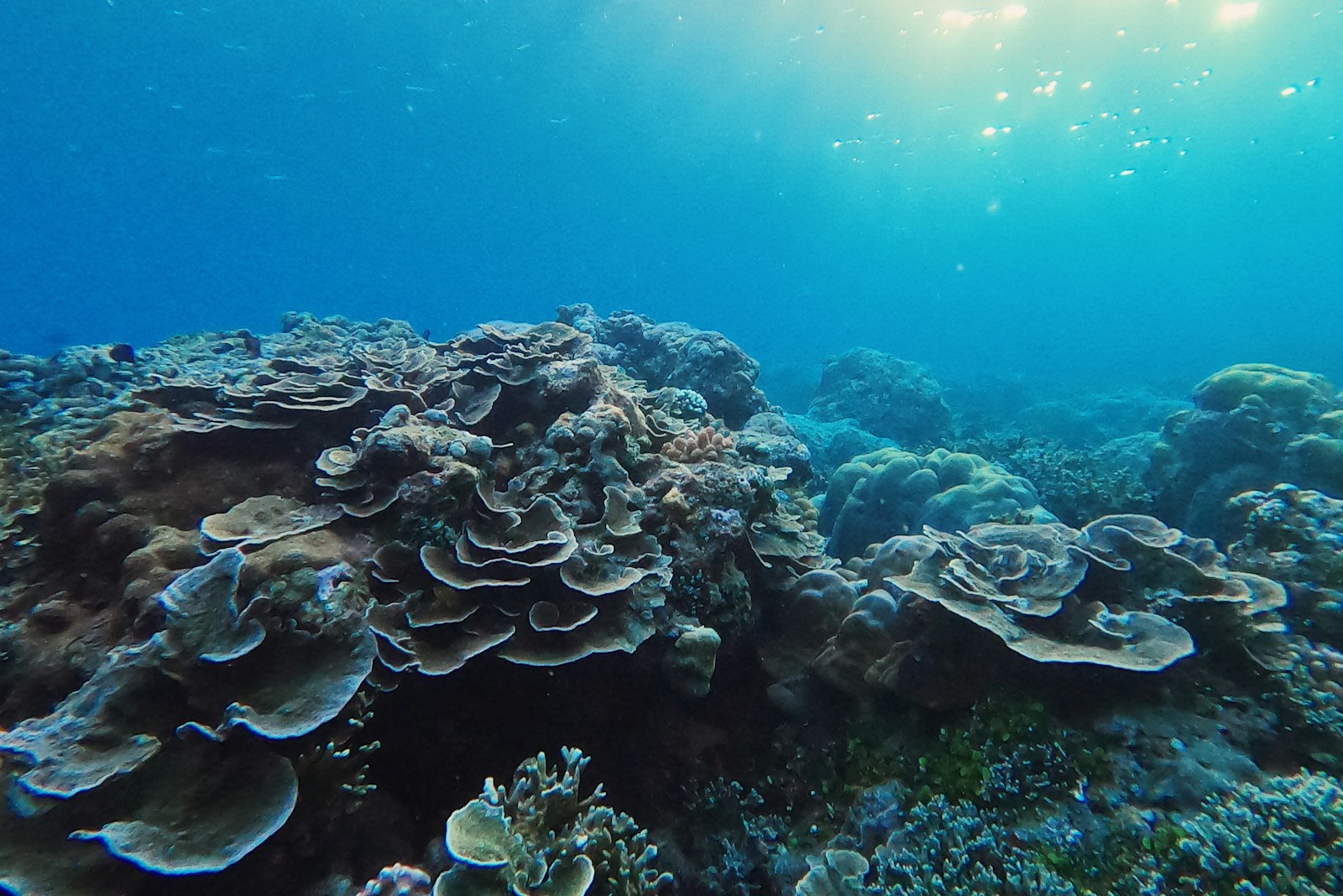
The south of Komodo — Horseshoe Bay (Loh Dasami), Yellow Wall, Cannibal Rock, Torpedo Bay, and Manta Alley — is an Oct–Apr product. Under the NW monsoon the south coast is calm, the water is cold and nutrient-rich, and Manta Alley delivers aggregations that Karang Makassar, for all its year-round reliability, simply cannot match in sheer numbers. Cannibal Rock is one of the most photographed coral bommies in eastern Indonesia: dense sea fans, pygmy seahorses, ghost pipefish, ribbons of anthias. Getting there on a paket sailing komodo plus diving that covers both the south and north in one trip requires at minimum a 4D3N charter, and honestly a 5D4N to do it without rushing the north.
The seasonal manta logic is genuinely two-sided and worth being direct about. Karang Makassar (Manta Point in the central park, near Taka Makassar sandbar) has mantas year-round, with hit-rates that improve in the plankton-rich Dec–Mar window. Manta Alley in the south peaks roughly Oct–Apr, when the site is also physically accessible. If your trip falls in Jul–Aug, the south coast is rough, the south sites are off the menu for comfort reasons, and the correct answer is a north-weighted itinerary through Castle Rock, Crystal Rock, and Batu Bolong — a different dive menu but not a lesser one. Any guide or operator who tells you July is fine for Manta Alley is not reading the weather correctly.
Non-Divers on the Same Boat: Mixing Groups
One of the genuine advantages of a private charter over any group liveaboard is that the trip is built around your party, not the dive operator’s schedule. A family of six where three people dive and three snorkel is a perfectly natural private-charter group. While the divers descend, the snorkellers take the tender to the adjacent reef or the beach landing. Nobody waits. Nobody compromises.
For a private snorkeling trip Komodo National Park passenger sitting alongside divers, the practical logistics are: snorkel gear is standard and included; the guide’s go/no-go call on current applies equally to snorkellers in the water (Komodo’s currents are real, not decorative — Pink Beach and Karang Makassar at the wrong tidal stage are unsafe for anyone without a guide’s clearance); and the day’s timing often works well because divers need surface intervals anyway.
The snorkeling private boat Labuan Bajo option is also a viable standalone product for non-divers — a charter built entirely around surface activities, fishing, and island landings. For groups mixing serious divers with non-diving partners or children, a private charter is unambiguously the better format than any group liveaboard, because the vessel’s daily plan is negotiated the night before by the guide, captain, and guests together.
A note on the private fishing charter Labuan Bajo angle: the waters around Komodo are productive for GT (giant trevally), wahoo, and tuna, particularly on the passage between islands and outside the park boundary. Most private phinisi charters can accommodate fishing lines off the stern at transit — the captain will flag any park zone restrictions. A dedicated fishing day is a reasonable request on a 7D+ itinerary. Discuss it at the brief stage so the right gear comes aboard.
The Cost Comparison: Charter vs Resort, Honestly
The comparison most people run is misleading because they compare the charter’s total against the resort’s per-person rate. The correct frame is: a private charter is a whole-boat hire, and the per-person cost scales down with group size.
- Mid-range phinisi, 4D3N, 4 divers
- Charter rate ~USD 3,000–5,000/night implied (whole boat); 3 nights = USD 9,000–15,000 before park fees and dive services. Per person across 4 guests: USD 2,250–3,750 all-in, comparable to a premium resort week with day-boat dives included.
- Mid-range phinisi, 6D5N, 6 guests
- 5 nights × $4,000/night = $20,000 whole boat. Six guests split $3,333 each — for a five-night private expedition covering Gili Banta, vs a resort week capped at central sites.
- Luxury phinisi, 7D6N, 8 guests
- 6 nights × $12,000/night = $72,000 whole boat. Eight guests at $9,000 each — this is the Sangeang-unlocking week in the flagship tier, with a dedicated DM, nitrox, full gear, chef-prepared meals, and nobody else on the boat.
Against those numbers, a premium Labuan Bajo dive resort might run USD 300–600 per person per night including two boat dives daily, so seven nights = USD 2,100–4,200 per person. That is a lower per-person cost than the luxury charter tier. But the range is also smaller, the site rotation is predetermined, and Sangeang is simply not in the menu. The question is whether the frontier sites and the private-boat experience are worth the premium to your particular group. For serious divers on a once-in-several-years Indonesia trip, usually yes. For casual snorkellers wanting Padar and Pink Beach on a budget, a shorter mid-range charter or a resort makes equal sense.
Ready to work out the right format for your group? Design your charter with our concierge team, or reach out directly on WhatsApp — we will map the right duration, vessel class, and dive-services package to what you actually want to do in the water.
Currents, Safety, and the Guide’s Go/No-Go Call
No content about diving Komodo is complete without being direct about the currents. Komodo National Park is one of the most current-swept dive destinations in the world — that is why it is also one of the most biodiverse. The same upwelling that pushes cold nutrient-rich water onto the reefs also creates conditions where an inexperienced diver can be swept off a site in minutes. Castle Rock, Crystal Rock, GPS Point on Gili Banta, and Manta Alley in the south are advanced or experienced-diver sites at any current state.
The correct protocol on any private diving charter from Labuan Bajo is: the dive guide makes the go/no-go call on each site each day based on tidal timing and observed surface conditions. No written itinerary — including this one — overrides that call. Experienced guides time the slack at current pinnacles with precision and will hold the anchor for thirty minutes rather than put guests in the wrong window. A guide who says “not today” at Crystal Rock is doing their job. Budget extra flexibility, especially at Gili Banta and Sangeang, for exactly this reason.
For non-certified guests on a mixed charter, snorkelling is genuinely viable at most central sites — Karang Makassar, Pink Beach, Siaba, Kanawa — in normal conditions. The guide applies the same current-read before sending snorkellers in. Children and non-swimmers should always use a life jacket and stay close to the tender. These are not theoretical cautions; they reflect real conditions in the park.
How to Brief the Dive Component at Booking
The clearest way to avoid surprises on a diving charter Labuan Bajo is to provide a specific dive brief at booking, not after. The questions that save the most confusion:
- Does this vessel carry a compressor and fill tanks aboard, or do tanks come pre-filled?
- Is a divemaster included in the charter rate, or is this an additional hire?
- Does the vessel carry nitrox capability, and at what surcharge?
- Which sites are in range for this duration and this season?
- Are park diving surcharges and entrance fees bundled or excluded?
- What is the minimum certification level required for the planned sites?
- What happens if weather cancels a planned site — is there a substitute dive day built in?
Our concierge team goes through all of these at the brief stage, matching vessel to dive intent and flagging any gap between what guests expect and what the itinerary can deliver. No one can pay to change what we tell you about a vessel’s dive setup; if you proceed with a charter partner through us, they may pay a referral fee at no extra cost to you.
The Indonesia Juara concierge team — our sister brand within Juara Holding Group, disclosed — can be reached via WhatsApp for a same-day dive brief. Use our charter brief form to give us the group size, certification levels, target duration, and preferred season, and we will return a shortlist of vessels with specific dive-services inclusions written out.
Frequently Asked Questions
Do private liveaboard charters in Komodo always have a compressor aboard?
Most mid-range and luxury phinisi carry a compressor for onboard fills, but budget wooden boats often do not — tanks come pre-filled from Labuan Bajo and the number of available fills is fixed. Always confirm at booking whether the vessel carries a compressor, how many fills per day are standard, and whether nitrox is available. For a serious dive charter, a compressor-equipped vessel is the practical baseline.
What is the diving surcharge in Komodo National Park?
Based on travel-site consensus as of June 2026, the park charges IDR 25,000 per diver per day as a diving surcharge, on top of the standard foreign visitor entrance fee of IDR 250,000 per person per day. These figures are not sourced from an official government decree — verify at booking, as park fees have changed historically and a new fee schedule is always possible. Budget and mid-range charters typically exclude all park fees from the quoted rate; luxury all-inclusive charters often bundle them.
Can non-divers and divers share a private charter without conflict?
Yes — and this is one of the strongest arguments for a private over a group liveaboard. Because the trip is built around your party alone, snorkellers use the tender during dives, and the day is paced to suit the mixed group. Snorkel gear is standard on all vessel classes. The guide applies the same current-safety assessment before sending snorkellers in the water as before sending divers down. Komodo’s currents are real, so surface supervision by crew is part of the standard operation, not an add-on.
Which sites require an advanced or experienced diver certification?
Castle Rock, Crystal Rock, GPS Point (Gili Banta), and Manta Alley are current-swept sites that demand at minimum Advanced Open Water with meaningful drift experience. Cannibal Rock and the south Komodo sites are generally accessible to Open Water certified divers at slack water but require a guide who knows the window precisely. Karang Makassar (Manta Point), Siaba, and Kanawa are beginner-accessible under normal conditions. The guide’s go/no-go call on the day is final regardless of certification level — conditions change between morning and afternoon.
Is it possible to combine a private dive liveaboard Komodo with fishing on the same charter?
On most private phinisi and yacht charters out of Labuan Bajo, fishing lines can be trailed during transits, and a dedicated fishing session can be built into the day on request. Giant trevally, wahoo, and tuna are present in the open water between islands and outside the park boundary. Jet fishing within the national park is subject to park regulations, so the captain will advise on zones. For groups mixing divers and keen anglers, a 7D6N or longer charter gives enough flexibility to run a full fishing day alongside the dive programme without sacrificing the main sites.