Are Komodo Boat Charters Safe? Incidents, Standards & How We Vet Every Hull
Are Komodo boat charters safe? The honest incident record, the harbormaster rules, and the vetting checklist we run before any hull enters our curated fleet.
7 min read

Are Komodo boat charters safe? Incidents, standards and how we vet every hull
Komodo boat charters are safe when the vessel is seaworthy, the crew is licensed and the captain respects the harbormaster’s weather calls — and the honest record shows not every boat in these waters clears that bar. This guide covers the incidents, the rules, and the checklist we run before any hull enters our fleet.
We are writing this one carefully, because it deserves care. The question “are Komodo boat charters safe” gets two kinds of answers online: reassurance from people selling trips, and alarm from people reacting to headlines. Neither helps you choose a boat. What helps is understanding why incidents happen and how to recognize the vessels that have engineered those causes out.
The record, stated plainly
Boats have been lost in Komodo waters. The most serious recent case came on 26 December 2025, when a wooden tour boat sank in the Padar strait in heavy seas after engine trouble; four members of one visiting family died. Indonesian authorities investigating that sinking noted that the wider area had recorded roughly fifteen tourist-boat incidents across 2024 and 2025 — most ending without casualties, most traced to weather, engine failure or both.
Those numbers sit against a very large denominator: hundreds of vessels making thousands of park crossings every year. But we will not hide behind the denominator. The pattern in the incident reports is consistent and, from a curation standpoint, useful — because the causes cluster tightly, and clustered causes can be screened for.
Why incidents happen: three causes, endlessly repeated
- Weather taken on instead of waited out. The west monsoon between November and March — hardest in January and February — builds short, steep seas in the straits. Boats get into trouble when schedules override conditions. Our rainy-season guide explains how good captains reroute rather than push.
- Single points of mechanical failure. An older hull with one engine, no serviced backup and a pump that only works when someone remembers it is not unsafe on a calm day. It is unsafe on the wrong day, and the wrong day always comes.
- Price-floor economics. The cheapest seats in the harbor are cheap because something was cut — crew numbers, maintenance intervals, insurance, or the patience to wait out a blow. Safety margins are the least visible thing to cut and the first thing cut.
What the rules actually require
Every commercial departure from Labuan Bajo requires port clearance — the SPB, issued by the harbormaster’s office — before the boat may sail. When weather warnings are in force, clearance is withheld and licensed boats stay in port; that system is the park’s first safety net, and the December 2025 tragedy has brought visibly tighter enforcement of it. Beyond clearance, tour vessels are subject to inspection, crew licensing requirements and mandatory life-saving equipment. The rules are sound. The variable is compliance — which is exactly where vetting comes in.
Are phinisi boats safe for overnight trips?
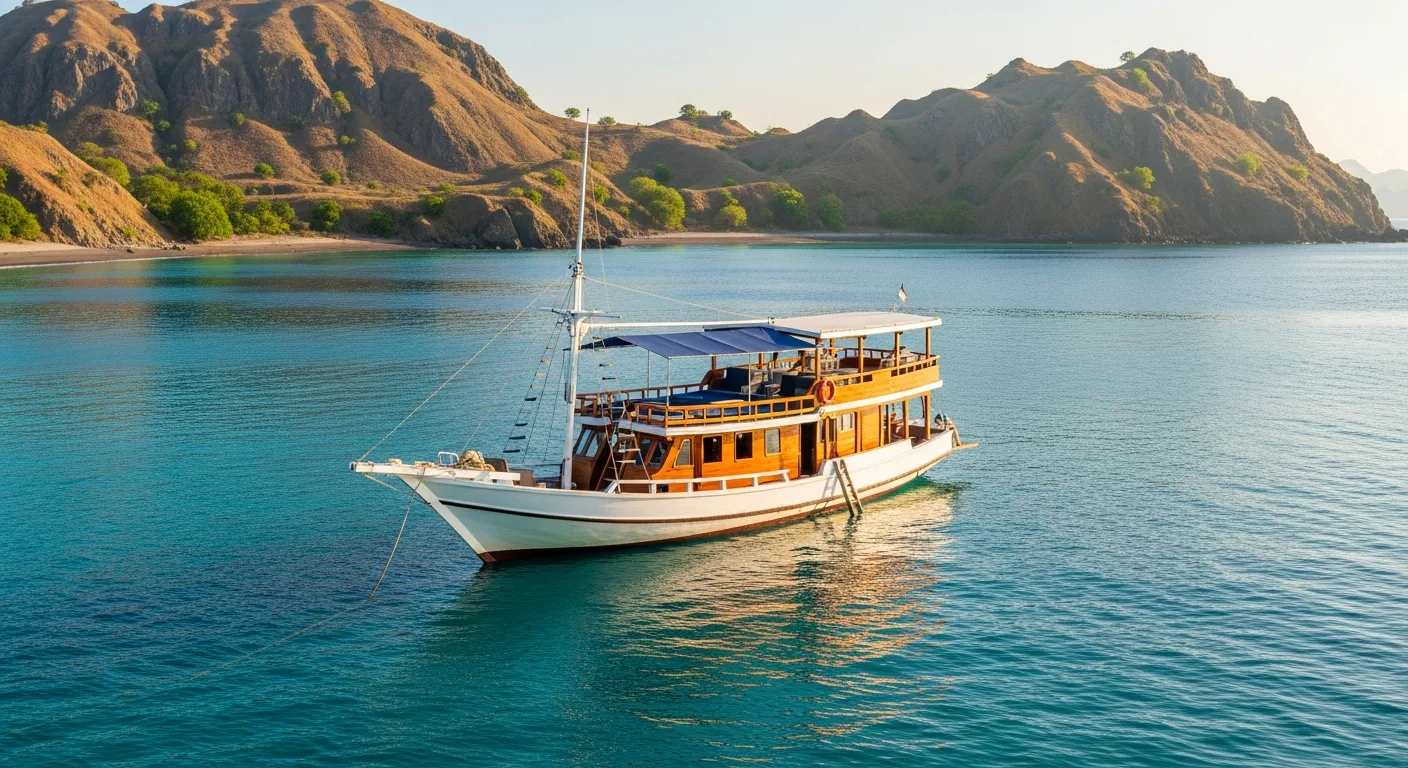
A well-built, well-run phinisi is a genuinely seaworthy platform — these hulls descend from Bugis working schooners that crossed open Indonesian seas for generations, and the modern charter builds add engines, navigation electronics and watertight compartmenting the originals never had. The design is not the risk. The individual boat is. Two phinisi moored side by side can be a decade apart in maintenance and a world apart in crew discipline, which is why we grade vessels one by one and never class-wide. For what the term itself means and how the boats are built, see our phinisi explainer.
How we vet every hull: the curation checklist
Kristo Jehamat, our fleet director, has worked this harbor for twelve years — first as phinisi crew, then charter operations — and he boards every vessel before it enters the directory. The checklist his team runs:
- Hull and engine room. Build year, refit history, bilge condition, and the state of the engine room — clean engine rooms and honest logbooks travel together.
- Redundancy. Twin engines or a documented, serviced backup; independent bilge pumps; a tender that starts.
- Safety count. Life jackets counted against maximum guests, not average bookings; extinguishers in date; flares; a life raft on hulls rated for open crossings.
- Crew ratio and licensing. Enough certified crew to run night watches on multi-day routes, not just daytime service.
- Communications. Working VHF plus a reliable phone or satellite link for the dead zones inside the park.
- Paper. Insurance that covers guests, current inspection documents, and a clean clearance record with the harbormaster.
- The sail test. We ride the boat. Deck hardware, crew drills and how the captain talks about weather tell you things paper cannot.
Vessels are graded, and the grade decides whether — and for which routes — they appear in the fleet directory. A boat fit for sheltered two-day loops is not automatically fit for the southern crossings, and our matching reflects that.
What you can check yourself in five minutes
Booking anywhere — with us or with anyone — ask these five questions and watch how they are answered:
- Does the boat sail with harbormaster clearance on every departure?
- Twin engines or a serviced backup?
- How many life jackets, and for how many guests?
- Is guest insurance in place — and can I see it?
- What did the captain do the last time weather turned mid-trip?
Fluent, specific answers mean process. Vague reassurance means improvisation. The full list of what to ask before money moves is in our booking guide.
Day trips and overnights: does the format change the risk?
Guests often assume the overnight is the riskier format. The record does not really support that instinct. Day-trip speedboats and multi-day phinisi face the same straits and the same weather; what differs is how each format manages exposure.
Speedboats run fast, morning-weighted schedules — out in the calm, back before the afternoon builds — and a good day-boat captain treats the 06:00 departure as a safety feature, not a marketing one. Their vulnerability is schedule pressure: a boat that must complete six stops and return by 17:00 has less room to wait out a squall than a liveaboard that can simply anchor and let it pass. Liveaboards carry the opposite profile: slower hulls, more time in the water, but the freedom to shelter, reroute and resume that speed can never buy. On the wrong day, patience is the superior technology.
Practically: on any day trip, confirm the boat carries jackets for every seat and watch that the crew actually briefs their location before the first crossing. On any overnight, ask who stands watch at anchor. Both questions take ten seconds and both answers tell you plenty.
The season factor
Most of the risk calendar is simply the weather calendar. April through October brings calm seas and routine crossings; November through March demands flexible itineraries and captains willing to wait. Trips run all year — January and February simply run on the weather’s terms, with sheltered alternates ready. See the best time to sail Komodo for the month-by-month picture, and if you are sailing with children, our family charter guide adds the age-specific layer.
Safety questions, answered short
Have there been sinking incidents with Komodo boats?
Yes. The December 2025 sinking near Padar was the most serious recent loss, and authorities counted roughly fifteen tourist-boat incidents in the area across 2024–2025, most weather- or engine-related and most without casualties. The causes repeat — which is why screening for them works.
How do I know if a Labuan Bajo boat is safe?
Ask for the specifics: clearance practice, engine redundancy, life-jacket count against capacity, guest insurance, crew numbers. A safe operator answers in details, immediately. An unsafe one answers in adjectives.
Which Komodo boat operator is the safest?
The one that shows you documents before you ask twice, sails only with port clearance, and treats a harbormaster weather call as final. Our directory is operated by Komodo Luxury — TripAdvisor Travelers’ Choice 2025 and 2026— and every listed hull has been boarded and graded against the checklist above; but judge any operator, including us, by the evidence they put in front of you.
Want the safety file on a specific vessel before you commit? Message the fleet desk on WhatsApp — (+62) 811 3823 875 or email [email protected] and we will walk you through exactly what we checked and when.