What to Pack for a Komodo Boat Trip: The Charter-Tested List
What to pack for a Komodo boat trip: the charter-tested list. Soft duffel, reef-safe sunscreen, trail shoes, dry bag, cash for ranger fees and what to skip.
7 min read

What to pack for a Komodo boat trip: the charter-tested list
Pack for a Komodo boat trip in one soft duffel of 10 to 15 kg: quick-dry clothes, reef-safe sunscreen, closed shoes for the dragon trails, a rash guard, motion-sickness tablets, a dry bag, a power bank and small rupiah notes for ranger fees. The boat supplies snorkel gear, towels and bedding.
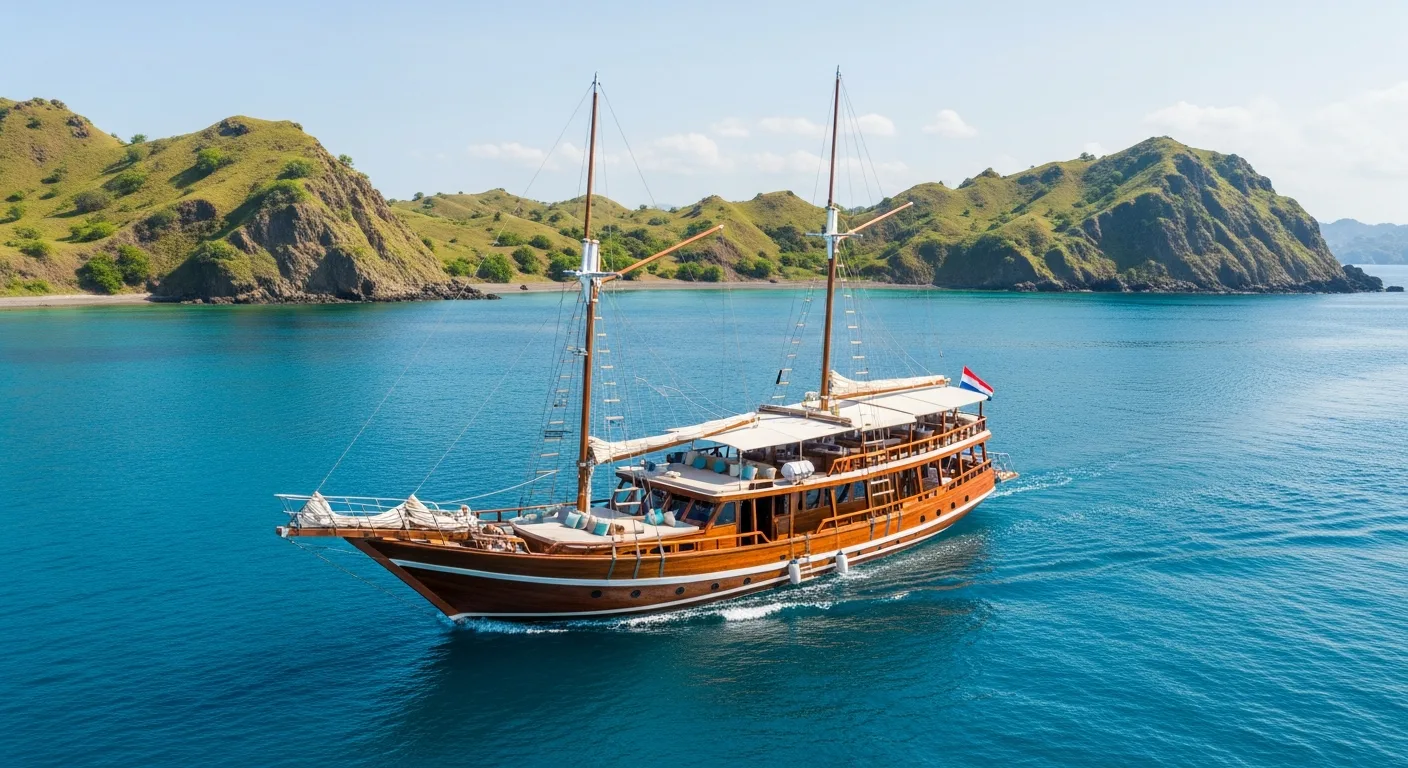
This list has been refined by watching what guests actually use at sea — and what stays zipped in the bag for three days. Nothing here is theoretical. Every item earned its place on deck, on a trail or in a cabin somewhere between Labuan Bajo and the south of the park.
The one rule: soft bag, modest weight
Phinisi cabins are clever with space but unforgiving with hard shells — under-bunk storage and curved hull walls swallow a duffel and reject a suitcase. One soft bag of 10 to 15 kg per person is the fleet-wide sweet spot. If you are flying in with more (domestic economy fares typically allow around 20 kg checked), most operators and hotels will store the overflow in Labuan Bajo until you are back on land; our flights and transfer guide covers how to arrange that on arrival day.
Sun protection, in three layers
- Reef-safe sunscreen. Marine-park etiquette and increasingly regulation point the same way: mineral formulas, not oxybenzone. Buy before you fly — selection in Labuan Bajo is thin and priced accordingly.
- A rash guard. The single most valuable item on the list. Equatorial sun plus two snorkel sessions a day defeats any cream; fabric does not reapply itself because it does not need to.
- Hat and sunglasses, both tethered. The crossing breeze has claimed enough of each to stock a market stall. Polarized lenses also make manta-spotting from the bow dramatically easier.
Feet: deck and trail are different problems
On board you will live barefoot — crews prefer it and teak agrees. Ashore is another matter: the ranger-guided walks on Komodo and Rinca cover uneven savannah, and the Padar viewpoint climb is a steep, loose-gravel staircase best treated with respect at dawn. Pack closed shoes with real tread for the trails and sandals for beach landings. Trail runners beat hiking boots here — the walks are short, the heat is not.
The overnight kit
- A warm layer. Night crossings and pre-dawn starts on deck run cooler than anyone expects from the tropics.
- Motion-sickness tablets. Take them before the exposed crossings, not after the horizon starts moving. Our guide to sleeping and comfort on board covers the timing and which anchorages sit calmest.
- Earplugs. Generators run on schedules, anchor chains do not.
- Personal medication plus a small first-aid basics kit. Boats carry kits; your prescriptions are your own responsibility, and the nearest pharmacy is hours of water away.
Electronics, signal and the dead zones
Phone signal fades within an hour of leaving Labuan Bajo and stays gone across most park anchorages, with brief flickers near a few islands. Plan for a disconnected trip: download maps, playlists and reading before departure, and warn whoever expects to reach you. A handful of luxury hulls carry satellite internet — Semesta Voyage runs Starlink, which is part of why it books the way it does — but treat connectivity as a listed amenity to confirm, never an assumption.
- Power bank (10,000 mAh or better). Cabin sockets exist, but generator hours vary by boat; the bank bridges the gaps.
- Dry bag (10–20 L). Every transfer to shore is by tender, and tenders splash. Phone, camera and passports ride in the dry bag, always.
- Drone: ask first. Komodo National Park does not routinely permit recreational drone flights. If aerial footage matters to you, raise it with the desk before the trip — not with a ranger after takeoff.
Paper and money
Park entry is now pre-booked and passport-linked, so carry the passport that made the booking — it is your permit’s ID. Ranger and trekking fees are settled on site in cash: bring small rupiah notes, since a IDR 100,000 note meets change reluctantly on an island. The full fee arithmetic — marine entry, harbor fee, ranger rates per group — is in our park fees guide; a comfortable cash buffer for fees, tips and a beach coffee is IDR 500,000 to 1,000,000 per person.
Snorkel and swim
Every vessel in the fleet directory carries masks, snorkels and fins. Bring your own mask if you are particular about fit — a personal mask that seals beats any shared one — plus anti-fog and, between April and October, a thin wetsuit top if you feel cold water easily. Divers should confirm gear and tank arrangements at booking rather than dockside.
Season adjustments: dry versus monsoon
The core list holds year-round; the margins shift with the calendar.
- April–October (dry season): add a second hat and more sunscreen than feels reasonable — there is no cloud cover to help you. Evenings on deck run breezy under the trade winds, so the warm layer gets used more, not less.
- November–March (monsoon): add a light rain shell, a second dry bag for the day pack, and one full change of clothes reserved in a plastic liner — squall insurance. Quick-dry fabric stops being a preference and becomes the wardrobe. Our December and rainy-season guide covers how the weather actually behaves day to day.
For divers and photographers
Two groups consistently pack wrong in opposite directions. Divers overpack: tanks, weights and compressors are the boat’s job, and on a diving charter your own mask, computer and certification card are the only non-negotiables — confirm rental sizes for the rest at booking. Photographers underpack protection: Komodo is a salt-spray environment with tender landings, so the camera that matters travels in its own dry bag with silica sachets, and a polarizing filter earns its slot on every deck panorama. Bring double the storage cards you think the trip deserves; the park has a way of proving estimates wrong.
What to leave behind
Also worth knowing: there is no laundry at sea, but three days of quick-dry clothing rinsed in fresh water covers a week afloat comfortably — pack for rotation, not for days. Families should double the sun protection and add a favorite snack per child; boat kitchens are generous, small palates are conservative.
- The hard suitcase (store it ashore).
- Heels and anything that minds salt spray.
- Single-use plastic bottles — boats run refill stations, and the park is better without them.
- Jewelry you would grieve. The sea keeps what it catches.
The list, printable
- Soft duffel 10–15 kg · packing cubes
- Quick-dry shirts and shorts · one warm layer · rash guard · two swimsuits
- Closed trail shoes · sandals
- Reef-safe sunscreen · hat · polarized sunglasses (tethered)
- Motion tablets · earplugs · personal meds · basic first aid
- Dry bag · power bank · offline downloads · own snorkel mask (optional)
- Passport (matches park booking) · small rupiah notes · insurance details
Packing questions, answered short
Do Komodo boats provide towels and snorkel gear?
Yes — towels, bedding, masks, snorkels and fins are standard across the curated fleet. Confirm wetsuits and dive equipment separately when booking, and bring your own mask if fit matters to you.
How much cash should I carry on a Komodo boat trip?
IDR 500,000 to 1,000,000 per person covers ranger fees, tips and shore spending comfortably, in small notes. Park entry itself is pre-booked and paid before you sail.
Can I charge devices on board?
Yes, within each boat’s generator hours — typically evenings and mornings on standard hulls, longer on deluxe and luxury vessels. A power bank makes the question irrelevant.
Unsure whether your boat carries something specific — wetsuits, adapters, a kayak, satellite WiFi? Ask before you pack. Message the fleet desk on WhatsApp — (+62) 811 3823 875 or email [email protected] — the team is operated by Komodo Luxury and answers from the boat lists, not from guesswork.