Non-Divers Welcome: Why a Komodo Snorkelling Liveaboard from Labuan Bajo Still Works in 2027
7 min read
Quick answer: Yes — non-divers, snorkellers and non-swimmers can genuinely enjoy a Komodo liveaboard from Labuan Bajo. Our boats run snorkel-only programmes over shallow, calm coral gardens, provide life jackets and attentive guides, and let snorkellers share the same vessel and reefs as scuba divers without ever putting on a tank.
Every week our fleet desk fields the same worried message: “We would love a Komodo trip, but nobody in our group dives — is a liveaboard still worth it?” In 2027 the answer is an emphatic yes. Komodo National Park is, first and foremost, a snorkeller’s park. The reefs sit shallow, marine life crowds the top few metres, and the most photographed encounters — reef sharks gliding below you, turtles grazing seagrass, mantas cruising a cleaning station — are all visible with nothing more than a mask, snorkel and fins. We are Labuan Bajo Boat Charter, the fleet-curation desk operated by Komodo Luxury, active in these waters since 2015, and this guide explains how a Komodo liveaboard for non-divers and snorkellers from Labuan Bajo actually works.
Labuan Bajo is the gateway, and the park favours snorkellers
Labuan Bajo is the sole gateway port to Komodo National Park, reached through Komodo Airport (LBJ). From the harbour, a speedboat reaches Komodo Island (Loh Liang) in roughly 60 to 90 minutes and Padar Island in about 90 to 120 minutes, while a traditional wooden phinisi takes around three to four hours to Komodo and four to five to Padar. That slower phinisi pace is a gift for non-divers: instead of racing between sites, you drift through a park of roughly 29 islands, stopping at shallow coral gardens where the whole family can slip off a swim platform. The lesson we repeat daily is simple — non-divers and snorkellers only need the surface, and in Komodo the surface is where much of the spectacle lives.
The best easy snorkelling spots near Labuan Bajo
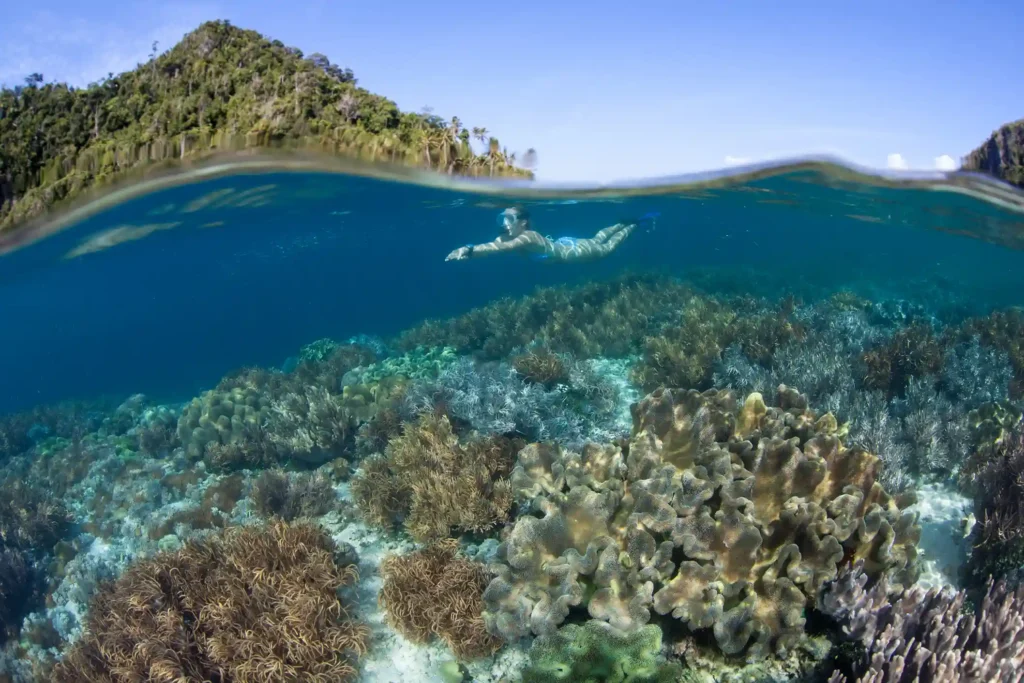
Ask us for the best easy snorkelling spots near Labuan Bajo with shallow coral reefs and two names come up first: Kanawa and Kelor. Both are smaller islets rather than the big landing islands, and both offer sheltered, waist-to-chest-deep coral that begins metres from the beach. Kanawa’s house reef is a gentle slope of hard coral and reef fish; Kelor pairs a short, optional hilltop walk with a calm swimming bay. These are the classic warm-up stops, and we cover them in detail in our guide to Kanawa and Kelor islands. Add the sheltered water around the Taka Makassar sandbank and you have a full day of relaxed snorkelling with almost no current to fight.
Calm bays and shallow reefs, not open-ocean drift dives
Komodo has a reputation for strong current, and among divers that is fair — but the currents that thrill technical divers are at exposed channels, not the bays we choose for snorkellers. There are plenty of calm bays in Komodo National Park for relaxed snorkelling: the leeward sides of the larger islands, the coral shallows off Kanawa and Kelor, and protected coves where the boat can anchor out of the swell. Our guides read the tide tables each morning and position the boat so snorkellers enter slack, sheltered water. Nobody in a snorkel group is dropped into a drift — that is a deliberate itinerary decision, and it is why non-divers, snorkellers only can enjoy a Komodo liveaboard from Labuan Bajo without anxiety.
Snorkellers and scuba divers, same boat
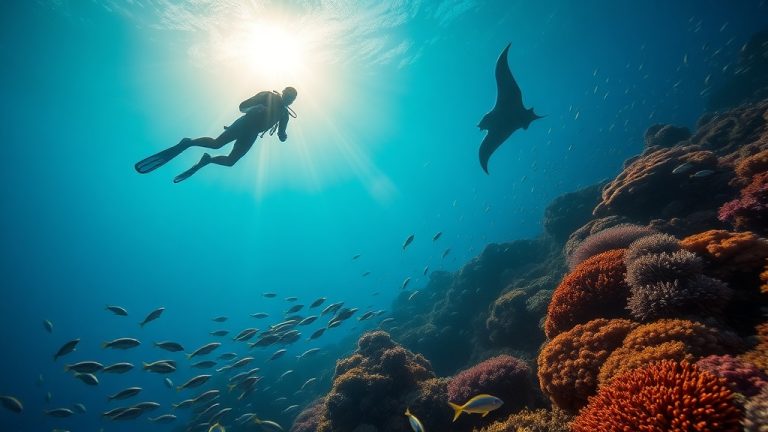
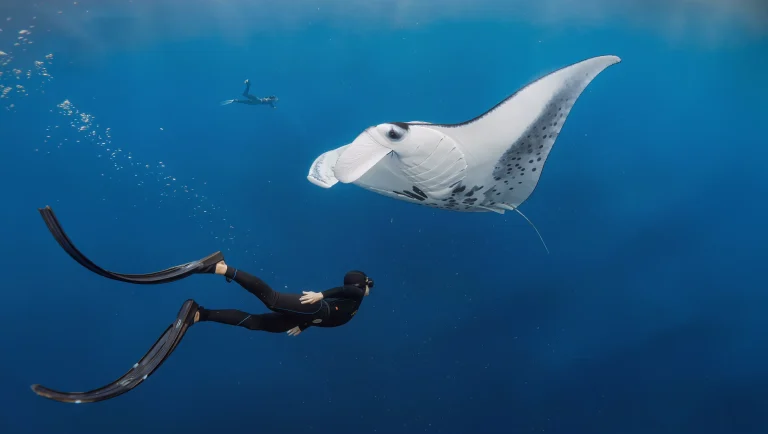
Mixed groups are our speciality. Snorkellers join scuba divers on the same Komodo boat all the time — a couple where one dives and one does not, families with children too young to certify, friends with mixed confidence in the water. At a site such as Manta Point, the divers descend to the cleaning station while snorkellers float above the same mantas from the surface; the animals are seen year-round there, with December to March (and the April-to-May transition) commonly cited as peak encounter months. While divers complete their profile, our snorkel guide keeps the surface group together, points out what is below, and everyone returns to the same tender. No one is left ashore, and no one is pressured to dive.
Safe and comfortable for non-swimmers and children
Is snorkelling around Komodo safe for kids? With the right set-up, yes. Every boat we curate carries life jackets and buoyancy aids in children’s and adult sizes, plus pool-noodle floats for nervous first-timers, so a safe and comfortable Komodo liveaboard for non-swimmers is entirely realistic. Non-swimmers can wear a jacket and simply look down while a guide tows them along the reef; children stay within arm’s reach of a guide or parent at all times. We brief every group on entry and exit, keep sessions in shallow, current-free water, and match the day’s spots to the least confident swimmer aboard. Snorkelling around Komodo is safe for kids when currents, life jackets and supervision are handled by people who do it daily.
Visibility, season and timing snorkellers should expect
The visibility snorkellers expect on reefs around Komodo is generally excellent in the dry season, April to October, when seas are calmest and the water clearest (July to September is busiest). November to March is the wet, monsoon season, with squalls and occasionally rougher seas that can stir up the shallows — still workable, but we plan sheltered sites and flexible timing. Since April 2026 the park has enforced a strict daily cap of around 1,000 visitors across tourist zones, including South Padar, so booking ahead matters more than ever. Park entry fees are in flux for 2026 and 2027 — the scheme and daily rate vary — so we confirm the exact, current cost with you at booking rather than quoting a fixed figure. To weave the snorkel stops together with dragon trekking, Padar’s viewpoint and Pink Beach, our snorkelling-led Komodo charter sequences reef time around the cooler morning hours when Komodo dragons are most active, so you get the best of both worlds on one boat. If you would like us to build the itinerary around swimmers rather than divers, that is exactly what our snorkeller-friendly Labuan Bajo boat charter desk exists to do.
Frequently asked questions
Can non-divers who only snorkel enjoy a Komodo liveaboard from Labuan Bajo?
Absolutely. Komodo’s headline marine life — reef sharks, turtles, mantas and vast coral gardens — sits in shallow water visible from the surface. Our liveaboards run snorkel-only programmes with dedicated guides, calm sheltered sites and life jackets, so non-divers and snorkellers get a full, memorable trip without ever needing a scuba certification or a tank.
Where are the best easy snorkelling spots near Labuan Bajo with shallow coral reefs?
Kanawa and Kelor islands are the classic easy spots: sheltered, shallow coral that starts metres from the beach with little or no current. The sandbank area around Taka Makassar and several leeward bays of the larger islands are also gentle. We sequence these calmer reefs first so first-time snorkellers build confidence before any busier site.
Is snorkelling around Komodo safe for kids?
Yes, when it is managed properly. We keep children in shallow, current-free bays, fit them with correctly sized life jackets or floats, and keep a guide within arm’s reach. Strong channel currents exist in Komodo but are avoided entirely for snorkel groups. With supervision and the right sites, families snorkel here comfortably throughout the dry season.
Can snorkellers join scuba divers on the same Komodo boat?
Yes, and it is one of the most common ways groups travel with us. At shared sites like Manta Point, divers descend while snorkellers watch the same animals from the surface with a dedicated snorkel guide. Mixed-ability couples, families and friends all travel on one vessel, so no one is separated or left ashore during the trip.
Is a Komodo boat charter safe for non-swimmers?
It can be, with the right precautions. Every boat we curate carries life jackets and buoyancy aids, and guides will tow non-swimmers gently along shallow reefs so they can enjoy the coral without swimming unaided. We choose calm, protected water and brief everyone before entry, making a comfortable Komodo experience realistic even for those who cannot swim.
Ask our fleet desk on WhatsApp