Learn to Dive in Labuan Bajo, Then Explore Komodo: The 2027 Course-to-Charter Path
8 min read

Quick answer: Yes — you can complete an entry-level PADI Open Water course in Labuan Bajo over three to four days, then apply those skills on a chartered Komodo dive cruise. We pair you with a licensed dive centre for training, then arrange the boat that carries you to Komodo’s calmer, beginner-friendly reefs.
Why Labuan Bajo is the only door to Komodo diving
Labuan Bajo is the sole gateway port to Komodo National Park, reached by air through Komodo Airport (LBJ) and then by sea from the town harbour. Every dive trip into the park — day charter or multi-day liveaboard — casts off from here, which makes it the natural place to certify before you go. From the harbour, a speedboat reaches Komodo Island’s Loh Liang jetty in roughly 60 to 90 minutes, while a traditional wooden phinisi takes around three to four hours at its slower, more scenic cruising pace. Padar Island sits a little further out, about 90 to 120 minutes by speedboat. Because your training centre, your gear fitting and your boat all sit within the same small town, you can move from classroom to open water to Komodo’s reefs without ever changing base.
Certify first: the PADI course path in Labuan Bajo
An entry-level PADI Open Water Diver course usually runs over three to four days and has three parts: theory (increasingly completed online before you arrive), confined-water skills in a pool or sheltered shallows, and four open-water training dives. If your time is tight, a one-day Discover Scuba Diving experience lets you breathe underwater under direct instructor supervision without full certification, though it limits where you can dive afterwards. We are a fleet-curation desk, not a dive school, so we introduce you to established, licensed dive centres in Labuan Bajo for the teaching itself, then build the charter around your course dates. Sequencing matters: finish your confined-water and shallow training dives in Labuan Bajo’s sheltered coastal waters first, and your open-water qualifying dives — or your first post-course fun dives — can then take place on gentle park sites.
Is Komodo good for beginner divers? Choosing the safe sites
Komodo National Park can genuinely suit newly certified divers, provided the sites are chosen with care. The park is famous for current, and a handful of world-renowned dives are firmly for experienced divers only — but plenty are not. The calmer reefs of the northern sector, where the water is warmer and the flow gentler, are well suited to new Open Water divers finding their buoyancy. Makassar Reef, the shallow rubble slope better known as Manta Point, is the classic beginner-friendly drift: you glide along a sandy channel rather than fight the sea. The decisive factor is a guide who reads the tide tables and only puts inexperienced divers in the water when conditions are benign. On a private charter this is far easier to control than on a fixed-schedule group boat, because the itinerary bends to the divers rather than to the clock.
Meeting the mantas at Manta Point
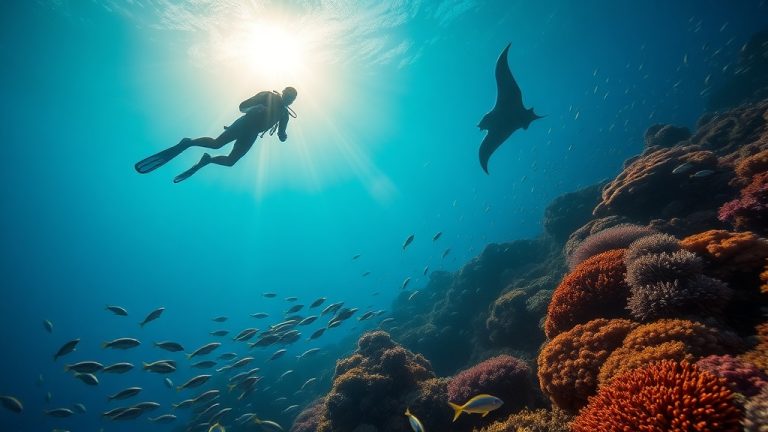
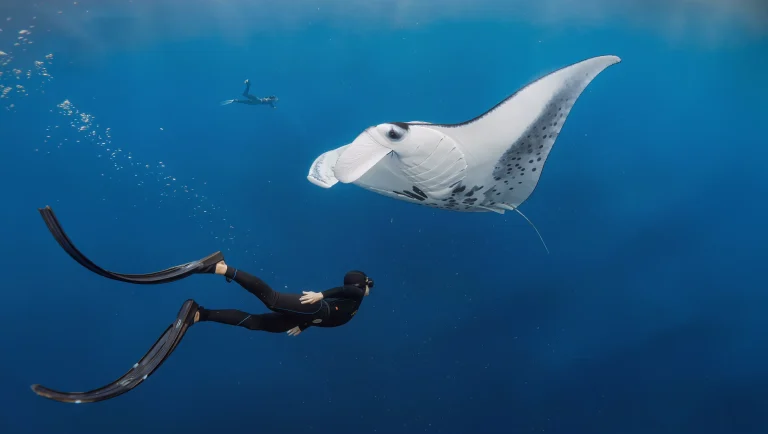
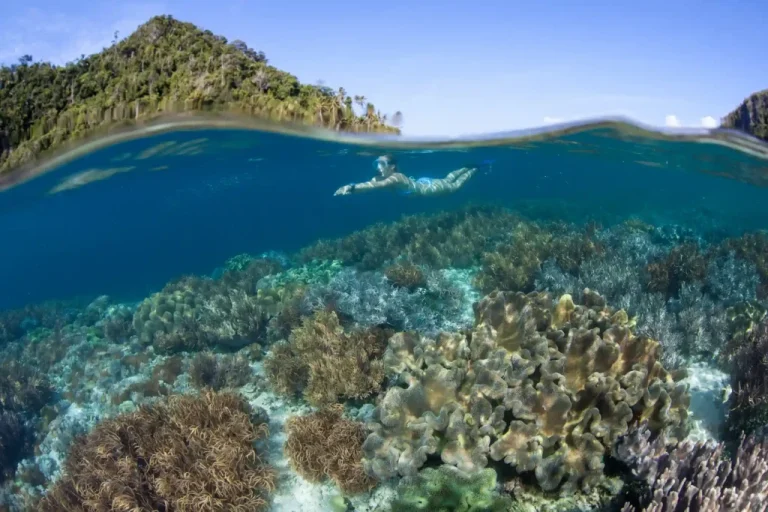
For most first-timers, the reef manta rays at Manta Point are the trip’s headline. Mantas are seen here year-round, though December to March — and the April-to-May transition — are commonly cited as the peak encounter months. Because the site is shallow and the movement is a slow drift, it is one of the few genuine big-animal encounters open to inexperienced divers, and non-divers in your party can meet the same mantas on a snorkel from the boat above. We build in flexibility so that if the current is running strong on the day, your guide can switch to snorkelling or reposition, rather than force a dive beyond your comfort. Watching a manta several metres across bank overhead on one of your first-ever dives is the kind of moment people plan whole trips around.
How many dives a day, and how long to stay
On a Komodo charter from Labuan Bajo, most divers do two to three dives per day, spaced with proper surface intervals and a relaxed lunch between them — a comfortable rhythm for people who have just certified. A single-day trip typically fits two dives around the travel time, while a dedicated Komodo diving charter over two or three nights opens up the more distant sites and lets you build experience dive by dive. Water temperatures in the park vary noticeably by area and season, generally sitting in the warm high-twenties Celsius in the north but turning cooler in the south, where upwelling brings nutrient-rich — and chillier — water; a 3mm wetsuit suits most divers, with a 5mm worth considering for southern sites. Visibility is usually good but genuinely variable with the tides. As a rough guide, allow at least three to four days in Labuan Bajo to both certify and dive Komodo properly: roughly three days for the course and a further two to three days on the water.
One boat for dragons and reefs on the same day
One of the pleasures of chartering your own boat is that you need not choose between diving and the park’s land life. A standard Komodo itinerary already threads together the Padar Island viewpoint trek, Pink Beach (Pantai Merah), dragon trekking on Komodo or Rinca, coral stops at Kanawa and Kelor, and the flying-foxes streaming off Kalong Island at dusk — and dive sites slot neatly into the same route. Komodo dragons are most active in the cooler morning hours, roughly 07:00 to 10:00, and again late in the afternoon, so we schedule early landings and then move to the reefs as the day warms; note that in the June-to-July mating season the dragons tend to retreat deeper inland. It is entirely possible to trek among dragons at dawn and be diving with mantas by mid-morning. A relaxed private Komodo day-trip boat is ideal for testing this land-and-sea combination before committing to a longer liveaboard.
Planning your 2027 course-to-charter trip
Timing shapes everything. The dry season from April to October brings the calmest seas, best visibility and most reliable trekking, with July to September the busiest months; the November-to-March wet season can bring squalls and occasionally rougher water, which matters more for nervous new divers. Since April 2026 the park has enforced a strict daily cap of around 1,000 visitors across its tourist zones, including South Padar, so reserving your dates ahead is now essential rather than optional. Park entry fees are, frankly, a moving target: the schemes have been disputed and revised, and the exact amount can vary by ticket type and by day, so we confirm the current figure with you in writing at the time of booking rather than quote a number that may already be out of date. Any market prices we mention are indicative only. When you are ready to book a Labuan Bajo boat charter for your dive course, we will line up the training, the boat and the park logistics as a single plan.
Frequently asked questions
Can I learn PADI scuba diving in Labuan Bajo then dive Komodo?
Yes. Labuan Bajo has established, licensed dive centres offering PADI courses, and it is the sole gateway to Komodo National Park. A common plan is to complete an Open Water course over three to four days, then dive the park by charter. We coordinate the course dates with your boat so the two connect seamlessly on one trip.
Is Komodo National Park good for beginner scuba divers from Labuan Bajo?
It can be, with careful site selection. The park has strong currents and some advanced-only dives, but its calmer northern reefs and the gentle Makassar Reef (Manta Point) drift suit newly certified Open Water divers well. The essential thing is a guide who reads the tides and only takes beginners down when conditions are genuinely benign.
How many dives per day do you usually do on a Komodo charter from Labuan Bajo?
Most divers do two to three dives per day, with proper surface intervals and a lunch break between them. A single day-trip usually fits two dives around the travel time, while a two- or three-night liveaboard allows a fuller schedule and reaches the more distant sites. Newly certified divers often prefer two relaxed dives daily.
Can I combine Komodo dragon trekking with a day of scuba diving on one boat trip from Labuan Bajo?
Yes, and it is one of the best reasons to charter privately. Dragons are most active from about 07:00 to 10:00, so we schedule an early landing on Komodo or Rinca, then move to dive sites such as Manta Point as the morning warms. Trekking at dawn and diving by mid-morning fits comfortably into one day.
How many days should I spend diving in Komodo from Labuan Bajo?
If you are certifying and diving on the same trip, allow at least three to four days in Labuan Bajo — roughly three for the Open Water course and two to three days of diving afterwards. Already-certified divers can enjoy a solid trip in two to three days, or longer on a liveaboard to reach the distant sites.
Ask our fleet desk on WhatsApp