Freediving Komodo: Is a Labuan Bajo Charter Right for Breath-Hold Divers in 2027?
8 min read
Quick answer: Komodo can be excellent for recreational freediving, but conditions are demanding. Its famous pinnacles — Batu Bolong and Castle Rock — carry strong tidal currents unsuited to beginners, while sheltered bays offer calm, relaxed breath-hold sessions. A private Labuan Bajo charter lets you match each site to your level with dedicated surface support.
Is Komodo National Park suitable for recreational freediving?
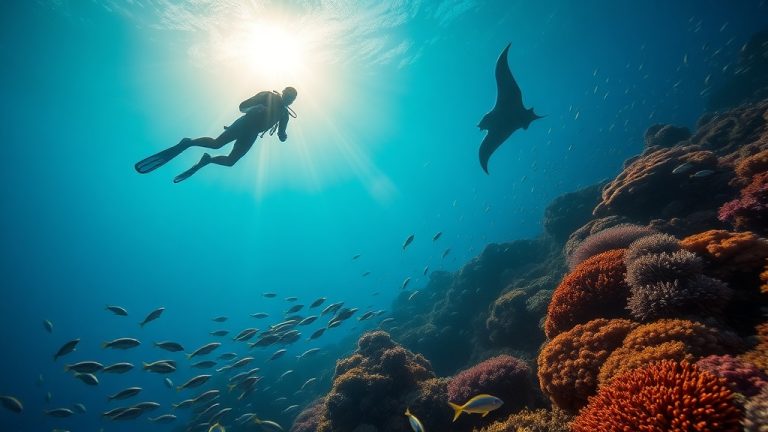
As the fleet-curation desk operated by Komodo Luxury, we field this question most weeks in 2027, and our honest answer is a qualified yes. Komodo National Park is suitable for recreational freediving from a Labuan Bajo charter boat — provided you are candid about your experience and let the tides, rather than the timetable, decide where you drop. The park spans roughly 29 islands and some of the richest reef systems in Indonesia, with soft-coral walls, schooling fish and mantas that make even a shallow breath-hold feel cinematic. Labuan Bajo is the sole gateway port, reached via Komodo Airport (LBJ), and every credible freediving day begins from its harbour.
What Komodo is not, however, is a gentle training pool. The same tidal flow that feeds the plankton and packs the reefs with life also creates conditions that can overwhelm a diver who wanders in expecting calm, glassy water everywhere. Treated with respect — and paired with the right site on the right tide — the park rewards breath-hold divers of almost every level. Treated casually, it punishes complacency quickly.
Are Komodo’s currents too strong for beginner freedivers?
At the marquee dive sites, frequently — and this is the single most important thing we tell first-time guests. Whether the currents in Komodo are too strong for beginner freedivers on a Labuan Bajo liveaboard depends entirely on which site and which hour you enter the water. The park sits in the Sape Strait, where powerful tidal exchanges between the Flores and Sumba seas push water through narrow channels. At exposed pinnacles this can mean ripping horizontal drift and, at worst, down-currents that pull a diver deeper than intended — a serious hazard when you are holding your breath.
The solution is timing, not fitness. We plan freediving windows around slack tide, the short lull between the flood and the ebb when flow eases and the water settles. A private charter is invaluable here precisely because it can wait: rather than racing a fixed group schedule, your crew reads the tide tables and moves you to a sheltered spot when the current builds. Beginners should never freedive an open pinnacle on a running tide, full stop.
Reef walls, Batu Bolong and the calm-bay alternatives
The reef walls that draw experienced breath-hold divers to a Komodo cruise — Batu Bolong and Castle Rock chief among them — are genuinely world-class and genuinely serious. Batu Bolong is a tiny rock rising from deep water with sheer coral walls dropping away on both sides; Castle Rock is a submerged seamount swept by current. Both deliver staggering fish life, and both suit only confident freedivers working with hands-on surface support at slack water. They are not places to learn.
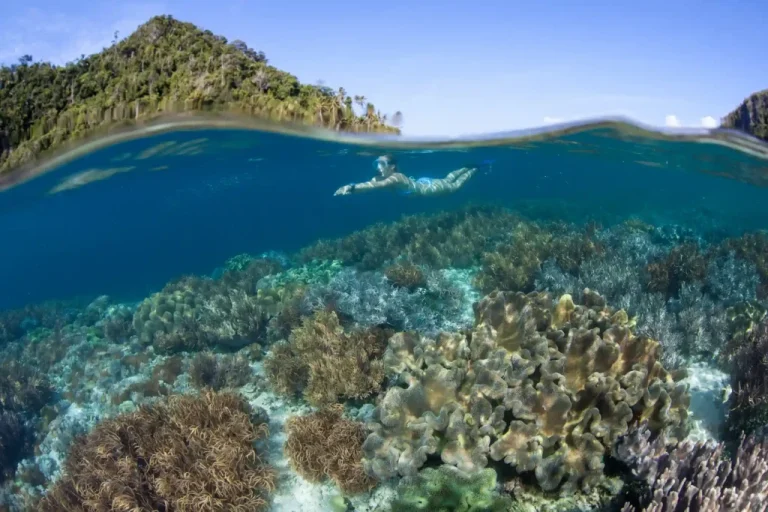
For relaxed sessions, the best calm spots for freediving around Komodo’s coral reefs lie in the sheltered bays and lee-side fringing reefs. The coral gardens off Kanawa and Kelor islands offer shallow, protected water ideal for easy descents, and the lagoon shallows near the Taka Makassar sandbank and Pink Beach (Pantai Merah) are among the calm bays in Komodo National Park best suited to relaxed snorkelling and gentle breath-holds. We routinely build an itinerary that saves the demanding pinnacles for peak conditions and fills the rest of the day with these forgiving, photogenic shallows.
What freediving safety support does a Labuan Bajo charter provide?
This is where a curated private boat earns its keep. Most Labuan Bajo boats are rigged for scuba diving and snorkelling rather than dedicated freediving, so proper breath-hold safety support — trained spotters, a descent-and-safety line with a surface buoy, and a following tender — is something we arrange deliberately with the operators on our roster, never something to assume comes as standard. When we brief a crew for a private Komodo diving and freediving charter, we specify a dedicated surface watch, one-up-one-down buddy discipline, a weighted line with a lanyard for any depth work, and a dinghy shadowing divers in case the current carries anyone off the reef.
We also insist on the non-negotiables of the sport: never freedive alone, always surface with a buddy watching, and treat shallow-water blackout as a real risk rather than an abstract one. A charter cannot make a strong current safe, but it can put spotters, lines and a rescue tender exactly where they need to be — and move you off a site the moment conditions turn.
Snorkelling and mantas — Manta Point and what you will see
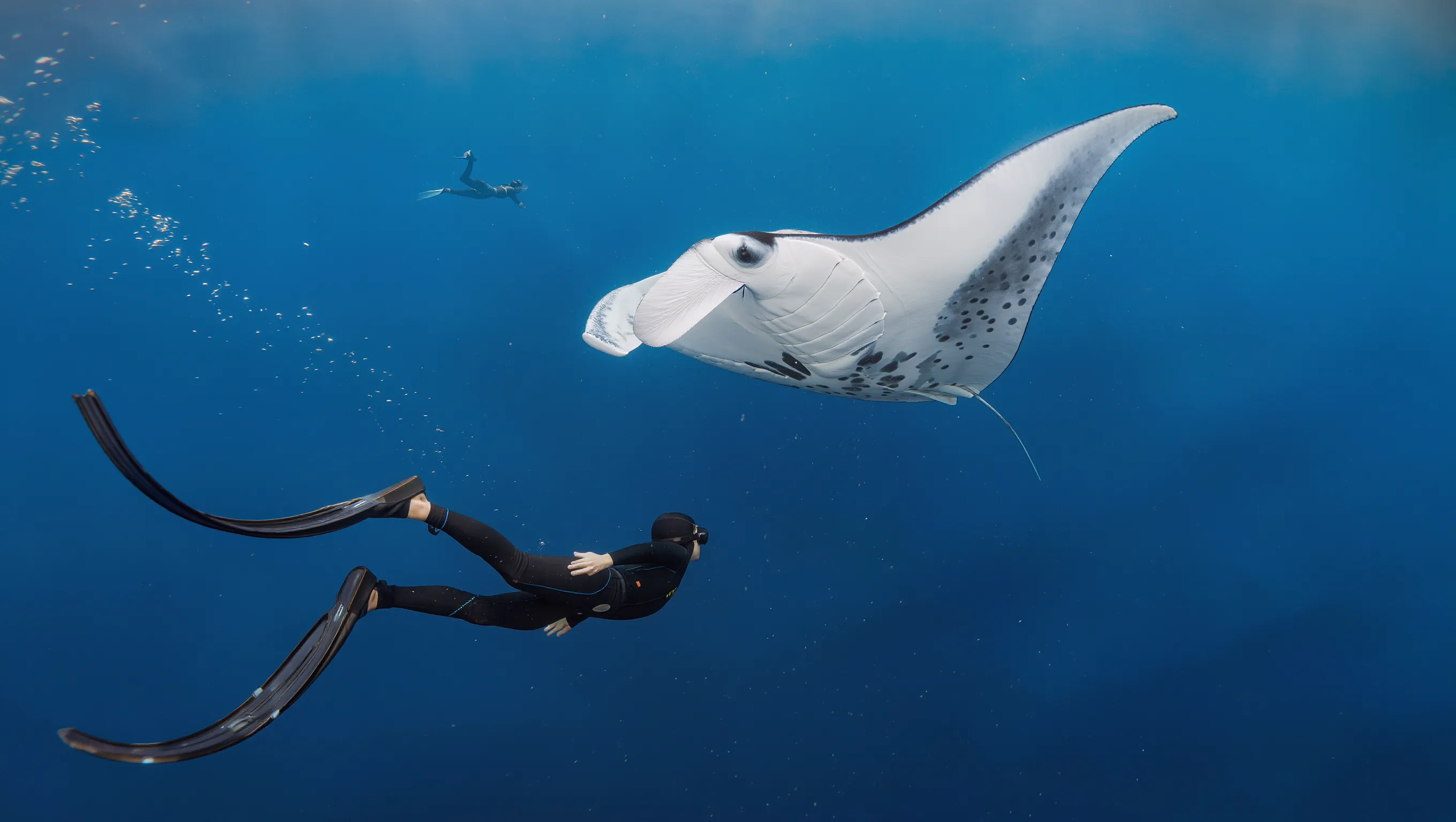
Not everyone aboard wants to breath-hold, and Komodo is superb for snorkelling too. The headline experience is the chance to snorkel with manta rays at Manta Point on a Komodo day trip, where these gentle giants glide through a cleaning-and-feeding station. Mantas are seen year-round, though December to March (with an April–May shoulder) is commonly cited as the peak encounter window. Manta Point can carry current of its own, so we position snorkellers with the same care we give freedivers.
On visibility, the reasonable expectation for snorkellers and freedivers on reefs around Komodo and Labuan Bajo is roughly 10 to 30 metres, best in the dry season and typically clearest at the sheltered coral stops. Plankton-rich water can cut clarity — but that same plankton is what brings the mantas in, so a slightly milky day at Manta Point is often a trade worth making.
Season, visibility and planning your 2027 freediving charter
The dry season, April to October, brings the calmest seas, the best visibility and the most reliable conditions, with July to September the busiest stretch. The wet, monsoon months of November to March bring squalls and occasionally rougher seas, though they also overlap with prime manta season. For a dedicated freediving trip we usually steer guests toward the dry-season shoulders for the sweet spot of calm water and thinner crowds. If you are still weighing whether a Labuan Bajo boat charter for freedivers fits your plans, this seasonal picture is the place to start.
Two practical notes for 2027. First, timings: speedboats reach Komodo Island in roughly 60–90 minutes and a slower traditional phinisi in about three to four hours, so a multi-day liveaboard is the calmer, more flexible platform for chasing slack-tide windows. Second, since April 2026 the park enforces a strict daily cap of around 1,000 visitors across tourist zones including South Padar, which makes advance planning essential. Park entry fees are currently disputed and vary by scheme and by day, so we confirm the exact, current figure with you at the point of booking rather than quoting a single number that may not hold.
Frequently asked questions
Is Komodo National Park suitable for recreational freediving from a Labuan Bajo charter boat?
Yes, for divers who respect the conditions. The reefs are spectacular and many sites are excellent for breath-hold diving, but Komodo’s tidal currents mean site choice and timing are everything. A private Labuan Bajo charter lets you match each spot to your level and hold sessions at slack tide with proper surface support.
Are currents in Komodo too strong for beginner freedivers on a Labuan Bajo liveaboard?
At exposed pinnacles like Batu Bolong and Castle Rock, often yes — beginners should avoid them on a running tide. The currents come from powerful tidal exchange through the Sape Strait. We plan easy sessions in sheltered bays and reserve the demanding sites for experienced divers at slack water only.
Do Labuan Bajo boats provide freediving safety support, spotters and lines in Komodo?
Not by default. Most boats are set up for scuba and snorkelling, so we arrange dedicated freediving support specifically — a trained surface spotter, a descent-and-safety line with a buoy, a following tender and strict one-up-one-down buddy discipline. Always confirm this support is in place before any breath-hold dive.
What are the best calm spots for relaxed freediving around Komodo’s coral reefs?
The sheltered coral gardens off Kanawa and Kelor islands, plus the lagoon shallows near the Taka Makassar sandbank and Pink Beach, are the calmest, most forgiving spots for relaxed freediving and snorkelling. They sit out of the main current, offer easy descents and shallow reef life, and make ideal warm-ups before any more exposed sites.
What visibility can freedivers and snorkellers expect on reefs around Komodo?
Roughly 10 to 30 metres, best during the dry season from April to October and typically clearest at the sheltered coral stops. Plankton-rich water can reduce clarity, especially near Manta Point — but that plankton is exactly what draws the mantas in, so lower visibility there often comes with the best encounters.
Ask our fleet desk on WhatsApp