Food and Crew on a Komodo Charter: Who Sails With You and What’s on the Table
Food on komodo liveaboard explained: 3 meals daily, dedicated cook or chef, dietary handling, crew ratios by vessel class, and safety basics.
13 min read
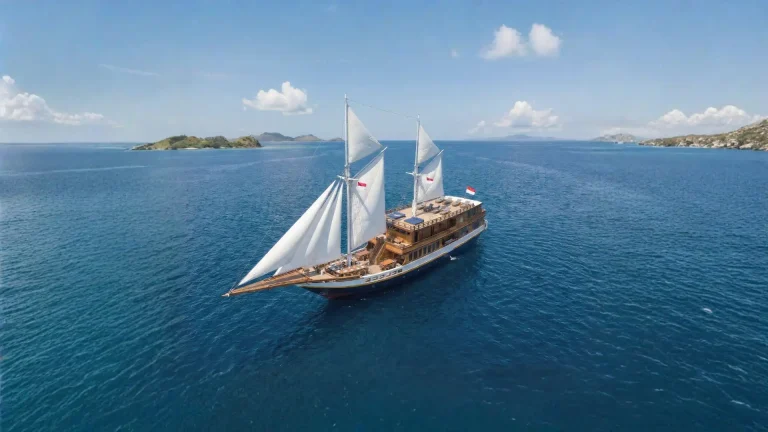
Food on a Komodo liveaboard means full board from the moment you step aboard: three meals a day, snacks between dives or hikes, and unlimited water, tea, and coffee as standard — on every vessel class, from an entry phinisi to a flagship luxury yacht. That is the baseline you should expect from any private charter running from Labuan Bajo into Komodo National Park, and it holds across vessel classes. What changes as you move up the price ladder is who cooks it, how far ahead dietary needs are planned, and whether the menu has been tailored around your group before the anchor is even lifted.
What Full Board Actually Means on a Komodo Cruise
The term gets used loosely, so let me be precise. On a private charter — phinisi, motor yacht, sailing liveaboard — full board means breakfast, lunch, and dinner cooked on the boat, plus at least one snack round mid-morning or mid-afternoon. Drinking water is always included. Tea and coffee come with every breakfast and are generally available throughout the day. Soft drinks, juices, and alcohol are almost universally treated as extras, listed separately and settled at checkout or stated per quote at the booking stage.
This structure does not vary by trip length. Whether you book a 2-day 1-night run to see dragons on Rinca and catch the sunrise over Padar, or a 7-day circuit that takes in Gili Banta and the Sangeang volcano, the same full-board principle applies. The difference is in quality, variety, and the degree of advance customisation.
Alcohol and Extras: How the Bill Splits
Nearly every operator treats alcohol as a separate cost. Some budget and mid-range boats do not carry alcohol at all, particularly on shorter trips with mixed-nationality groups. On mid-range and luxury phinisi, a drinks package — beer, wine, spirits — can typically be pre-arranged, but the price is added to your quote, not folded into the base rate. If you drink and this matters to your group, ask explicitly at the brief stage. The concierge team handles this at the planning level, long before you board.
What Kind of Food Is Served on Komodo Cruises
Honest answer: Indonesian home-cooking anchors every menu across the fleet, and the quality varies meaningfully between vessel classes.
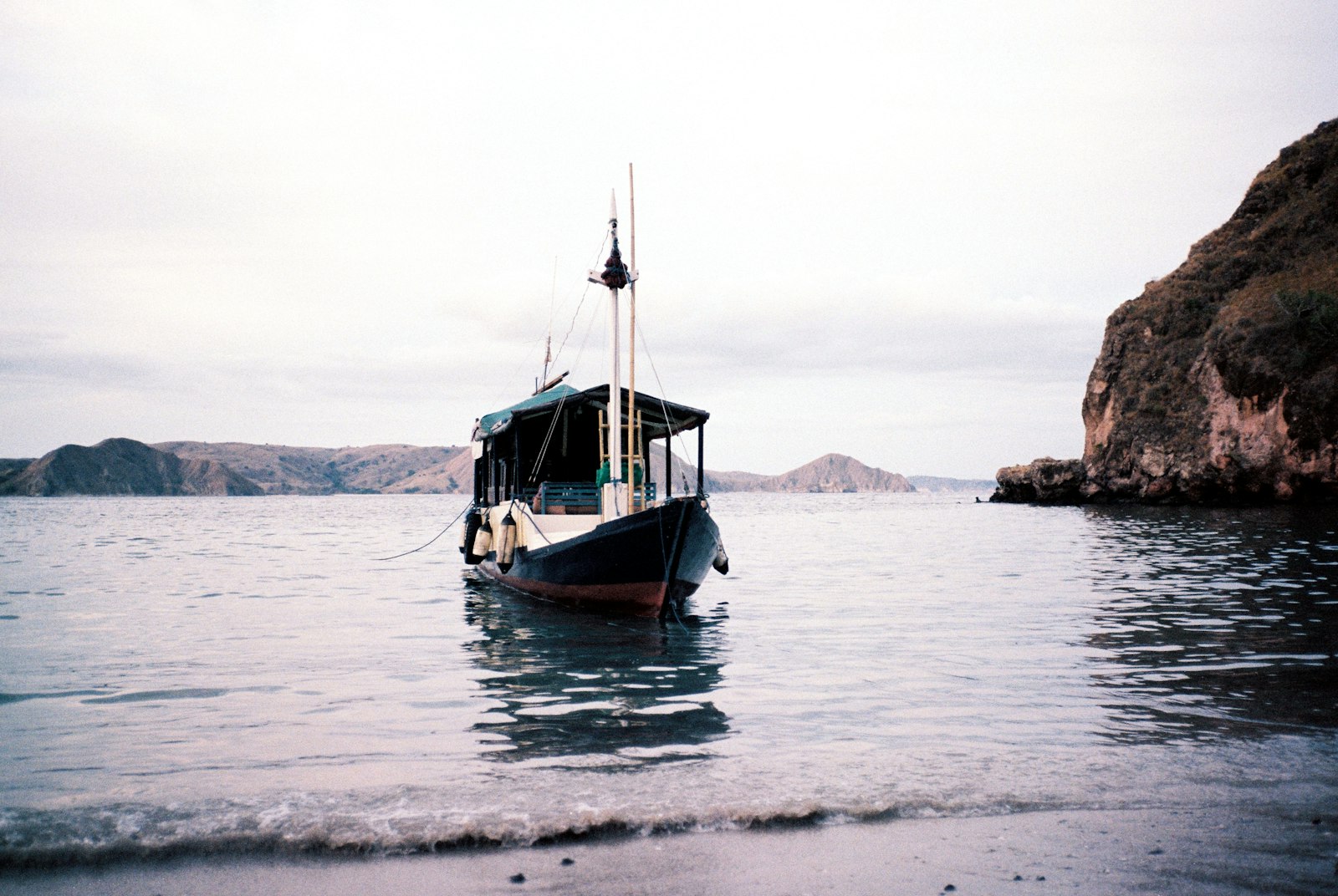
On budget and standard wooden boats, meals lean toward the galley staples: nasi goreng, mie goreng, fresh grilled fish caught that morning, steamed rice, stir-fried vegetables, sambal, and fruit. Simple, generous, genuinely good if you like Indonesian food. The cook manages a small galley with limited refrigeration and a gas burner; variety across a 3-day trip is real but constrained by the space.
Mid-range phinisi kitchens are larger and provisioned more carefully. Expect a broader mix — Indonesian classics alongside pasta, grilled meat or fish, salads, and a dessert at dinner. The cook on these boats has typically been doing this route for years and knows what works at sea: light lunches when guests are diving, more substantial dinners at anchor. Snacks between activities often include fresh cut fruit, crackers, or light Indonesian pastries.
At the luxury tier — phinisi in the $15,000–$30,000 per night range (last verified June 2026) — you are dealing with a trained chef rather than a cook. The distinction matters. These chefs work within a set menu designed weeks in advance and adjusted around your group’s profile. Multiple courses at dinner, fresh-baked bread, Indonesian-Western fusion, dietary accommodations treated not as an afterthought but as a design constraint from day one. Some top-tier yachts run at near 2:1 crew-to-guest ratios and employ both a head chef and an assistant.
Do They Cater for Vegetarians on Komodo Boats?
Yes — but with an important condition: communicate it clearly at the briefing stage, not on the morning of departure. Indonesian cooking is not inherently meat-heavy, and galley cooks on routes from Labuan Bajo are well-accustomed to vegetarian requests. Rice, tempeh, tofu, fresh vegetables, eggs, and fish (if you eat it) give a competent cook plenty to work with across a week.
Veganism is more demanding in the context of a small galley provisioned from Labuan Bajo’s market, but it is manageable when flagged in advance. Gluten intolerance, severe nut allergies, and religious dietary requirements (halal is the default provisioning baseline on most Indonesian-operated boats) should all be stated at the brief stage. On mid-range and luxury vessels, the provisioning list is reviewed before departure; on budget boats, advance notice remains important, but the flexibility the cook has is narrower.
The rule of thumb: the more complex the dietary need, the higher the vessel class that can reliably meet it. A complex vegan menu with specific substitutes is straightforward for a luxury chef running a well-stocked yacht. On a 3-cabin budget phinisi, keep your requests simple and specific.
Do Komodo Boats Have Crew and Chef? Understanding Crew Composition by Vessel Class
Every private komodo boat charter with crew — no exceptions. The crew is not optional; it is the product. What changes by class is how many people are looking after you, what their specialisations are, and the ratio of crew to guests.
- Budget wooden boat / simple liveaboard (2–4 cabins, 4–10 guests)
- Typically 3–6 crew: captain, first mate/deckhand, engineer, and one cook who may double as a deckhand on transit legs. Safety roles overlap. No specialist dive guide unless contracted separately.
- Mid-range phinisi (3–6 cabins, 6–14 guests)
- Typically 6–10 crew: captain, first mate, 2–3 deckhands/sailor crew, engineer, cook, and often a dedicated host or guest liaison. Dive guides are sometimes part of the crew package; more often a separate booking on shorter trips.
- Luxury phinisi (5–9 cabins, 8–18 guests)
- Typically 10–21+ crew. At the flagship end — vessels in the USD 15,000–30,000+/night bracket — crew-to-guest ratios approach or exceed 1:1. Roles become specialised: head chef plus assistant, butler for each group of cabins, spa therapist, dive master, dedicated children’s crew on family charters. One verified benchmark: Prana by Atzaro runs 21 crew for 18 guests; Vela carries 18 crew for 12 guests (last verified June 2026, single-source).
For context on how crew size translates to your experience: on a budget boat with 5 crew looking after 8 guests, the cook is also clearing the snorkel kit and helping fender-off at the dock. On a luxury phinisi at the 2:1 ratio, one person’s sole job during your Padar sunrise is to have hot coffee and a warm towel waiting when you get back to the boat.
If you want to design your charter around a specific crew ratio or a particular level of culinary experience, our concierge team maps that against the verified fleet before recommending a vessel class. This is the kind of detail that gets lost in a generic booking aggregator — and gets found in a properly briefed private charter.
Is a Komodo Boat Trip Safe? Safety Standards on Komodo Tour Boats
The straight answer: private charter boats operating out of Labuan Bajo are regulated under Indonesian maritime law, and the harbour authority (KSOP Class III Labuan Bajo) issues sailing permits — SPB, Surat Persetujuan Berlayar — before boats depart. When BMKG issues extreme weather warnings, the harbour authority suspends those permits. This has happened and is documented: port closures occurred during extreme weather advisories in March 2024 and in late 2025 and early 2026 affecting the Komodo and Padar routes. A night-sailing ban for tourist vessels has also been in effect following a documented shipwreck incident. Charter operators departing legally cannot leave port when conditions cross the safety threshold.
At the boat level, safety standards komodo tour boats must meet include:
- Life jackets for every person aboard. This is universal and non-negotiable. Budget phinisi and luxury yachts alike carry life jackets in the correct number; a boat operating without them cannot legally depart.
- First-aid training for crew. The norm across mid-range and luxury vessels is at least one crew member with formal first-aid training. Budget boats vary — and this is a fair question to ask at the briefing stage if it matters to your group.
- Emergency communication equipment. VHF radio is standard. Satellite communications and EPIRBs are more common on luxury and offshore-capable vessels.
- Fire extinguishers and bilge pumps. Regulated by Indonesian maritime inspection; boats operating legally carry these as a matter of certification.
A note I always give guests asking about safety: the honest risk on a Komodo charter is not the boat equipment — it is the sea state, the tidal currents at certain dive sites, and the judgment calls that come with a changing swell. Komodo National Park’s currents are genuine; they are also why this is one of the world’s great diving destinations. Children, non-swimmers, and guests with limited ocean experience should factor this into the vessel and itinerary choice. Shorter trips in the central zone (Kelor, Rinca, Padar, Manta Point) carry more manageable conditions than the southern routes around Horseshoe Bay and Manta Alley, which are primarily for experienced divers and are themselves seasonal — accessible roughly October to April when the northwest monsoon keeps the south coast calm.
If safety is a primary concern for your group — young children, elderly guests, anyone with limited sea experience — raise it in your initial brief. Vessel class, route design, and season selection are all tools for managing this. Our team plans around the group, not a fixed template.
Budget Transparency: What You’re Paying For By Class
Per-night charter rates across the Labuan Bajo fleet run broadly from USD 3,000 to USD 30,000 per night for the whole vessel (implied from package math, last verified June 2026). Here is how food and crew costs translate across the ladder:
| Vessel Class | Per Night (USD, implied) | Crew Count | Food Standard |
|---|---|---|---|
| Budget wooden phinisi | ~1,200–2,500 | 3–6 | Home-cook galley, Indonesian staples, simple and fresh |
| Mid-range phinisi | ~2,500–8,000 | 6–10 | Dedicated cook, broader menu, dietary requests handled with advance notice |
| Luxury phinisi | ~8,000–20,000 | 10–18 | Trained chef, pre-planned menu, multi-course dinners, full dietary customisation |
| Flagship luxury (Prana / Vela class) | ~18,000–30,000+ | 18–21+ | Head chef + assistant, curated menus, near 1:1 crew ratio, full butler service |
To put a number on it: a 6-night mid-range charter at $4,000 per night runs $24,000 before Komodo National Park fees (roughly IDR 250,000 per foreign visitor per day, verify at booking — last verified June 2026), fuel, and tips. At the same six nights on a luxury vessel at $15,000 per night, you are at $90,000. Both prices include full board and crew. The gap in experience is real and worth understanding before you book.
No one can pay to change what we publish. If you use our free planning help and proceed with an operator through our team, that operator may pay us a referral fee at no extra cost to you.
Planning Food and Crew Details: How the Briefing Works
When you send a charter brief through the Indonesia Juara concierge team — the sister brand within Juara Holding Group who handle private charter planning from Labuan Bajo — the dietary and crew questions are part of the initial questionnaire, not an afterthought. Group size, dietary needs, diving certification levels, children’s ages, preferred activity pace, and budget all shape the vessel recommendation before a single boat is named.
On a practical level: dietary requirements get relayed to the provisioning team before departure, not communicated to the cook on the dock the morning you leave. Specific requests — dietary supplements, preferred coffee beans, a particular wine for a celebration dinner — are easier to fulfil on a 3-night trip than a 2-night sprint, and easier still on a 7-night charter where provisioning logistics are built around your group from the start.
If this piece of the planning matters to you — and for honeymooners, families with young children, or guests with medical dietary requirements, it usually does — reach out via our charter brief form or WhatsApp before you choose a vessel. The right answer depends on your group’s specifics.
Frequently Asked Questions
Is alcohol included in the charter price on Komodo boats?
Almost never in the base rate. Alcohol is nearly always treated as an extra on Komodo charters, whether budget or luxury. A drinks package — beer, wine, spirits — can usually be pre-arranged and priced separately into your quote. If you have specific requirements (particular wines, spirits, a celebration bottle), state them at the briefing stage so they can be provisioned before departure from Labuan Bajo.
Do they cater for vegetarians on Komodo boats?
Yes, across all vessel classes, provided you communicate it clearly at the brief stage rather than on board. Indonesian cuisine naturally leans on rice, tempeh, tofu, eggs, and fresh vegetables, so a cook on even a simple phinisi can produce varied vegetarian meals across a 3 or 4-day trip. Veganism and complex allergen requirements are best matched with mid-range or luxury vessels where the provisioning list is reviewed in advance and the cook or chef has more flexibility.
How many crew will be on my Komodo charter boat?
Crew count scales with vessel class: 3–6 on budget wooden boats (4–10 guests), 6–10 on mid-range phinisi (6–14 guests), and 10 to 21+ on luxury phinisi where top-tier vessels approach or exceed a 1:1 crew-to-guest ratio. At the 2:1 end of the luxury market, roles are specialist — head chef, butler, dive master, and dedicated children’s crew on family charters. The specific crew complement for any vessel can be confirmed through our team before booking.
Is a Komodo boat trip safe for children or older guests?
Private charters from Labuan Bajo into Komodo National Park carry life jackets for every person and are regulated under Indonesian maritime law, with harbour sailing permits suspended during official extreme-weather warnings. For children and older guests, the main considerations are sea state and tidal currents rather than vessel safety equipment — these vary by route and season. The central zone routes (Kelor, Rinca, Padar, Pink Beach, Manta Point) in the dry season (April–October) offer the most manageable conditions. The southern routes involve stronger currents and are better suited to experienced swimmers and divers. We design the itinerary around your group’s profile, not a generic template — tell us who is joining the trip when you brief.
What safety standards do Komodo tour boats have to meet?
Indonesian maritime law requires charter boats to carry life jackets for all persons aboard, pass a harbour authority inspection, and hold a sailing permit (SPB) before departure — a permit the KSOP Class III Labuan Bajo authority can suspend during BMKG extreme-weather warnings, as documented during closures in 2024 and 2025–2026. Mid-range and luxury vessels additionally carry VHF radio, first-aid-trained crew, fire safety equipment, and emergency communication devices. Specific certifications vary by boat and are worth confirming for any vessel before you commit, particularly if your group includes non-swimmers, young children, or guests with medical needs.