One Week Sailing Komodo: A 7-Day Charter Itinerary That Earns Every Mile
1 week Komodo sailing itinerary: day-by-day 7D6N with Sangeang volcano, Gili Banta & per-night pricing from $3,000. Season windows explained.
18 min read
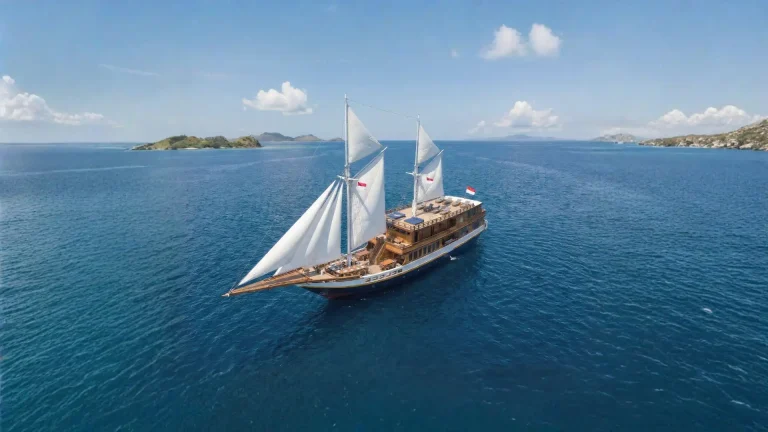
A 1 week Komodo sailing itinerary — specifically the 7-day 6-night shape — is the first duration where the route earns its own logic rather than simply compressing one. Six nights gives you the full park core, a night at Gili Banta on the northern frontier, and a crossing to Sangeang, the active volcano off the Sumbawa coast. Nothing is skipped. Nothing is hurried. That is what separates a week on the water from Labuan Bajo into Komodo National Park from all the shorter formats: you are no longer reacting to what fits; you are choosing what to include.
This page walks through the 7D6N route day by day, explains where the 8-day 7-night variant (8D7N) opens up during October–April, gives you the honest arithmetic on what a week costs across vessel classes, and flags the two seasonal windows — April–June and September–November — when the Sangeang crossing sits at its calmest. Charter pricing runs roughly USD 3,000–30,000 per night for the whole boat depending on vessel class (last verified June 2026), which puts a 6-night week at $18,000–$180,000 before park fees.
Why Seven Nights Works: The Route Logic
The unlock ladder for phinisi and yacht charters out of Labuan Bajo is sequential and honest. A 2-night trip covers the core triangle — Kelor, Rinca, Padar sunrise, Pink Beach, Karang Makassar. A 4-night trip adds the south Komodo season (Horseshoe Bay, Manta Alley) for October–April departures. By 5 nights you have the full figure-eight with both south and north zones without backtracking.
What nights 6 and 7 buy is entirely different. Gili Banta sits just outside the park boundary to the north — a frontier wall dive called K2, a bay you will likely anchor alone in, and a crossing mentality that signals you are on a real voyage rather than a loop. Sangeang is 3–4.5 hours beyond Banta: an active stratovolcano with Bubble Reef below its crater shelf, where volcanic gas seeps through black sand and the critter density rewards photographers who have spent the rest of the week chasing mantas and dragons. No shorter charter has time for both. A 7-day komodo yacht charter itinerary is the minimum format to make the Sangeang excursion unhurried.
The 7D6N Komodo Liveaboard Route: Day by Day
All passage times below are underway-only at 7–10 knots, the typical cruising range for a phinisi or mid-range liveaboard. Pad 20–30% for sea state, current, and photography stops. Motor yachts at 12–15 knots compress legs by roughly a third.
Day 1 — Labuan Bajo Departure: Kelor and the First Dragon Walk
Depart Labuan Bajo at 08:00. Kelor Island is 45–90 minutes out — a compact hill above clear shallows, good for first-morning legs and a snorkel around the base. From there, Rinca’s Loh Buaya ranger station is a 1–1.5-hour hop. The ranger-guided komodo dragon walk takes about an hour inside the park. You are seeing real wild animals in dry savanna, not a zoo enclosure — keep the group compact and follow the ranger’s lead on distance. Afternoon: sail northeast to Kalong Island for the dusk bat exodus, one of the most reliably cinematic moments on any liveaboard route through Komodo National Park. Anchor here for the night.
Day 2 — Padar Sunrise, Pink Beach, Manta Point
This is the day that earns the charter’s reputation. Pre-dawn, the boat leaves Kalong on a 1.5–2-hour run to Padar’s north bay, timed to arrive at the base of the ridge before first light. The trek up takes 45–60 minutes. The view from the top — three bays in contrasting hues below a single spine of rock — is one of the most photographed images in Indonesian tourism. Mid-morning: Pink Beach, roughly an hour’s sail from Padar’s south anchor. The water here is exceptionally shallow over coarse pink-tinted sand; snorkelling directly off the beach produces dense coral and fish in minutes. Afternoon: swing to Karang Makassar (Manta Point) for the drift over the cleaning station — mantas feed here year-round with best odds when plankton blooms are thickest in the cooler months. Anchor at Pink Beach or a nearby bay for the night, depending on season and swell direction.
For October–April charters on the 8D7N variant, Day 2 afternoon shifts south instead: a 2–3-hour run to Horseshoe Bay (Loh Dasami) at the base of south Komodo, setting up the south loop for Days 3–4. The May–September route keeps this standard Pink Beach anchor and trades south access for calmer conditions at the northern sites.
Day 3 — Komodo Island Dragons and the North Apex
Morning: Loh Liang on Komodo Island, the larger of the two dragon ranger stations. The dragons here are bigger on average and the habitat is slightly more varied — a mix of savanna and dry monsoon forest. Budget 2–3 hours including transfer by tender. Afternoon: 1.5–2 hours north to Gili Lawa — for the 7D6N route this is the gateway to the frontier segment. Divers can hit Castle Rock or Crystal Rock on the way if timing aligns with the appropriate current window (ask your dive guide; these sites run 3–5 knot surges). Sunset from the Gili Lawa Darat ridge is a legitimate rival to Padar — fewer boats, quieter. Anchor in the protected bay below.
Day 4 — Gili Banta: The Empty Bay
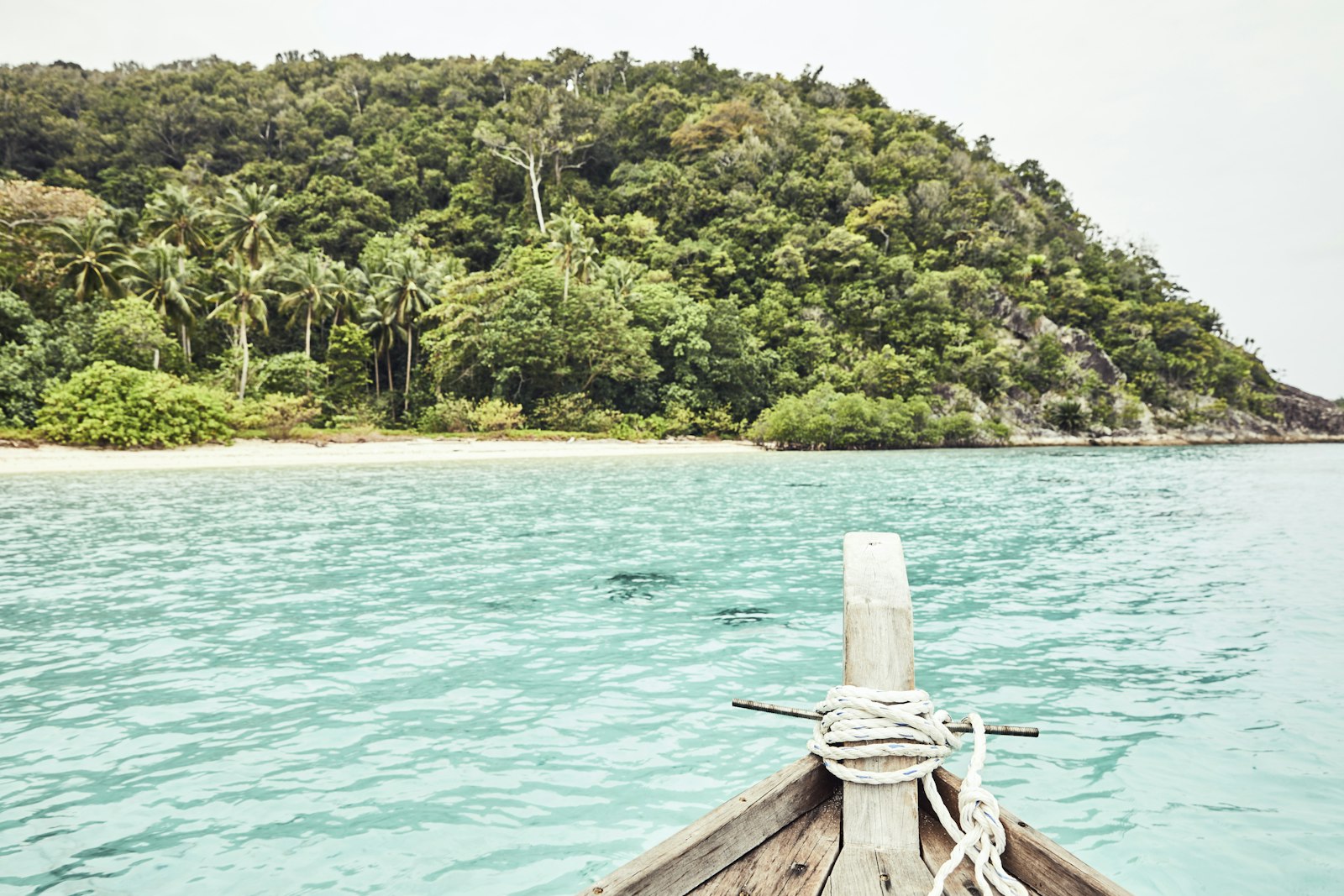
Gili Banta is 1.5–2.5 hours from Gili Lawa across the park’s northern boundary. The K2 wall here is advanced — significant current, requiring a dive guide’s go/no-go decision on conditions — but the critter life on its lower sections and the sheer drop-off are well outside the usual Komodo circuit. GPS Point, on Banta’s north face, is the frontier site that expedition divers mention when they talk about the island: a current-swept pinnacle with schooling fish in volumes that the more-visited central sites rarely match. Non-divers have a beach day, a genuinely deserted anchorage, and the quietest night on the trip. You will likely be the only charter boat in the bay.
Day 5 — The Crossing to Sangeang Volcano
The Sangeang crossing is open water — 3–4.5 hours from Banta — and the single leg on this route that responds most to season. April–June and September–November give the calmest passages; July–August is doable but expect a lively crossing with SE trade-wind swell. January–February squalls occasionally force a hold day at Banta, which is why experienced captains build the Banta stop before Sangeang rather than going direct.
Sangeang is a smoking stratovolcano. On approach, the cone fills the horizon and the sulfur smell reaches the boat before the anchor is down. Bubble Reef sits directly below the crater shelf: volcanic gas seeps up through black sand, sustaining a cold-seep ecosystem with unusual critters — ghost pipefish, ornate ghost pipefish, pygmy seahorses, hairy frogfish — that have no analog at any Komodo site. Hot Rocks is a second site where the sand is genuinely warm to the touch. Anchor off Bontoh village on the eastern shore; the fishing community has lived alongside the volcano for generations. Check current PVMBG (Indonesian volcanology agency) advisories before departure — last verified June 2026, the volcano was at a monitored-activity status normal for the area, but this should be confirmed at booking.
Day 6 — Sangeang Deep Dives and Recross to Gili Banta
Morning dives at Sangeang’s signature sites: Deep Purple and Techno Reef, both black-sand muck-diving environments where macro photographers typically spend three times as long underwater as on any Komodo reef. Optional: a village walk through Bontoh in the mid-morning — the boat-building tradition here is active, not a museum exhibit. Early afternoon: recross to Gili Banta, 3–4.5 hours. Anchor for the night. Total dives by end of Day 6: 18–22 for serious divers.
Day 7 — Back into the Park: Manta Point, Taka Makassar, Labuan Bajo
Final morning: 3–4 hours south back into the park. Karang Makassar (Manta Point) for a last manta drift at the cleaning station — the circular arc of the trip means you see this site with different eyes after six days offshore. Taka Makassar, the tidal sandbar between Komodo and Rinca, appears at certain tide windows as a strip of white sand surrounded by turquoise water. Tide-dependent, never guaranteed, worth the 30-minute detour if conditions allow. Afternoon snorkel stop at Kanawa or Sebayur on the run home. Alongside Labuan Bajo by 16:00–17:00.
Who This Duration Suits
The 7D6N is purpose-built for divers who want volume and variety — 20–24 dives across the full biotope range from cold-water critter dives at Sangeang to current-swept pinnacles at Castle Rock to manta cleaning stations at Karang Makassar. No shorter format covers all three. Non-divers get equal value: three dragon encounters across two islands, Padar twice (dawn approach and possibly a sunset from Gili Lawa), the empty Banta anchorage, and the volcano at night.
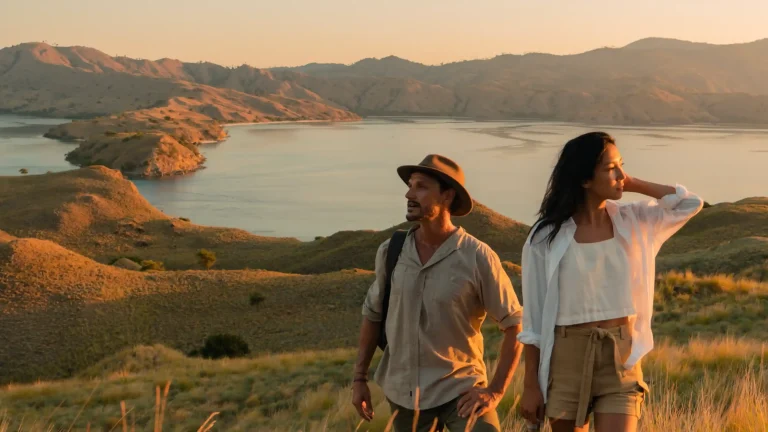
Couples who want to feel genuinely away — not just on a boat in a national park — tend to find that the Sangeang night is the trip’s emotional center. There is no competing light pollution. The volcano glows. The gap between that experience and a 3-night loop out of Labuan Bajo is not measured in days.
The one thing to be honest about: this route moves. Six nights covering Rinca, Padar, Komodo Island, Gili Lawa, Gili Banta, and Sangeang with a return leg involves real passage-making. Guests who want a majority of their time at anchor in one bay should consider the 9D8N, which adds a flex day that can be spent anywhere without compressing the Sangeang visit.
The 8D7N Variant: Adding the South Loop (October–April)
The 8-day 7-night komodo liveaboard itinerary is the 7D6N route with the south Komodo loop inserted between Padar and Komodo Island. This is an October–April product only — the south coast sits under the northwest monsoon in those months, which keeps Horseshoe Bay and Manta Alley accessible. From May through September, SE trade winds make the south coast rough to inaccessible, and operators who promise it honestly should not.
What the south adds: Cannibal Rock, one of the most celebrated dive sites in Asia Pacific, with a wall of sea fans, soft corals, and sea apples at densities that require more than one dive to process. Manta Alley (Torpedo Bay), where the south coast’s colder, plankton-rich water draws manta rays in different concentrations from Karang Makassar — wider wingspan, different behavior. Wild komodo dragons on the Horseshoe Bay beach, unguided, seen from the tender. Charter math for 7 nights: $21,000–$210,000 (USD 3,000–30,000 per night, last verified June 2026).
| Feature | 7D6N (Year-Round) | 8D7N (Oct–Apr Only) |
|---|---|---|
| Nights | 6 | 7 |
| South Komodo (Horseshoe Bay, Manta Alley, Cannibal Rock) | Not included | Full south loop, Days 2–3 |
| Gili Banta | Yes (Day 4) | Yes (Day 7) |
| Sangeang Volcano | Yes (Day 5–6) | Yes (Day 6) |
| Dragon encounters | 2 (Rinca + Komodo Island) | 3 (Rinca + south beach + Komodo Island) |
| Dives (approximate) | 20–24 | 24–28 |
| Entry charter cost (whole boat) | $18,000–$180,000 | $21,000–$210,000 |
| Best season | Apr–Jun, Sep–Nov for Sangeang crossing; Jul–Aug workable | Oct–Apr only for full version |
Vessel Classes and Per-Night Budget Math
Private charters out of Labuan Bajo into Komodo National Park are priced per boat per night, not per person. The whole vessel is yours regardless of whether you fill every cabin. That changes how the math reads for small groups — two people on a mid-range phinisi may pay the same total as eight people sharing it, but they have the deck, the crew, and the itinerary to themselves.
- Budget wooden phinisi / semi-liveaboard
- ~USD 1,200–2,500 per night (implied from per-trip package pricing, last verified June 2026). Typically 2–4 cabins, 4–10 guests, partial AC, shared bathrooms common. Suitable for the route but cabin finish and crew size reflect the bracket.
- Mid-range phinisi
- ~USD 2,500–8,000 per night. 3–6 cabins, 6–14 guests, full AC, increasingly all-ensuite on newer builds, 6–10 crew. The working standard for couples and small groups. This bracket covers the Kayra ($7,000/night, as listed by our concierge partner) and similar vessels.
- Luxury phinisi
- ~USD 8,000–20,000 per night. 5–9 cabins, 8–18 guests, full ensuite, crew-to-guest ratio approaching 1:1, water toys (SUPs, kayaks, occasionally sea bobs), chef rather than cook. Verified broker benchmarks: vessels like El Aleph at ~$10,000/night+VAT, Otium at ~$14,000/night, Sanctuary at ~$15,000/night+VAT (all last verified June 2026 via concierge listings).
- Flagship expedition class
- ~USD 15,000–30,000+ per night. Vessels in the 47–65m range (think Prana by Atzaro at ~$18–20k/night for a 55m, 9-cabin, 21-crew yacht, or The Maj Oceanic at ~$15k/night for 47–51m). Park minimum-stay preferences in this class typically run 5–7 nights. Price on application for vessels like Lamima, Dunia Baru, Amandira — rates are not published but the class sits comfortably above $15,000/night.
Worked example for the 7D6N: 6 nights on a mid-range phinisi at $4,000 per night = $24,000 for the whole boat. Split across six guests, that is $4,000 per person before park fees — a private liveaboard diving expedition for the cost of a mid-range European ski week. Park fees for foreign visitors run IDR 250,000 per person per day (approximately $15–16 at current rates, verify at booking — last verified June 2026) plus ranger fees, harbour fees, and a diving surcharge of IDR 25,000 per diver per day. These are typically excluded from budget and mid charters and bundled at luxury level — confirm explicitly when you quote.
The entry-point math for a week: 6 nights × $3,000/night = $18,000. The top-tier ceiling: 6 nights × $30,000/night = $180,000. The 8D7N adds one more night: 7 nights × $3,000 = $21,000 entry; 7 nights × $30,000 = $210,000 top tier (last verified June 2026).
Season Notes: When to Book Your Week
The Sangeang crossing governs the season choice for this route more than any other factor. Open water at 7–10 knots responds to swell height, and the SE trade winds of July and August produce the most consistent swell on the run north from Gili Banta. The route is still operable in those months — captains cross regularly — but guests on mid-range vessels will feel it, and an overnight passage in a short chop on a wooden phinisi is not the same experience as the same crossing in April.
April–June and September–November are the windows where the Sangeang leg sits at its most comfortable and the overall week reads as designed. April–June additionally gives you dry-season visibility and the transition out of the north-west monsoon, which means the central park sites (Karang Makassar, Batu Bolong, Crystal Rock) are at their most consistent. September–November brings the dry season’s tail end with slightly lower sea temperatures and strong currents at the north pinnacles — excellent for fish density at Castle Rock and the Gili Lawa sites.
July–August is peak season and the busiest period in Komodo National Park. The SiORA reservation system (the park’s online ticketing and reservation platform) imposes a reported cap of approximately 1,000 visitors per day — single-source figure, verify at booking. Advance reservation through your operator is not optional in peak season; it is the only way to guarantee Loh Liang and Loh Buaya entry. Demand from the private charter sector competes with day boats from Labuan Bajo for ranger slots, particularly at Padar.
December–March brings the northwest monsoon and the year’s highest manta densities at Karang Makassar. Mantas are essentially year-round at this site, but plankton blooms in the wetter months increase hit-rate. January and February are also the roughest weeks of the year — BMKG (Indonesia’s meteorological agency) has suspended sailing permits out of Labuan Bajo during extreme weather, as documented in 2024 and 2025. A week-long charter in January is possible but requires flexible dates and a captain and crew with experience on the passage. Build extra days into your itinerary if you can.
Planning Your Week: What to Discuss Before You Commit
The specific bay you anchor in on Day 2 changes the entire shape of the week. South or north? That decision depends on your departure month, your priority between manta diving and dry weather, and whether you have done the south loop before. It is not a detail to leave until you board.
Dive certification level matters for Days 4–5. K2 and GPS Point at Gili Banta and Bubble Reef at Sangeang are manageable for advanced open-water divers with a guide, but the currents at GPS Point require a go/no-go judgment on the morning of the dive. Non-certified guests can snorkel Sangeang’s shallower volcanic fields, which are genuinely remarkable, but they will not see the black-sand muck-dive layer that 20 metres below is the site’s main event.
Crew-to-guest ratio shapes the quality of service in subtle ways across six nights. A luxury phinisi with 16 crew for 12 guests means someone notices when you want a cold towel after the Padar climb without being asked. A budget boat with 4 crew for 8 guests runs meals efficiently and gets you where you need to be, but the margin for individual requests is thin. Decide which experience you are buying before comparing prices.
Ready to map your week? Design your charter with our concierge team — they hold current vessel availability, seasonal routing advice, and real-time park permit status. WhatsApp planning is available for guests who prefer to think in questions rather than forms; the concierge team typically responds within a few hours during Labuan Bajo business hours.
A note on independence: no charter operator can pay to change what we publish here. If you use our free planning help and proceed with a vessel through our concierge partner (Indonesia Juara, a sister brand within Juara Holding Group — disclosed), they may pay us a referral fee at no extra cost to you. That arrangement does not alter our routing advice, our season candor, or our pricing brackets.
Frequently Asked Questions
What is the best season for a 1 week Komodo sailing itinerary with the Sangeang crossing?
April–June and September–November are the two shoulder windows where the open-water crossing from Gili Banta to Sangeang is calmest. The SE trade winds of July–August create swell on this leg — the route runs, but it is livelier. January–February has the highest manta density at Karang Makassar but the greatest weather variability; build buffer days if you travel then. October–April additionally opens the south Komodo loop (Horseshoe Bay, Manta Alley, Cannibal Rock) for the 8D7N variant.
How does the 7D6N differ from the 8D7N komodo liveaboard itinerary?
The 7D6N covers the full park core plus Gili Banta and Sangeang. The 8D7N adds the south Komodo loop — Horseshoe Bay, Cannibal Rock, and Manta Alley — which is only accessible October–April when the northwest monsoon keeps the south coast calm. Outside that window, the 8D7N runs as a north-weighted variant with an additional day banked into the central park sites. Charter cost: 6 nights at $3,000–$30,000/night = $18,000–$180,000; 7 nights = $21,000–$210,000 (last verified June 2026).
What is included in a private phinisi charter for one week in Komodo National Park?
Full-board catering — three meals plus snacks, water, tea, and coffee — with a dedicated cook or chef is standard across all vessel classes on private charters. Fuel for the standard Labuan Bajo–Komodo loop is included on all-inclusive rates. Park entrance fees (IDR 250,000 per person per day for foreign visitors, last verified June 2026), ranger fees, and diving surcharges are typically excluded on budget and mid-range boats and bundled on luxury vessels — confirm before signing. Snorkel gear and life jackets are included everywhere. Full scuba gear, dive guides, and nitrox are usually additional costs even when tanks and a compressor are aboard.
How many dives can I realistically fit into a 7-day komodo yacht charter itinerary?
For certified divers with no medical contraindications, 20–24 dives over six nights is realistic at a pace of 3–4 dives per day with adequate surface intervals. The 7D6N route covers: Rinca area reefs and Kalong, Manta Point and Pink Beach reefs, Komodo Island and Gili Lawa (Castle Rock or Crystal Rock), Gili Banta (K2, GPS Point — advanced), and two Sangeang days (Bubble Reef, Deep Purple, Techno Reef). That is five distinct diving environments. The 8D7N adds Cannibal Rock and Yellow Wall in south Komodo, bringing the total to 24–28 dives across six biotopes.
What vessel class makes sense for a group of four on a one week Komodo sailing trip?
Four guests have the most flexibility. A mid-range phinisi with 3–4 cabins and full AC gives you a private charter at roughly $3,000–$8,000 per night for the whole boat — $4,500–$12,000 per couple for six nights. Moving up to a luxury phinisi with 5–6 cabins means more deck space, a better crew-to-guest ratio, and ensuite bathrooms in every cabin; that bracket runs $8,000–$15,000 per night. For a group of four who want full ensuite privacy, individual AC control, and a chef rather than a cook, the mid-to-luxury boundary is the relevant decision point. Our concierge team can match current vessel availability to your specific dates and group composition — start with our charter brief form and they will turn it into a shortlist within 24 hours.