Beyond the Dragons: Dolphins, Flying Foxes & Birdlife You’ll See on a Komodo Charter in 2027
8 min read
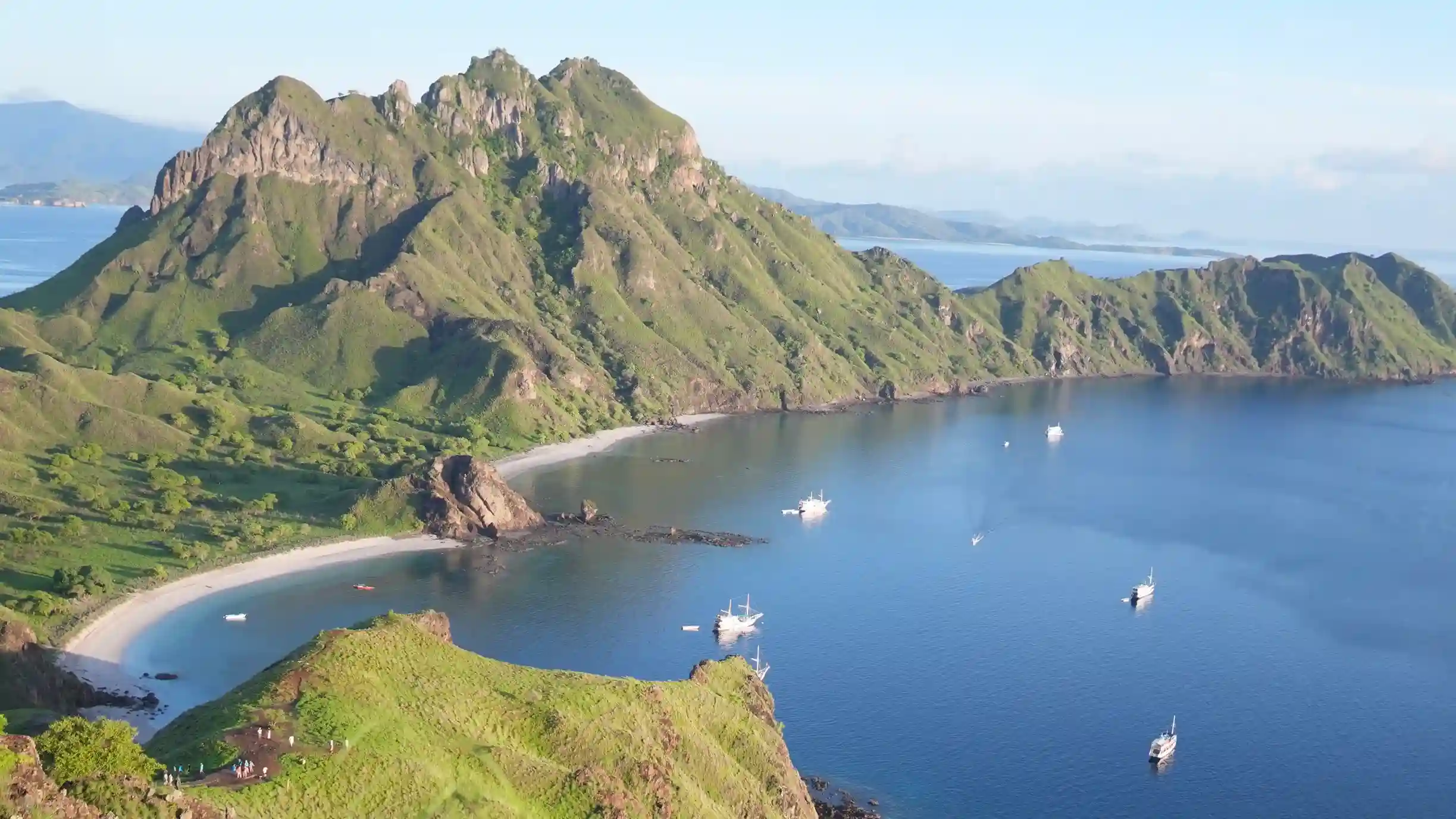
Quick answer: Beyond the dragons, a Komodo charter delivers spinner dolphins riding the bow wave, thousands of flying foxes streaming off Kalong Island at dusk, reef mantas and turtles at Manta Point, and sea eagles, kingfishers and megapodes birdwatched from the deck at first light.
The Komodo dragon earns top billing, and rightly so — but as the fleet-curation desk operated by Komodo Luxury on the Labuan Bajo waterfront since 2015, we spend our days watching guests fall for everything else the park holds. Komodo National Park spans roughly 29 islands across a channel system that funnels marine life, seabirds and fruit bats into predictable, watchable patterns. This is our naturalist’s field guide to the wildlife you can genuinely expect to see from the deck, the tender and the water — well beyond the reptiles ashore.
Dolphins riding the bow between the islands
Ask any skipper and they will tell you the crossings are where the action starts. The deep channels between Labuan Bajo harbour and the landing islands are hunting grounds for spinner and bottlenose dolphins, and the currents that draw them make for reliable sightings on the longer transits. Because a traditional wooden phinisi takes around three to four hours to reach Komodo — against sixty to ninety minutes on a speedboat — the slower cruise is, counter-intuitively, the better wildlife platform: more time on the water, more eyes scanning, more chances for a pod to swing in and surf the bow wave.
We tell guests to be on deck for the first hour after leaving the harbour, and again in the golden light before dusk, when pods are most active near the surface. Pilot whales and, occasionally, dugongs are seen in the same waters, though far less predictably. There is no feeding and no chasing — our crews hold course and let the animals decide, which is both the ethical approach and, in our experience, the one that keeps them alongside longest.
Kalong Island — the flying-fox exodus at dusk
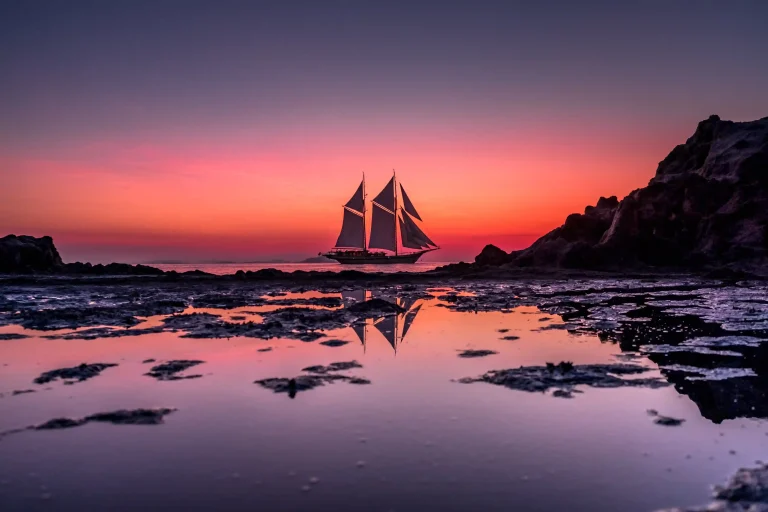
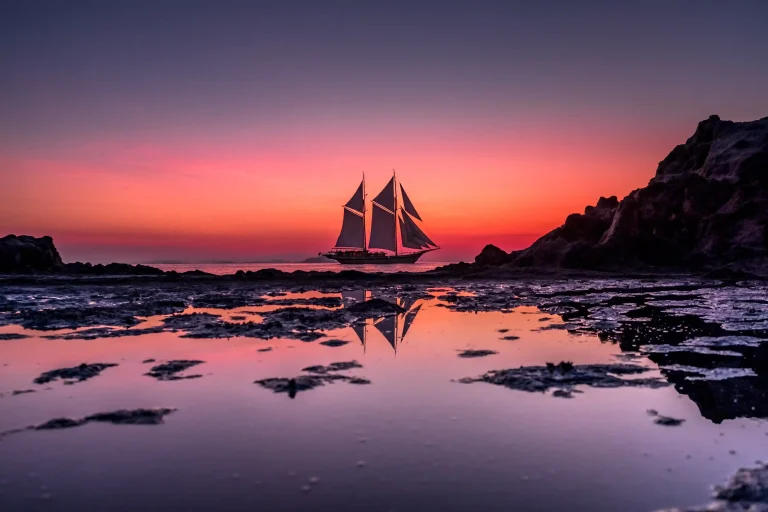
If one moment reliably silences a boat, it is sunset at Kalong Island. “Kalong” is Indonesian for fruit bat, and the mangrove islet is home to a colony of thousands of large flying foxes that roost through the heat of the day and pour off the island at dusk to feed on the mainland’s fruiting trees. Standard itineraries anchor here in the late afternoon precisely for this — it is the natural closing act of a day that often began with a sunrise trek on Padar.
The spectacle lasts twenty to forty minutes as ribbons of bats cross a pink-and-orange sky, and it is best appreciated from the water with a cold drink and a long lens. We position the boat side-on to the flight path so every guest has an unobstructed view, and we keep engines low to avoid disturbing the colony. It costs nothing extra and asks nothing of you but patience — arguably the single best-value wildlife stop in the park.
Birdlife from the deck at first light
Komodo is a genuinely rewarding destination for birdwatching from a boat charter, and the best hide is your own deck at dawn. The park’s dry savannah and mangrove fringes support a distinctive avifauna: the orange-footed scrubfowl or megapode that builds huge nesting mounds, the green imperial pigeon, several kingfisher species, sea eagles and brahminy kites wheeling over the ridgelines, and reef egrets stalking the shallows. Early-morning birdwatching from the deck works because the birds are most vocal and active before the heat builds and before the day boats arrive.
We recommend guests take their coffee up top around first light, binoculars in hand, while the crew keeps the anchorage quiet. On the trekking islands the same walk that leads to the dragons doubles as a birding transect — you will hear the megapodes long before you see them. Bring a modest zoom; the dawn light is soft and generous, and the backdrops are extraordinary.
Beneath the surface — mantas, turtles and reef fish
Some of the park’s most memorable wildlife never appears above the waterline. Manta Point is the headline: reef mantas gather year-round to feed and be cleaned, and while December to March — with a strong April-to-May transition — is commonly cited as the peak window, we run snorkel and dive drops there across the seasons. Guests routinely surface having shared the water with animals four metres across, alongside green and hawksbill turtles, reef sharks and clouds of reef fish.
The coral gardens off Kanawa and Kelor round out the marine day with gentler, shallower snorkelling suited to families and first-timers, while Pink Beach — Pantai Merah — offers easy fringing-reef snorkelling straight off the sand. We match the drop sites to the tide and to your comfort in the water, and brief every group on keeping fins clear of the coral. If marine life is your priority, a dedicated komodo boat tour weighted toward Manta Point and the reef stops will serve you far better than a dragon-first itinerary.
The dragons, in their proper place
None of this means skipping the star — it means timing the trek so it complements the wildlife day rather than dominating it. Komodo dragons are most active in the cooler hours, roughly 07:00 to 10:00 and again in the late afternoon, so we schedule a mid-morning trek that lands you ashore while the animals are still moving and the light is good for photography. Trekking on Rinca Island is often the quieter, more atmospheric choice, with strong odds of dragons around the ranger post and sweeping views over the mangrove flats.
One seasonal note worth planning around: June and July are the dragons’ mating season, when the reptiles tend to retreat deeper into the bush and sightings near the trails can thin out. It is still a fine time to sail — the seas are calm and the birding and marine life are excellent — but if the dragons are your priority, we will say so honestly when we build your dates.
When to sail for wildlife
Season shapes what you see. The dry months from April to October bring calm seas, clear water and reliable trekking, with July to September the busiest stretch; the November-to-March monsoon brings squalls and occasionally rougher crossings, though it overlaps neatly with the manta peak for those who prioritise the water. Since April 2026 the park has enforced a strict daily cap of around 1,000 visitors across its tourist zones, including South Padar, so the quieter shoulder months of April-May and October now reward early booking more than ever.
As a wildlife-focused Labuan Bajo boat charter, we build each itinerary around the animals rather than a fixed checklist — sunrise on Padar, mantas on the right tide, Kalong at dusk, and dawn birding from the anchorage. Park entry and conservation fees for 2026-2027 remain in flux, with several competing schemes quoted by authorities and operators; rather than print a number that may be wrong by your travel date, we confirm the exact, current fees with you at booking. Any market prices we mention are indicative.
Frequently asked questions
What wildlife can I see on a Labuan Bajo Komodo charter besides Komodo dragons?
Plenty. Beyond the dragons you can expect spinner and bottlenose dolphins on the crossings, thousands of flying foxes leaving Kalong Island at dusk, reef mantas, sea turtles and reef fish at Manta Point and the coral stops, and a rich birdlife including megapodes, sea eagles, kingfishers and imperial pigeons watched from the deck.
Can I spot dolphins from the boat while sailing Komodo National Park?
Yes, and often. The deep channels between Labuan Bajo harbour and the landing islands are dolphin hunting grounds, so the transits themselves are prime viewing. Spinner and bottlenose pods frequently ride the bow wave, especially in the first hour after leaving harbour and again near dusk. A slower phinisi cruise gives more watching time than a fast speedboat.
Where are the best sunset spots to watch flying foxes and fruit bats on a Komodo cruise?
Kalong Island is the classic stop. This mangrove islet — “kalong” means fruit bat — hosts a colony of thousands that stream off to feed at dusk. Standard itineraries anchor there in the late afternoon so guests watch the exodus from the water as the sky turns pink. It is usually the day’s final stop after a Padar sunrise.
Is Komodo National Park a good destination for birdwatching from a boat charter?
Very much so. The savannah and mangrove habitats support megapodes, green imperial pigeons, several kingfishers, sea eagles, brahminy kites and reef egrets. The best hide is your own deck at first light, when birds are most active before the heat and the day boats. The trekking trails double as birding transects on the way to the dragons.
Why is Kalong Island visited at sunset on the boat itinerary?
Because that is when the wildlife performs. The flying foxes roost through the day’s heat and only leave at dusk to feed on the mainland, so late afternoon is the sole window to witness the colony taking flight. Anchoring there at sunset also makes a natural close to a full day that typically began with a dawn Padar trek.
Ask our fleet desk on WhatsApp