Mastering Liveaboard Diving Expeditions in Komodo and Beyond
How to pick the best Komodo liveaboard for diving: compressors, tenders and guide ratios, the sites that matter by season, and boats we have graded.
8 min read

Mastering Liveaboard Diving Expeditions in Komodo and Beyond
The best Komodo liveaboard for diving carries its own compressor and tank bank, a proper tender for drift pickups, and guides who cap groups at four divers. Book three nights minimum for the north-and-central circuit, aim for October to April if Manta Alley matters, and keep 18 to 24 hours between your last dive and any flight.
By Yohanes Sanggu, journal editor. Reviewed by Kristoforus Jehamat, Fleet Director.
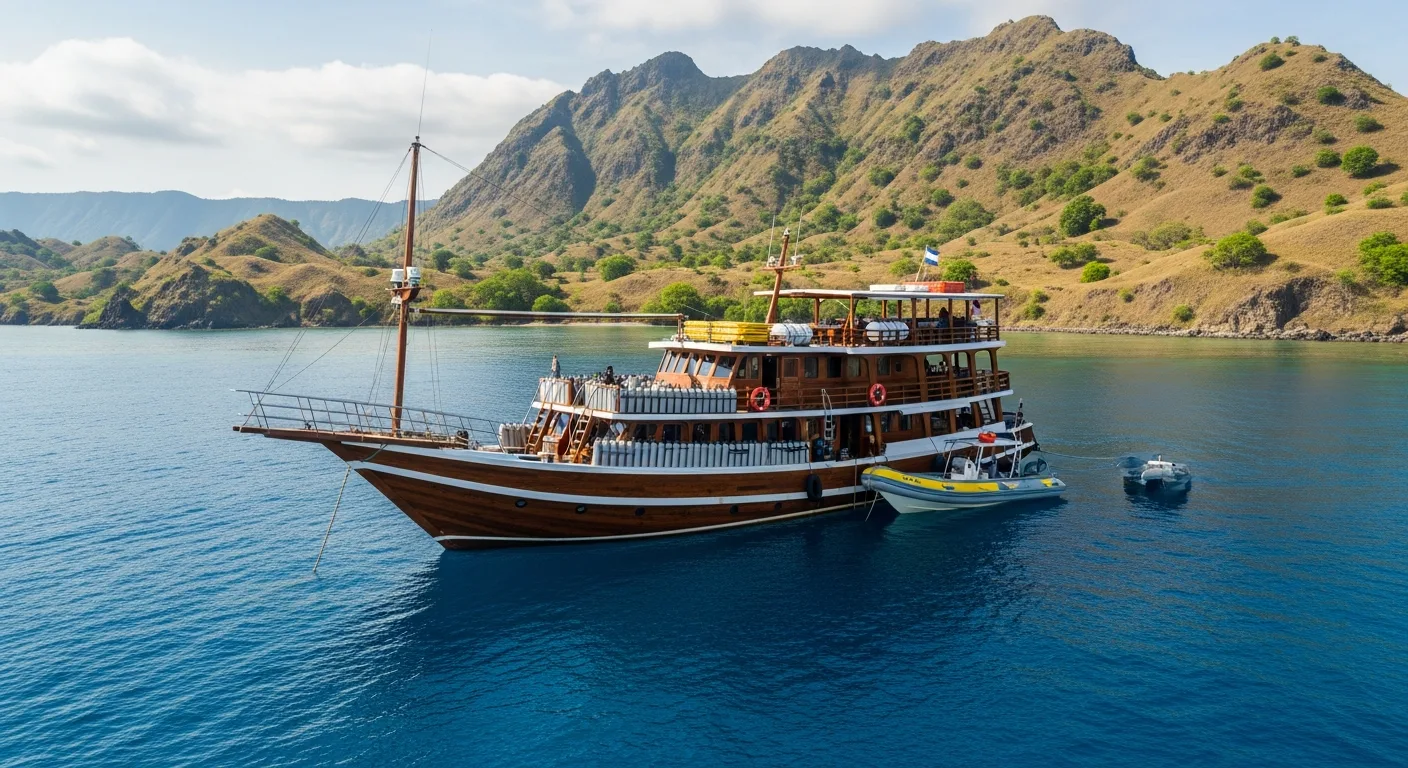
Komodo’s reputation underwater rests on current: the tidal exchange that pours between the islands feeds some of the fishiest reefs in Indonesia and demands boats that are organised for it. A liveaboard turns that current from an obstacle into the whole point, positioning you at slack windows day after day while day boats are still steaming out from the harbour. This is our working guide to doing it properly — and it begins with the boat, because the boat decides everything else. Our Komodo diving charter desk builds the trips; this post explains how we judge them.
What separates a dive liveaboard from a boat that permits diving
Plenty of phinisi will let you dive. A true komodo dive liveaboard is built to run dives, and the difference shows in five places we check on every boarding. A working compressor and a real tank bank aboard, so the day’s schedule never depends on shore fills. A dedicated tender with an experienced driver, because Komodo’s signature dives are drifts and the pickup is half the dive. A guide ratio that stays at or under four divers per guide. A briefing culture that reads the tide tables aloud rather than gesturing at them. And the authority, vested in the dive lead, to swap a site when the current window says no — the itineraries we respect are written in pencil.
Ask, too, about oxygen and first-aid provision and where the nearest chamber support lies. A crew that answers precisely has thought about the question; a crew that waves it away has answered a different one.
Before booking, put five questions in writing and keep the answers: how many tanks and what compressor the boat carries, the guide-to-diver ratio on your specific dates, which sites the plan holds for your certification level, what the weather-swap policy is, and what surface support the tender provides on drift sites. The boats worth chartering answer inside a day with specifics. Vague answers are themselves an answer, and the deposit you do not send is the cheapest dive insurance there is.
A day in the rhythm
Liveaboard diving in Komodo runs on the tide table, not the clock. A typical day opens with coffee and a briefing while the boat repositions to catch slack water on a pinnacle; the first dive goes in early, when the light is low and the current is honest. A long surface interval follows at anchor, usually somewhere a non-diving companion would choose on purpose. The second dive works a central site at midday, the third catches the afternoon window, and on the right nights a fourth goes in under torchlight. Between dives the crew swaps tanks off the bank, the guides log conditions, and the next day’s plan gets rewritten in pencil against the tides. Day boats can copy the sites; they cannot copy the schedule.
Seasons and timing the circuit
The north-and-central circuit dives well across the long dry season, with the calmest boarding conditions from April through November; the south, Manta Alley included, belongs to the October-to-April window. Water temperature swings noticeably between the park’s north and south, so pack exposure protection for both and let the guides call thickness. For the full month-by-month picture above and below the surface, our guide to the best time to sail Komodo maps the year in detail.
The sites a serious itinerary is built around
The northern arc
Castle Rock and Crystal Rock are the park’s adrenaline pair: submerged pinnacles swept by current, stacked with trevally, surgeonfish walls and patrolling sharks. The Cauldron adds a channel ride that guides brief with visible relish. These are advanced sites in strong exchanges, and they are the reason experienced divers charter here at all.
The central belt
Batu Bolong is a single current-split pinnacle that concentrates an unreasonable amount of life into a hundred metres; Siaba Besar is the gentle counterweight, all turtles and seagrass calm; Tatawa Besar and Sebayur round out a belt of sites that give a mixed-experience group honest options every day.
The southern season
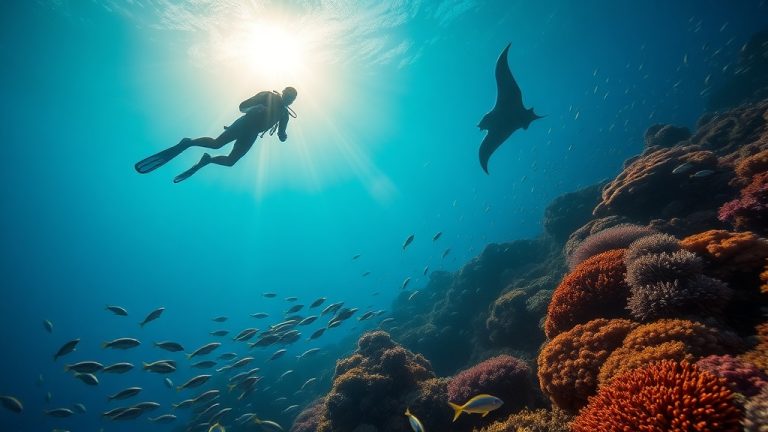
From roughly October to April, the park’s south opens and with it Manta Alley, the aggregation site that headlines the wet-season circuit. Karang Makassar, the drift over rubble flats that most guests know as Manta Point, produces sightings across much of the year. We map the movements month by month in our manta season guide.
Boats we have boarded and graded
Two vessels in the directory anchor the dive class, each documented from our own boarding notes.
Tatawa is the specialist: a 21-metre dive boat making 7 knots, carrying a Bauer compressor and a twelve-tank bank, an aluminium RIB tender, and five cabins for a maximum of eight certified divers. Her 3D2N expedition runs nine dives, night dives included, across the exact circuit above — Sebayur, Tatawa Besar, Siaba, the Cauldron, Castle and Crystal Rock, Batu Bolong, Manta Point — with a dragon trek folded into the final day, at USD 871 per diver. She also runs a two-day, six-dive day-boat format at USD 657 per person with PADI guides held to four guests each. Open Water certification is the entry bar; the northern sites reward Advanced.
Lalunia is the crossover: a 27-metre deluxe phinisi with five cabins for 12 to 14 guests that runs as a leisure boat or a dive boat as your group requires. Diving is a documented add-on at USD 151.51 per person per day including gear and divemaster, minimum two divers, on private whole-boat charters from USD 2,892 for a single day up to 4D3N formats. She is the answer when half the party dives and half does not.
The dive class also lists Oracle, Neptune One and Vagabond, whose specifications we are still verifying on our own boardings; treat those as price on request until the directory entries carry full grades.
How many nights an expedition needs
Two days is a taste, and on a day-boat format a legitimate one. Three nights is the honest floor for the full north-and-central circuit at liveaboard rhythm — roughly three dives a day with slack-window timing. If Manta Alley and the southern amphitheatres are on your list, the season points you toward our 4D3N Komodo charter window from October to April, which unlocks the south without rushing the north. For the fuller comparison of formats, our piece on diving Komodo from a charter versus a dive resort runs the numbers side by side. However long you sail, respect the exit rule: 18 to 24 hours between your final dive and your flight out of Labuan Bajo.
And beyond: the Raja Ampat question
Divers who master Komodo’s currents almost always ask the same next question, and the answer sits two flights east. Raja Ampat’s reefs hold some of the highest marine biodiversity ever recorded, its prime season runs opposite to Komodo’s, and its fleet is curated by our Raja Ampat sister desk under the same operator, Komodo Luxury. The clean pattern is Komodo in the dry months, Raja Ampat between October and April, with your logbook better for both.
Questions we hear at the desk
What certification do I need for Komodo’s famous dive sites?
Open Water certification covers the central belt. The northern pinnacles — Castle Rock, Crystal Rock, the Cauldron — are current-swept and genuinely advanced; boats like Tatawa require certified divers only and will grade the day’s sites to the group’s experience.
Can non-divers join a Komodo dive charter?
Yes, on crossover boats. Lalunia runs leisure and diving in parallel, so snorkellers, trekkers and readers share the deck while the dive group works the pinnacles. Dedicated dive boats like Tatawa suit all-diver parties better.
When should I book for mantas?
Karang Makassar produces encounters across much of the year, while Manta Alley in the south is a wet-season site, roughly October to April. If mantas are the trip’s centrepiece, build the charter inside that window and give the itinerary two chances at each site.
Ready to build the expedition? Message the fleet desk on WhatsApp at (+62) 811 3823 875 or email [email protected] with your dates, certification levels and group size, and we will shortlist the boats we would put our own tanks on.