Catamaran vs Phinisi in Komodo: Which Is More Stable and Seasickness-Proof in 2027?
8 min read
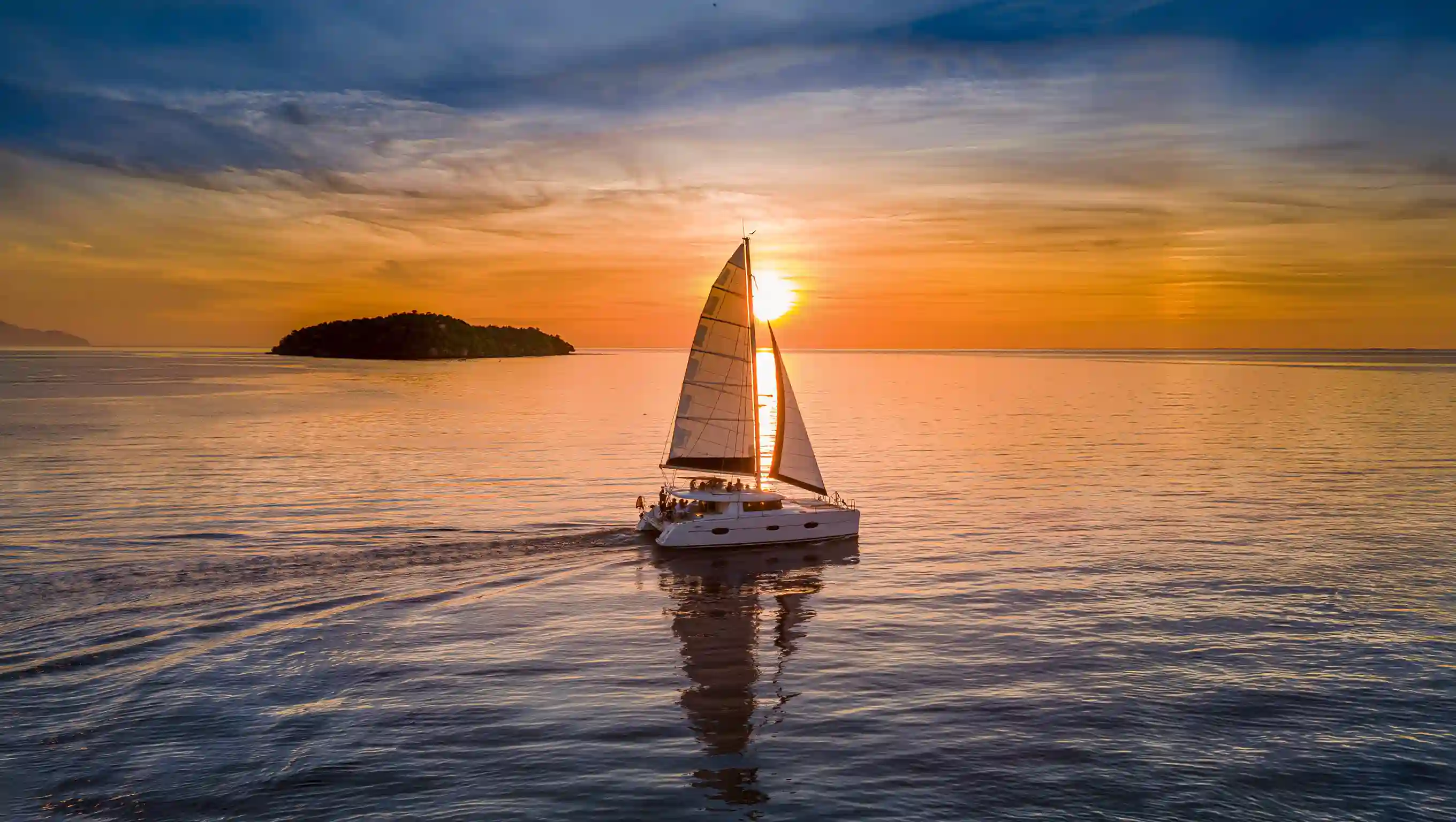
Quick answer: For most travellers, a catamaran is the more stable, seasickness-resistant choice in Komodo. Its twin hulls resist roll, hold decks level and sit calmly at anchor, while a traditional phinisi offers heritage and roomier cabins but rolls more in beam swell — especially during the November–March monsoon.
Why hull shape decides your comfort in Komodo
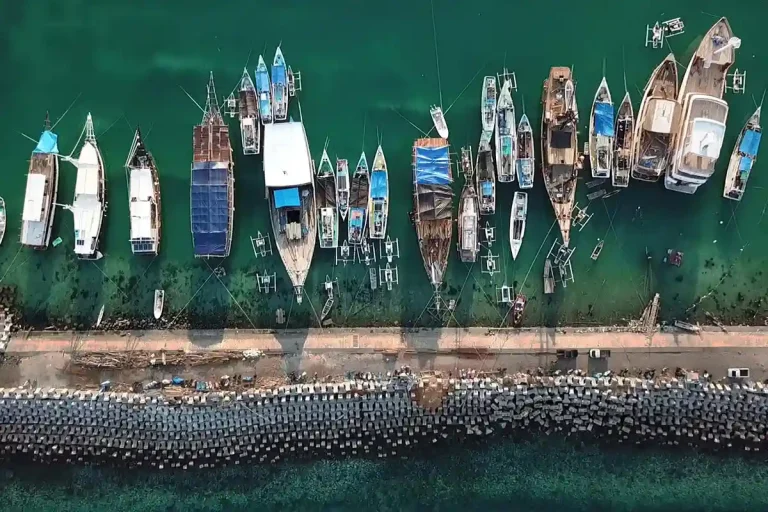
Labuan Bajo is the sole gateway port to Komodo National Park, reached through Komodo Airport (LBJ), and every trip into the park’s roughly 29 islands begins at its harbour. From that first departure, the single biggest factor in how comfortable you feel is not the cabin, the food or the crew — it is the shape of the hull beneath you. As the fleet-curation desk operated by Komodo Luxury, we spend our days matching guests to the right vessel, and the question we field most often is simple: catamaran or phinisi?
The two could not be more different. A phinisi is a traditional Indonesian wooden sailing vessel with a single, deep hull; a catamaran rides on two slender hulls joined by a wide bridgedeck. That structural difference governs stability, motion, deck space and even how close you can anchor to a beach. Understanding it is the key to choosing well.
Catamaran vs phinisi: the stability difference explained
Stability comes down to how a boat resists rolling from side to side. A monohull phinisi has a single point of buoyancy, so it leans and rocks with each passing swell — part of its romance under sail, but tiring on a two- or three-day cruise. A catamaran spreads its buoyancy across two widely spaced hulls, giving it enormous resistance to roll. In practice this means level decks, drinks that stay on the table and a far gentler night at anchor. When guests ask us, in the Komodo catamaran vs phinisi debate, which is more stable, the honest engineering answer is the catamaran, by a clear margin.
There is a trade-off worth knowing. In a large head-on swell, a heavy monohull can slice through waves with a predictable, rhythmic motion, whereas a catamaran can feel a sharper, quicker movement. For the beam seas and short chop that dominate Komodo’s channels, though, the catamaran’s steadiness wins for comfort almost every time.
Seasickness: which hull wins, and when it doesn’t
Seasickness is triggered by motion — particularly the slow, rolling sway that a monohull produces at anchor and in beam swell. Because a catamaran dramatically reduces that roll, it is the boat we recommend for anyone prone to nausea. If you have asked which boat is best for seasickness in Komodo, a catamaran or phinisi, the catamaran is our default answer for sensitive stomachs, older travellers and children.
Guests also raise the catamaran vs superyacht question for seasickness around Labuan Bajo. A large motor superyacht carries stabiliser technology that calms roll impressively, so it rivals a catamaran for smoothness — but it comes at a very different price point and draws more water, keeping it further from shallow beaches. For most parties, a well-found catamaran delivers superyacht-level steadiness without the superyacht bill.
Families, children and nervous sailors: the catamaran case
When parents ask which is the more family-friendly boat in Komodo — catamaran or phinisi — the catamaran usually wins on practical grounds. Its wide, flat, level decks and netted trampolines give children safe space to sit and play, while the shallow draft lets the boat nose close to the sandbanks and reefs that make the park special. Level surfaces also mean fewer stumbles for grandparents, and calmer motion means fewer queasy little faces.
A phinisi remains a wonderful family vessel too, with characterful cabins and generous sun decks. But for multigenerational groups mixing toddlers, teenagers and elders, the steadiness and open layout of a catamaran tend to keep everyone happier across a full itinerary of Padar treks, Pink Beach swims and Manta Point snorkels.
When a phinisi still wins
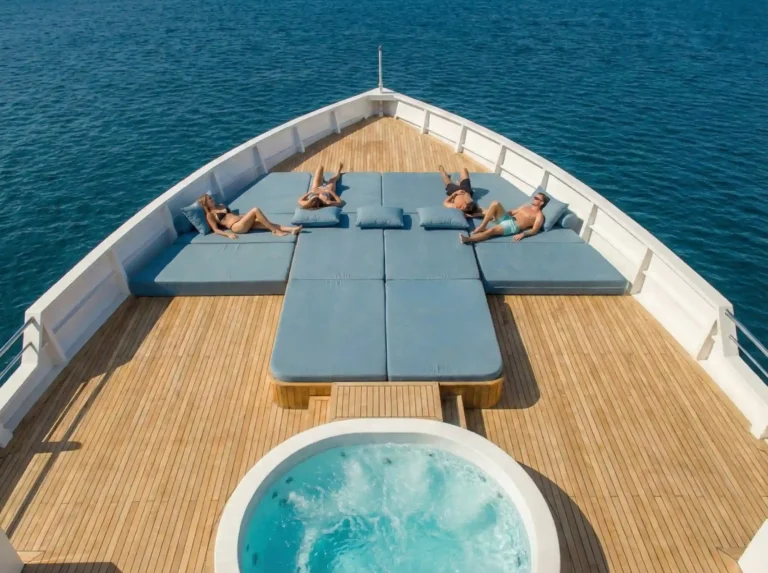
None of this makes the phinisi the wrong choice — far from it. For travellers who prize atmosphere, a hand-built wooden phinisi under sail is one of the most romantic ways to see Komodo, and many of the largest, most spacious cabins in the region sit aboard phinisi yachts. In the komodo luxury catamaran charter vs phinisi yacht comparison, the phinisi answers a different brief: heritage, craftsmanship and a slower, more contemplative pace.
Phinisi are also slower, which shapes your day. From Labuan Bajo harbour a phinisi typically needs around three to four hours to reach Komodo Island and four to five to Padar, partly by design — the leisurely cruising speed and photo stops are the point. Speedboat-class vessels, including many catamarans, cover the same water far faster, reaching Loh Liang on Komodo Island in roughly 60 to 90 minutes and Padar in about 90 to 120 minutes.
Matching the hull to your season, route and budget
Season matters enormously. The dry months of April to October bring the calmest seas, best visibility and most reliable trekking, with July to September the busiest. From November to March the monsoon brings squalls and occasionally rougher water, and this is when hull choice bites hardest: if you are asking about the best boat type for rough seas in Labuan Bajo during those months, a stable catamaran — or a larger stabilised yacht — will keep a wet-season crossing far more comfortable than a light monohull.
Your wildlife priorities also shape the plan. Komodo dragons are most active in the cool morning hours of roughly 07:00 to 10:00 and again in late afternoon, so early landings on Komodo or Rinca are best; note that June to July is mating season, when dragons retreat deeper into the bush. Mantas cruise Manta Point year-round, but December to March, and the April–May transition, are widely cited as peak months. Whatever your season, a faster, steadier hull lets you reach the early-morning trailheads and the sandbanks of Kanawa, Kelor, Taka Makassar and the flying-fox roost at Kalong with time to spare. Remember, too, that since April 2026 the park enforces a strict daily cap of around 1,000 visitors across tourist zones including South Padar, so early booking matters. Park entry fees for 2026 and 2027 remain disputed and vary by scheme and day; we confirm the exact, current figure with you at the time of booking, and any market prices we quote are indicative until finalised.
How our fleet desk pairs you with the right boat
Because we curate rather than sell a single boat, we can be genuinely impartial. Tell us who is travelling, how sensitive your group is to motion, which season you are sailing and what atmosphere you want, and we will shortlist the hull that fits. Sustainability-minded guests increasingly ask us about a low-emission catamaran charter from Labuan Bajo, and sailing or hybrid catamarans can indeed reduce fuel use on the longer legs — another point in the multihull’s favour. Explore our full catamaran Labuan Bajo boat charter options, browse the wider luxury yacht charter across Komodo, or compare vessels through our yacht charter from Labuan Bajo desk. Whether you want Labuan Bajo ultra-luxury catamaran charters or a classic phinisi, we will match the boat to the sea you will actually meet.
Frequently asked questions
Is a catamaran better than a phinisi in Komodo?
For stability and comfort, yes — a catamaran’s twin hulls resist roll, keep decks level and sit calmer at anchor. A phinisi wins on heritage, atmosphere and often cabin size. The better boat depends on your priorities: choose a catamaran for steadiness, a phinisi for traditional character and a slower, more romantic pace.
Which boat is best for seasickness in Komodo, catamaran or phinisi?
A catamaran is the better choice for seasickness. Its wide twin-hull stance sharply reduces the rolling motion that triggers nausea, both underway and at anchor. A monohull phinisi rocks more, especially in beam swell. For sensitive stomachs, children or older travellers, we consistently recommend a catamaran, or a larger stabilised yacht if budget allows.
Which boat is most family-friendly in Komodo?
Catamarans usually suit families best. Flat, level decks and safety trampolines give children secure space, the shallow draft reaches beaches easily, and steadier motion means fewer queasy passengers. Phinisi remain great for families too, with roomy cabins and sun decks, but for mixed-age groups the catamaran’s stability and open layout tend to keep everyone comfortable.
Catamaran vs superyacht in Labuan Bajo — which is smoother?
Both are very smooth. A large motor superyacht uses stabilisers to calm roll and rivals a catamaran for comfort, but costs far more and draws more water, keeping it further from shallow beaches. A catamaran delivers similar steadiness at a lower price and anchors closer to shore, which is why we recommend it for most parties.
What is the best boat type for rough seas in Labuan Bajo?
During the November-to-March monsoon, a stable catamaran or a larger stabilised yacht handles rough seas most comfortably, resisting the beam roll that light monohulls suffer. Heavier phinisi cope with big head swells but rock more at anchor. Whatever the hull, we plan wet-season routes carefully and confirm conditions before departure to keep crossings as smooth as possible.
Ask our fleet desk on WhatsApp